



Roger Kennedy: Shaping resilience through leadership and purpose at JPS
FOR over three decades, Roger Kennedy has been a steadfast contributor to shaping the culture of reliability and resilience at the Jamaica Public Service Company (JPS). In an industry defined by evolving technology, customer needs, natural disasters, and other disruptive events, Kennedy exemplifies principled leadership, discipline, and seasoned insight.
When Kennedy joined JPS in 1992, as a newly qualified electrical engineering College of Arts, Science and Technology graduate, he embarked on a journey that exposed him to almost every aspect of the organisation. During his first decade, he served as a technical auditor before transitioning into parish management for Westmoreland, Hanover, and Clarendon, followed by senior leadership positions in regional operations, transmission oversight, and distribution management. Today, as director of business continuity, he appreciates the extensive knowledge, personal growth, and invaluable lessons gained throughout his 33-year journey. He draws on every layer of his tenure, from technical insight and operational awareness to human connection, which drives his commitment to JPS’s revolutionary approach to disaster preparedness.
Kennedy attributes his early field experiences to shaping the calm, structured approach that his team and colleagues now rely on.
“My approach to crisis management and disaster preparedness has been shaped by formative experiences that reinforced the importance of planning, adaptability, and communication,” he says. “I am also cognisant that a combination of my values, particularly resilience, empathy, and accountability, has made the difference between chaos and coordinated action.”
During emergencies, Kennedy believes leaders must provide both direction and reassurance, striking a balance between structure, empathy, and effective communication to keep teams focused and coordinated. This approach has served him well amid numerous challenges. Having coordinated teams during hurricanes and large-scale restoration exercises, Kennedy understands that clarity and structure are essential for saving time and lives.
“My leadership style is grounded in clear communication, calm decision-making, and collaborative problem-solving, which are essential during emergencies. I prioritise transparency and structure, ensuring that everyone, across internal teams and external partners, is aligned on roles, responsibilities, and the evolving situation,” he added.
Kennedy is recognised as a leader who maintains order and offers clear guidance during a crisis or unexpected disruptions. His ability to translate complex technical frameworks into practical steps makes him uniquely suited for his role. Whether discussing strategic protocols, stakeholder management, or readiness drills, Kennedy keeps his team focused on outcomes that matter most to the company and its customers: safety, reliability, and rapid recovery.
He is also open about the personal qualities the role requires. “One must be a strong communicator, possess impeccable emotional intelligence, and have strong collaboration skills,” he notes. These qualities, Kennedy believes, are vital for success in this field.
Communication, according to Kennedy, is as essential as infrastructure. He believes that preparedness goes beyond strengthening the grid; it also involves ensuring that employees, customers, and critical partners know how to operate during and after a natural disaster or disruptive event. He emphasises clear, coordinated messaging through multi-channel communication strategies that keep the public informed before, during, and after crises, while also maintaining seamless collaboration with key stakeholders in real time.
For Kennedy, being a strong communicator means promoting a culture of consistency, teamwork, and accountability; a culture that endures long after each challenge has passed.
“Our aim is twofold – ensuring safety and reducing uncertainty. Transparent and timely updates foster trust, empowering customers to make informed decisions in moments of crisis,” the director said.
As JPS continues to modernise its systems and improve reliability, Kennedy and his team remain essential to that effort. Their work involves more than just technical plans and protocols; it’s about building the framework that keeps people connected, maintains operations, and ensures communities stay informed during times of uncertainty.
Looking ahead, Kennedy remains optimistic about the future. “My goal is to leave a legacy of resilience where JPS and its customers are not just recovering, but thriving. Through stronger infrastructure, meaningful partnerships, and innovative thinking, we are working towards a safer, more prepared Jamaica,” he assures.
For those who work alongside him, Roger Kennedy represents the steady assurance that comes from experience and preparation. His legacy is not defined only by continuity of service, but also by purpose — a commitment to planning, communication, and teamwork that strengthens the organisation from within.
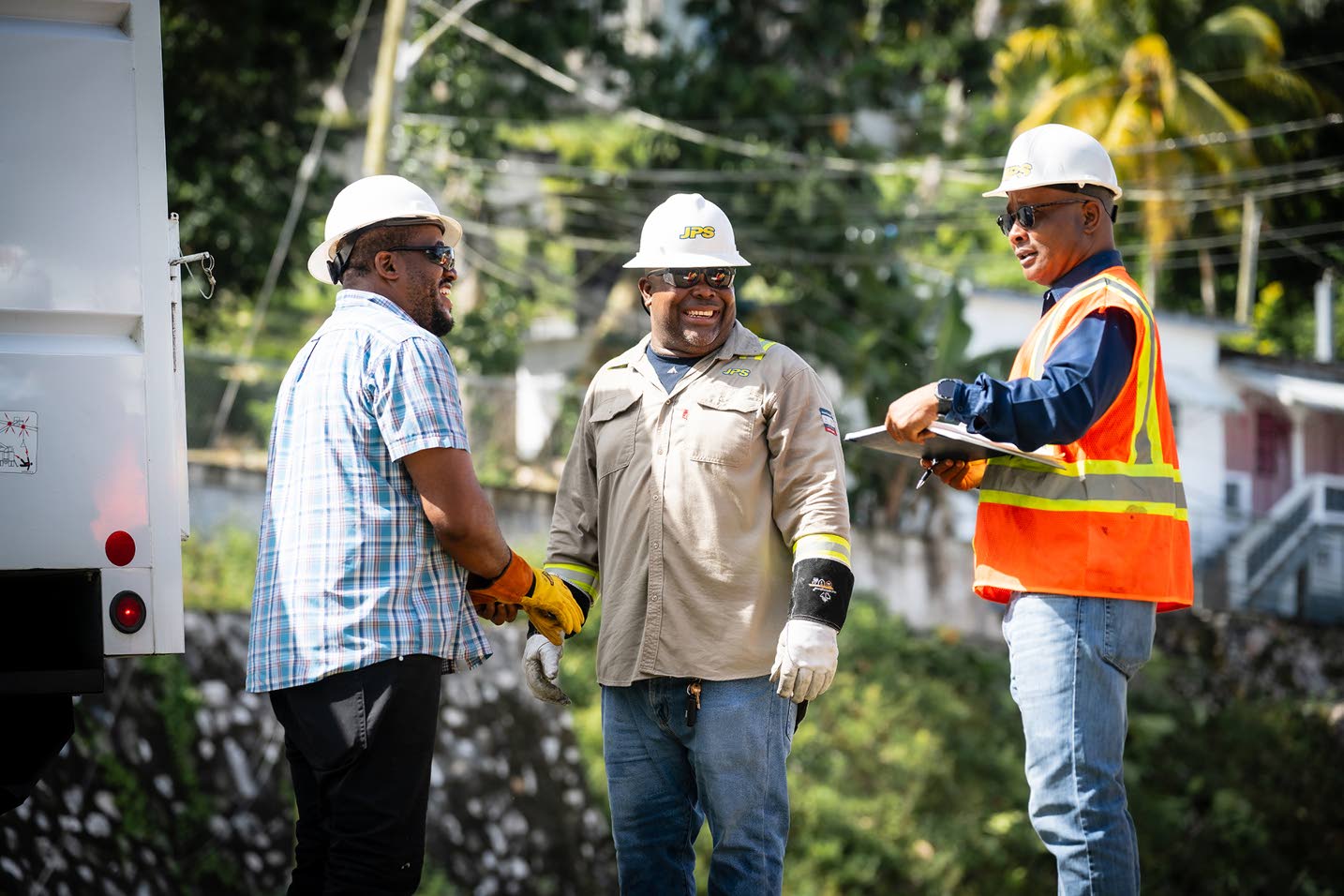
Director of Business Continuity at JPS, Roger Kennedy (right), interacts with team members Marlon Lee (left) and Nicholas Nembhard during a field visit.


