Survival of the fittest
Whitehouse residents battle hunger, homelessness, heartbreak after killer hurricane
IN Whitehouse, Westmoreland, the struggle for survival has intensified in the wake of Hurricane Melissa. Days after the storm flattened sections of the seaside town, residents desperately gathered outside the only shop still open on that side of the parish, scrambling for food, water, and essential supplies.
The once-lively fishing and tourism community now lies in ruins, as many houses were reduced to splinters, tangled power lines are strewn across streets, and families are sleeping under makeshift shelters. For many, there is no access to electricity, running water, and no clear sign of when relief will arrive.
“Everywhere you go, if you see how the place look, a sufferation, real sufferation,” said resident Linson Allen, who was among those outside Hong Chen Supermarket waiting to purchase food and essential items.
“We hungry, no food, and we deeven a talk bout house yet cause man can get back house. Right now we a try preserve life; the people dem need food and water,” he added.
Allen described scenes of desperation and resilience, recounting how some residents have begun salvaging sheets of zinc from the wreckage to build temporary shelters.
“Who have strength and the energy and [are] creative, them can hunt back some zinc, put on back some zinc weh blow all round, and kotch up back something — it might all save another man in the future,” he told the Jamaica Observer last Friday.
But he warned that the situation could soon worsen if help does not come quickly.
“Them haffi try bring some assistance as soon as possible, cause you see with this now, a loot some of the people dem soon start loot now enuh, because some people might feel like them nah no other choice. Remember mi tell you seh a survival ting a gwaan out yah man, and while some man might say, ‘Mi nah guh loot because mi full a shame and pride,’ some other man a seh, ‘Mi a guh save my life cause a food mi a look,’” he said gravely.
Allen’s voice grew heavier as he looked around at the wreckage left behind when Category 5 Hurricane Melissa pummelled the area last week Tuesday. He told the Observer that what pains him most is not the loss of property, but the suffering of those who can no longer help themselves.
“Mi see all a man bruk him foot and when him foot bruk, a only the vein dem hold up the foot. A yesterday [last Thursday] before we could get him some help cause the whole a the man foot done, and mi see some people pass all the youth a suffer and a mi and mi bredrin affi guh out deh and try help him. The man tell mi seh him feel so much pain to the point where him can’t even feel no more pain again,” he explained.
Allen said the devastation has affected everyone, regardless of background or status. “This a affect everybody — rich, poor, blind, dumb, deaf, everybody — so only the fittest a guh survive,” he declared, shaking his head. “A the first me ever see this. Mi tell my wife seh this a nuh water enuh — this a fire. Only fire could a mek the place look suh. When you see how fire behave, a suh it mek the place look — bun down housetop and destroy tree,” he insisted.
However, Allen acknowledged that many residents had not taken the warnings about the approaching hurricane seriously.
“But you see the thing is, a whole heap a people never mek any preparation, and all the man dem warn dem and tell them tek this serious, but at the same time some people can’t even mek any preparation because them nuh know which way fi turn because them poor, so them need help,” he said.
Like Allen, other residents described scenes of destruction and endurance that have tested the very core of their community spirit.
For Sharon Rankine Whitter, a businesswoman in Whitehouse, survival has meant turning her own home into a haven for the displaced.
“I have been accommodating about 50 people right now, and it took 50 people yesterday [last Thursday] to clear my road or else I couldn’t move. From six o’clock yesterday morning to six o’clock last night the man dem were cleaning the road for me. I give them liquor, I give them food, I give them everything so the people dem could come out,” she said.
Whitter, who on Friday said she had not received any help from the authorities, is appealing for urgent government intervention.
“Westmoreland need emergency, emergency attention to the poorer class of people dem who don’t live anywhere at this side.
“All the board housetops are gone — no sheet, no food, no clothes, nothing! Everybody is homeless at this time,” she said.
Among the many now displaced is a resident who only gave her name as Kim, who said she has lost everything she owned.
“My house is completely gone; I lost everything. Yesterday some supermarkets were offering water to the residents [but] otherwise, nothing. No panty, nothing — we lost everything. Flat, flat, flat. I can’t even change my clothes because I don’t even have any other clothes to put on,” she said quietly.
She noted that she is now staying with a friend, but each day brings new uncertainty.
“Tonight I sleep here but when I wake up in the morning I have to be thinking about where I am going to lay my head for the next night, because we don’t have anything,” she explained. “I’m still lost because I don’t have any money, I don’t know where to start, and for us here in Westmoreland this is a case of emergency.”
Further up the road in Bluefields and adjoining communities, residents echoed similar cries for help, describing a parish brought to its knees.
Ann Marie Logan, who lost her clothes store — her main source of income — said she has been left with nothing but memories.
“It completely gone; the bar gone, the house gone, we nuh save anything,” she said.
“During the hurricane we were holding up different parts of the roof, and as each part fall, we haffi try see if we can hold up a next one. Oh my God, I have never experienced anything like this. I heard the windows of the house singing and we looking for cats when it’s only the window making that sound,” she said.
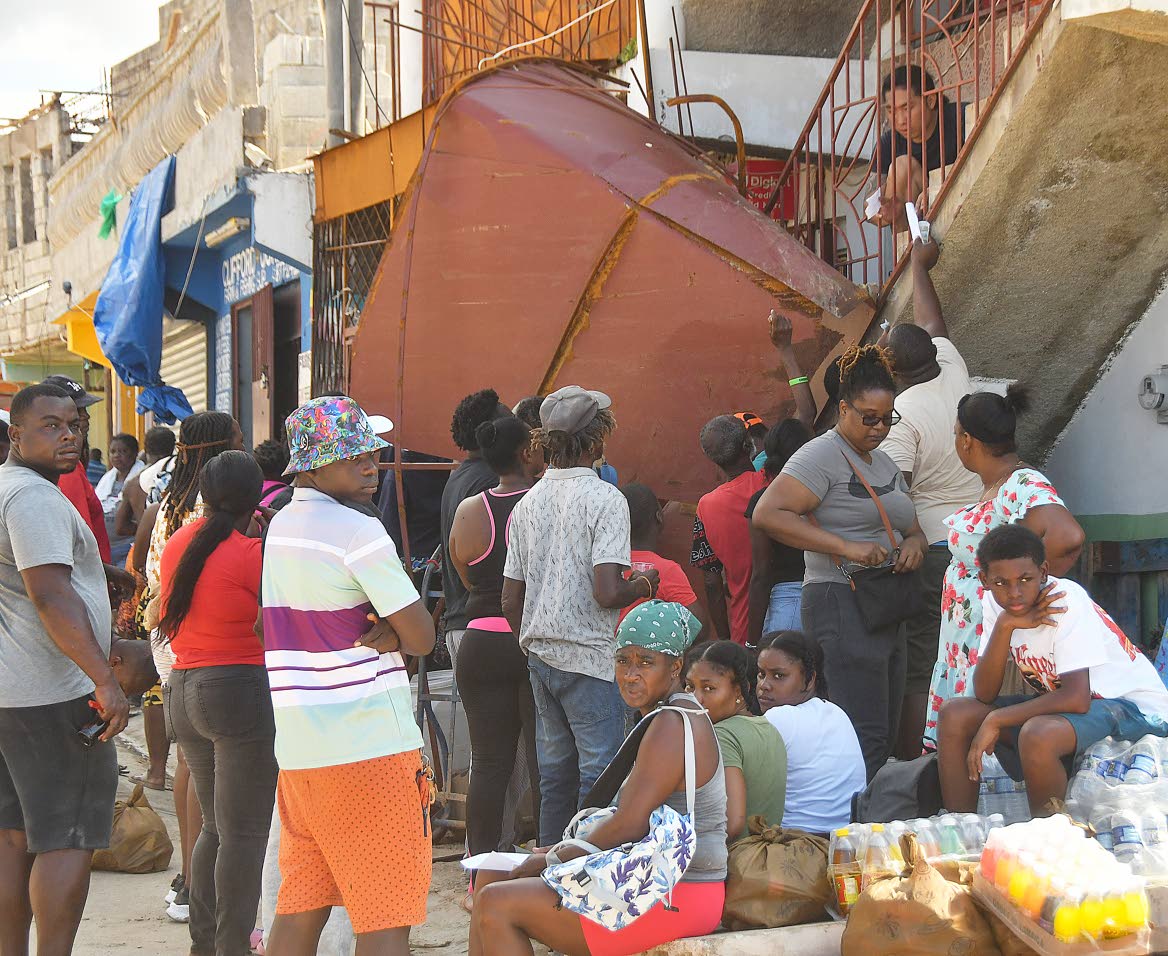
Residents gather outside a shop in Whitehouse, Westmoreland, last Friday as they seek to purchase essential items.
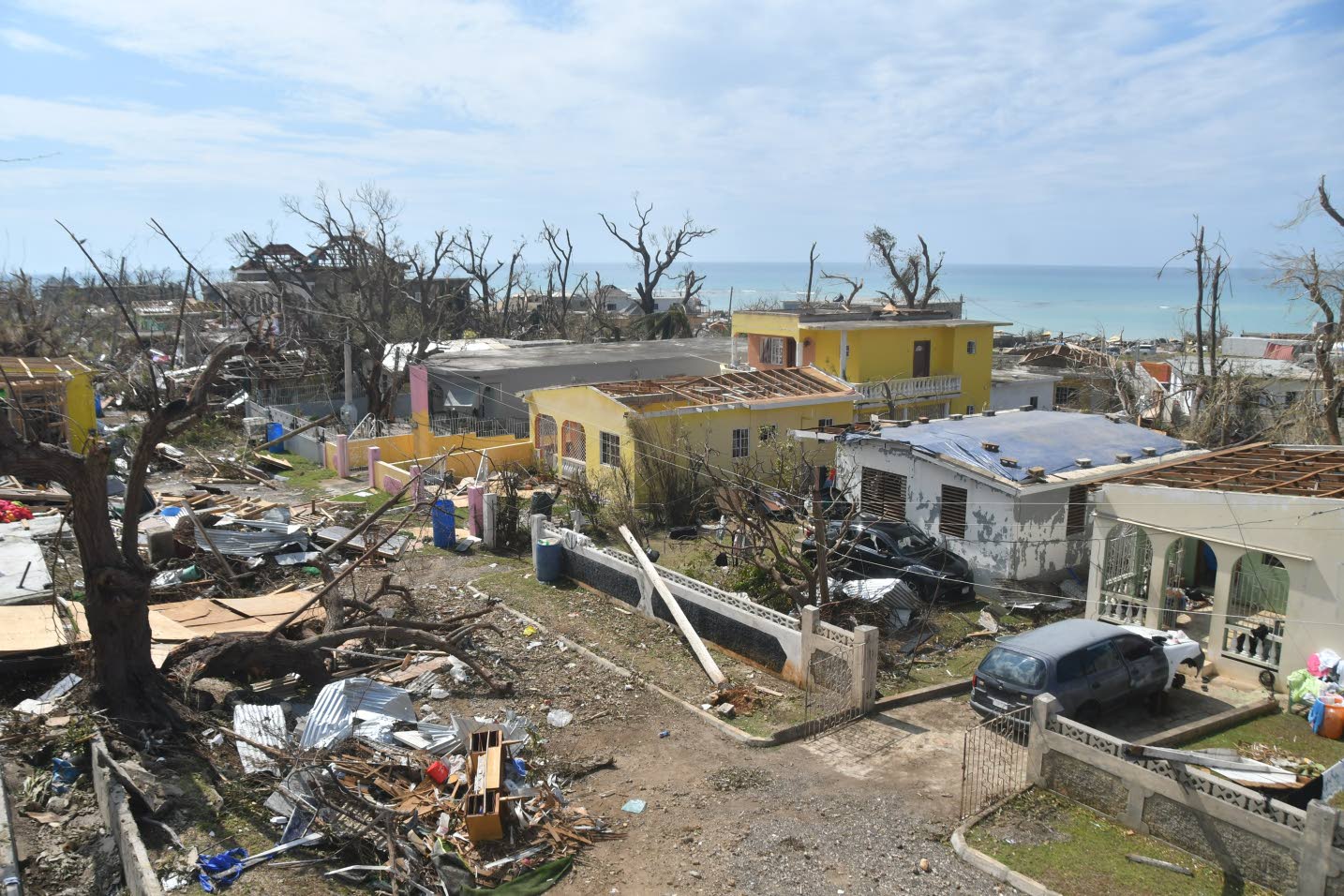
A section of Whitehouse, Westmoreland, is in complete ruins after the passage of Hurricane Melissa.