



Food safety priority after Melissa
Expert gives updates on vector control, waste disposal and public health concerns in recovery
DIRECTOR of the Environmental Health Unit in the Ministry of Health Michael Williams says health officials who have so far done 2,000 food assessments and condemned 5,000 kilogrammes of rations are prioritising food safety as Hurricane Melissa recovery efforts kick into high gear.
Speaking at a health cluster Hurricane Melissa response meeting with donor agencies and non-government organisations at Courtleigh Hotel in St Andrew on Tuesday, Williams said officials have been carrying out food inspections and observing safe handling of food in shelters while conducting surveillance in communities.
“There are a lot of organisations who are providing food for persons who were displaced; our officers are on location to ensure that food safety is maintained. In terms of our findings, we have a situation where a lot of animals have been washed away, and our health inspectors have gone into the field to ensure that there is burial or incineration of animals that were washed away. For instance, we have chicken farms where thousands of birds drowned and we wouldn’t want these to get into the regular food chain. So far we have done 2,000 food assessments, and this figure of 5,000 kilogrammes of foods that we have condemned is going to rise exponentially,” he told the meeting.
In the meantime, Williams said imported foods will also come in for scrutiny given the damage wreaked on several parishes which accounted for a high percentage of the country’s agricultural offerings.
“A lot of the locally produced food is no longer present, fields have been washed way, foods that have been stored have been washed away, so a lot of the food going forward will be imported, and inspection will be done at ports of entry,” he said.
The unit director said other areas of concern surrounded environmental health, water quality, vector control and institutions, especially shelters, and general sanitation.
“Over 50 per cent of treatment plants were down, today 65 per cent of customers have gotten back potable water, and less than 35 per cent of the plants are down. Our greatest concern currently is the possibility of water borne diseases as regular water supplies are out and people will gravitate to other sources (spring, pond) and treatment of the water is not being done right now,” he told the meeting.
He said health officials also harbour fears given the impact of the hurricane on sewage treatment plants.
“A lot of sewage treatment plants were affected and those that do not have electricity to operate, a big risk is out there of sewage flowing into communities, flowing on the street. We are working with the water providers to have a fix to this issue,” Williams pointed out.
Further anxiety, he said, surrounded the loss of sanitary conveniences due to flooding.
“Again this a big concern of ours, where people have lost their toilet facilities and open defecation is a threat, so as we go into the community, we do our health education, we encourage them to put up an emergency pit latrine or if it is done in the open that they dig a hole and cover it to prevent fly breeding and the spread of diseases,” Williams stated.
Where waste management was concerned, he said lessons learnt in the aftermath of Hurricane Beryl last month informs the current response.
“What we found out after Beryl last year was that because of the delay in starting the removal of bulk waste where they would have to remove the bulk waste before domestic waste, there was a lot of fly breeding and rodents all over the place. So we are working with [waste removal players] to hasten the removal of bulky waste so they can go on to remove domestic waste,” Williams said.
In admitting that health-care facilities were now facing challenges to remove medical waste, Williams said that is being “worked through”.
As to the hurricane’s impact on vectors, he said, “Before Melissa came there was a lot of concern, a lot of complaints about vectors and this has been exacerbated with the passage of the hurricane, so we have mosquitoes, flies and rodents.”
“There is an abundance of food all around [on account of the flood rains from the system]; rodents have been washed out of their traditional burrows and where you have, like, agricultural fields because they are inundated, rodents are moving into people’s homes, and this is a big concern so we are doing our public education and trying to get rodenticides so we can help communities protect themselves,” Williams said.
The cluster meeting served to provide donors with information on how to go about making their contributions whether in kind or expertise to the relief effort in a coordinated way and within established guidelines.
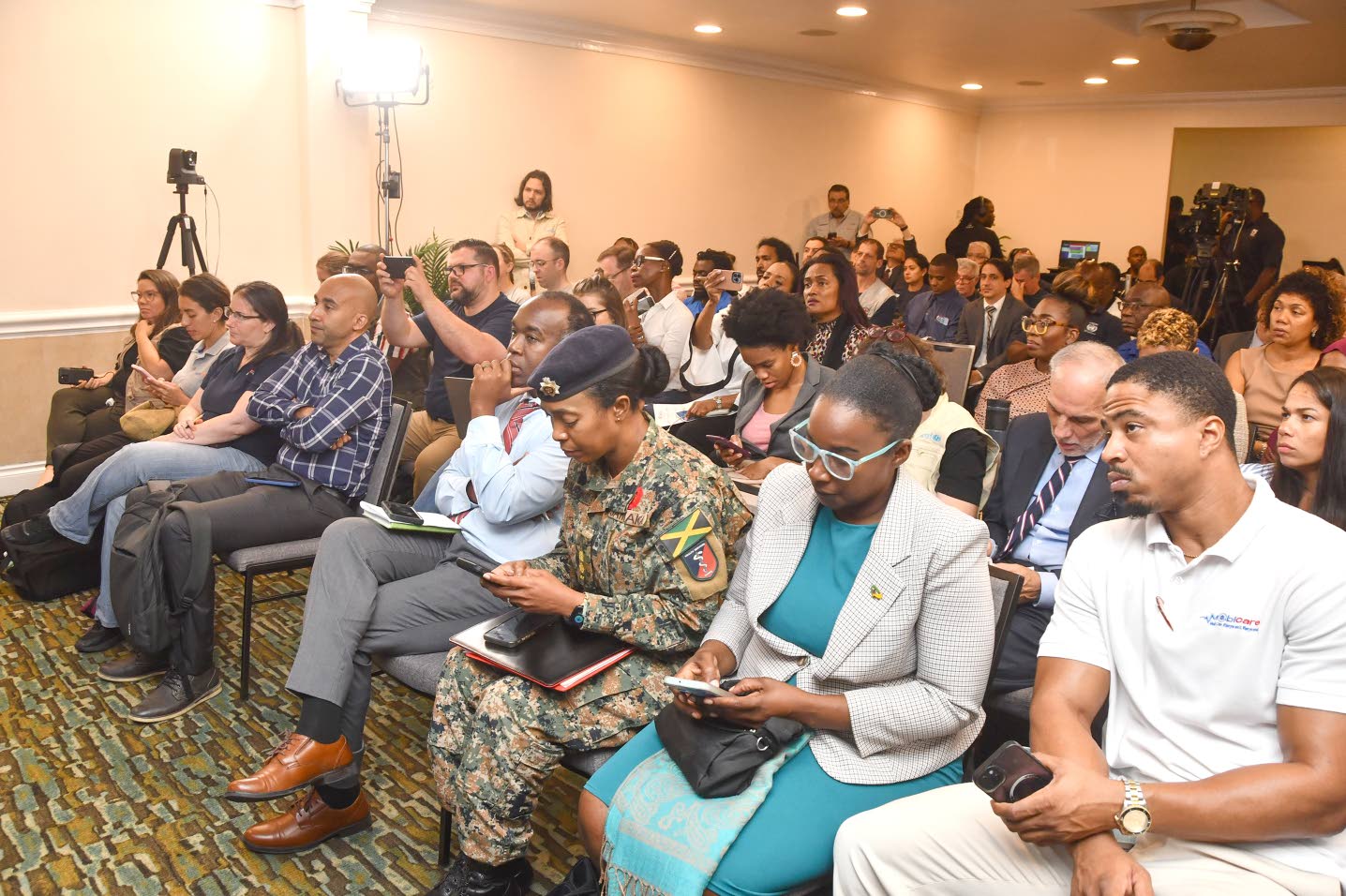
Participants listen keenly during Tuesday’s health cluster Hurricane Melissa response meeting with donor agencies and non-government organisations at the Courtleigh Hotel in St Andrew. (Photo: Naphtali Junior)


