



From Matthew to Melissa: The cataclysmic wake-up call
Just a few years ago, in the shadow of Hurricane Matthew, I asked: Do we have a plan? Today, in the devastating aftermath of Category 5 Hurricane Melissa, we have our answer. The plan we had was a good start, but it was tragically insufficient for a storm of this magnitude.
The preliminary figures are not just numbers, they are a nation’s trauma quantified. According to Prime Minister Dr Andrew Holness, Jamaica is estimated to have suffered US$6-7 billion in damage — a staggering blow that wipes out nearly a third of our gross domestic product (GDP). This, in my opinion, is not a temporary setback, it is an economic obliteration that has set our development clock back by years, if not decades. The scientific predictions we once discussed as future threats are now our painful present, with wet seasons becoming flash floods and dry seasons turning into prolonged droughts, creating a vicious cycle of financial strain, food insecurity, and public health vulnerability.
The bitter irony, and perhaps our one stroke of providence, is that the Kingston Metropolitan Area, housing over one million Jamaicans and the nation’s economic heart, was spared a direct hit. Let us be unequivocal: Had Melissa’s eyewall made landfall there, Jamaica as a functioning State would have ceased to exist. The complete shutdown of government, finance, and logistics would have been inevitable. The severe damage inflicted last year by Hurricane Beryl on St Elizabeth, Westmoreland, Hanover, and St James — even without a direct landfall — was not a near miss. It was a dress rehearsal we failed to fully heed.
There is, as always, plenty of blame to go around. But assigning it now is a luxury we cannot afford and a distraction that wastes precious recovery time. The immediate, singular focus must be on a coordinated, unprecedented national effort to build back. Not to what we were, but to what we must become — Jamaica’s development miracle.
The Limits of Our Existing Shields
Our membership in the Caribbean Catastrophe Risk Insurance Facility (CCRIF) since 2007 and the development of a catastrophe bond (a first of its kind) could, collectively, provide up to around US$221 million for the National Natural Disaster Reserve Fund (NNDRF) established in June 2024. These instruments provide critical emergency liquidity — the financial first aid to stabilise the patient immediately after the shock.
However, as Melissa has brutally demonstrated, these funds are a mere drop in the Caribbean Sea compared to the tropical wave of capital required for reconstruction. They are designed for response, not for rebuilding an entire country’s infrastructure, housing stock, and agricultural sector. The gap between what these funds cover and what is needed is where our national survival now hangs in the balance.
The Path Forward: From Recovery to Resilient Transformation
This is our moment of reckoning. The scale of the destruction presents a horrific but clear slate. We cannot simply replace what was lost; we must build what is necessary to withstand the next Melissa, because there will be others as our territorial waters become warmer, creating fertile grounds of low pressure that drive tropical cyclones.
This catastrophe must be the foundation for Jamaica’s economic and development miracle, a new programme that goes far beyond Vision 2030, forged in the weather of repeated tropical cyclones over the last half-century.
We are resilient and proud. Out of many, one people positively impacting the world around us. This can be seen by the outpouring of love and tangible support from our neighbours, near and far alike.
The build-back requires all hands on deck, bringing Jamaicans from all walks of life together. The Government and the Opposition People’s National Party must lead a unified coalition with local private sector groups and civil society, supported by regional and international development partners.
Here are the next critical steps to get us across this chasm:
1) A resilient rebuild code: A mandatory national building code for all new construction and major repairs, enforced without exception. This means concrete-reinforced structures, elevated foundations in flood zones, and wind-resistant designs.
2) Strategic spatial and urban planning: We must decentralise our economic and governmental functions. The near miss of Kingston was a potential warning. Critical data centres, government archives, and key economic operations need secure, hardened locations outside of the capital. We must incentivise development in less vulnerable areas and protect natural buffers like mangroves and reefs. This has been the plea from our environmentalists for years.
3) A national utility hardening programme: Our power, water, and communication grids are Achilles’ heels. The recovery cannot be complete until these systems are not just restored, but buried, reinforced, and solarised to create a decentralised, resilient network. Every school and community centre should be equipped as a hardened shelter with independent power and water.
4) Mobilise a resilience bond with international partners: The Government should immediately lead the creation of a multi-billion-dollar, long-term Jamaica resilience bond, or similar facility, backed by a consortium of multilateral development banks (World Bank, Inter-American Development Bank, Caribbean Development Bank), climate finance funds, and private impact investors. This cannot be another short-term loan, it must be a long-term, low-interest investment in Jamaica’s survival.
5) Agriculture 2.0 — climate-smart and protected: Our food security depends on a radical shift to climate-smart agriculture — greenhouses, hydroponics, and drought-resistant crops, as well as secured storage and value-added processing facilities located in several parishes.
The storm has passed. The blame game is a distraction we cannot afford. The task before us is Herculean, a challenge worthy of Leonidas and his 300 Spartans, but it is also our greatest national opportunity. Let the legacy of Hurricane Melissa not be one of loss, but the catalyst that finally forced Jamaica to build a nation as resilient and indomitable as the spirit of its people.
Priesnell Warren is managing director of Frontier Business Advisory Limited. Send comments to the Jamaica Observer or priesnell@frontierbusiness.org.
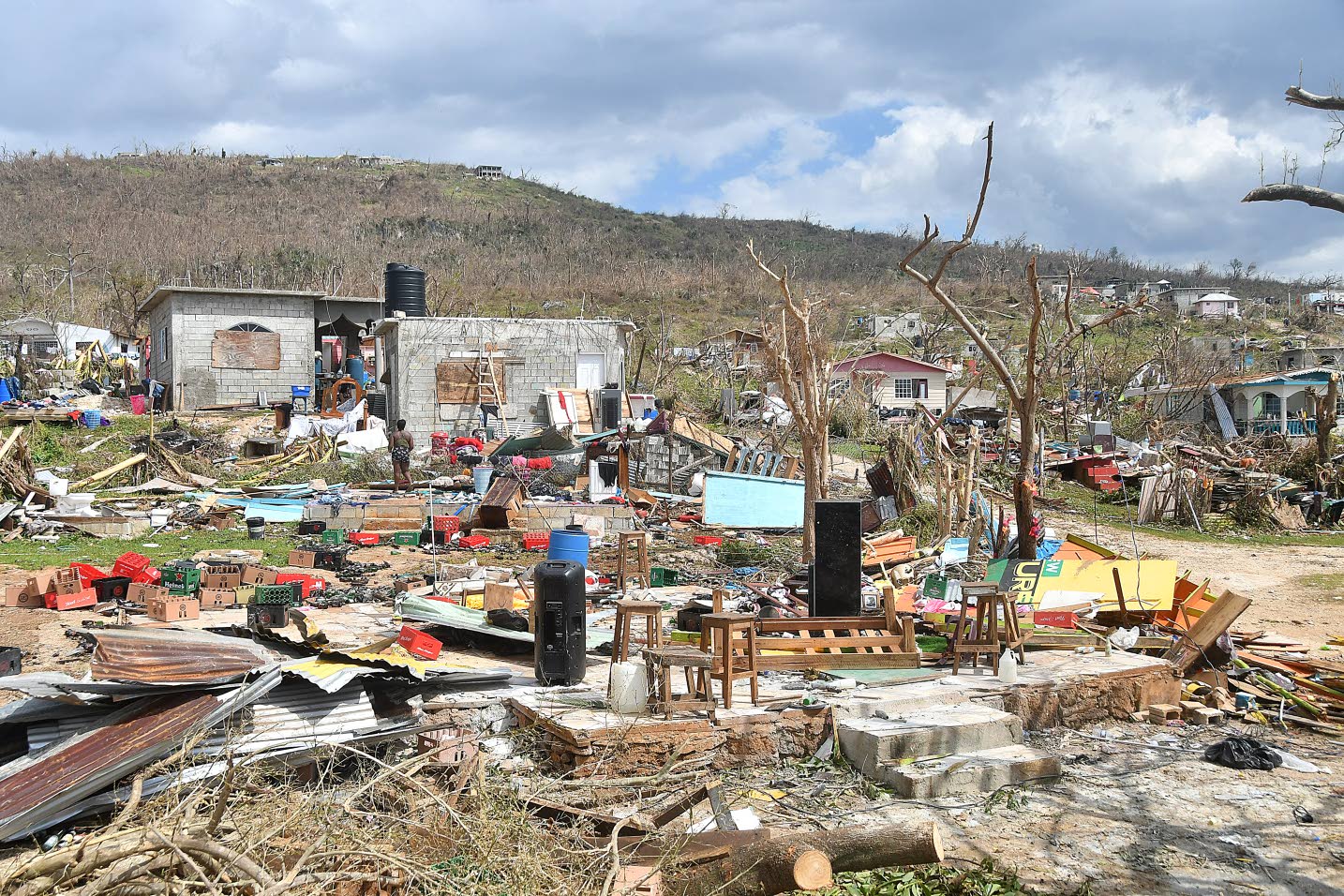
The value of the damage caused by Hurricane Melissa is estimated to be US$6-7 billion. (Photo: Garfield Robinson)

Priesnell Warrenl


