A total and complete disaster
Tearful Campbell proposes adopt-a-family plan to help those most in need in Westmoreland Eastern
HAVING seen the desolation facing residents of his Westmoreland Eastern constituency, Member of Parliament (MP) Dr Dayton Campbell has launched an ‘adopt-a-family’ initiative aimed at providing a direct link between potential donors and constituents worst affected by Hurricane Melissa.
A crestfallen Campbell told the Jamaica Observer on Tuesday that an assessment of his constituency found that some 2,000 houses were destroyed, leaving many constituents without food, water, and shelter.
According to Campbell, he conceived the adopt-a-family plan to not only provide short-term relief, but long-term support for the affected residents.
“I’m talking about houses where the entire roof gone, or partially, or they have been flattened. Because of that, this adopt-a-family initiative is not just carrying packages to an area and you say that a person may benefit and then other areas get ignored. I thought it wise to take a more structured approach to it, where we could identify the families that have been affected and then we could see if we can get persons to volunteer to adopt one of those families that can help them to recover,” said Campbell.
He pointed out that by adopting a family donors would be able to specify the type of family they were hoping to assist, and after the connection has been made, sponsors will then help, in whatever way they can, according to that family’s unique circumstances.
“They could say they want to adopt maybe a single-parent family with kids and we would identify the family, put them in contact with them, and so they can make their assistance to them. For the most part, I want to put the persons in contact with the families, as much as is possible now with the limited communication that is in the constituency.
“If you want to help them get back some clothes, or say there’s a mother and you want to help her get back some supplies so she can start back her livelihood, then that’s what you do. So it is wide, and I left it open because the reality is that no two individuals are exactly the same. And I didn’t want to use any criteria that would bar persons,” added Campbell.
He told the Observer that donors could also opt to purchase container homes that they could donate to their adopted family which would give them much-needed shelter.
“When I say adopt a family I am giving buying the house containers as an option. It can also mean that somebody wants to send a donation to Food for The Poor and partner with that organisation to build a house for the family but that would be a short-term plan, because we have a climate crisis and if we put back a lot of board houses, we’re going to have the same problem when the next system comes. But there needs to be a short-term plan as to how you get these people shelter,” reasoned Campbell.
The MP called for greater assistance for the residents of the area, warning that if conditions persisted, the area could see a plethora of health and safety crises ensue.
“We’ve seen mothers with children there and people washing their clothes in the drain. We can’t continue. We can’t live like that. There’s going to be a health crisis if we continue like that for much longer and I’m saying the national response of the country needs to focus on Eastern Westmoreland,” said Campbell.
In Parliament on Tuesday, a tearful Campbell pleaded for urgent Government intervention, describing the situation in his constituency as “a total and complete disaster”.
“The Maud McLeod shelter in Darliston, the persons there are sleeping on the desks that are within the shelter, not one mattress is at the facility,” he said, adding that women were without basic supplies and a three-month-old baby was among those sheltering in distressing conditions.
“The hurricane itself and the destruction that it has caused is a high-stress environment. To be hypertensive, have high blood pressure, and be out of your medication in a high-stress environment is a recipe for disaster — it’s a ticking time bomb,” charged Campbell.
“I have nothing but concern for the people that I represent and anybody that does not believe what I am saying take a trip for yourself and if it doesn’t cause you to have tears then you are not human,” he said, his voice breaking.
In his response, Prime Minister Dr Andrew Holness expressed sympathy and conceded that “no mechanism is perfect”, explaining that Hurricane Melissa’s shift to the west had complicated resource planning.
“When Melissa was coming, we thought that it would have hit the eastern end of the island. As it turns out, it went more southerly and westerly, so it’s very difficult to make the allocations, especially on unpredictable events such as weather events.”
Holness told the House that some relief supplies had been prepositioned, “particularly at parish councils and other such installations,” but admitted that “there was not prepositioning of aid at every parish.”
On the matter of shelter conditions, Holness was frank as he admitted that conditions in the shelters are not adequate.
“No Jamaican could say that…I have toured shelters on several occasions, not just in this disaster but in several others… but I think we can do better as a Government, and we should strive to do better,” added Holness as he rejected calls for the construction of dedicated hurricane shelters.
“We should not build purpose-built exclusive centres. We should build facilities that can withstand disasters that can double as shelters,” he said, explaining that many existing shelters “just did not withstand the hurricane.”
Jerome Williams contributed to this story.
A resident of Westmoreland Eastern surveys the area of her house which lost its roof during Hurricane Melissa. (Photo: Garfield Robinson)
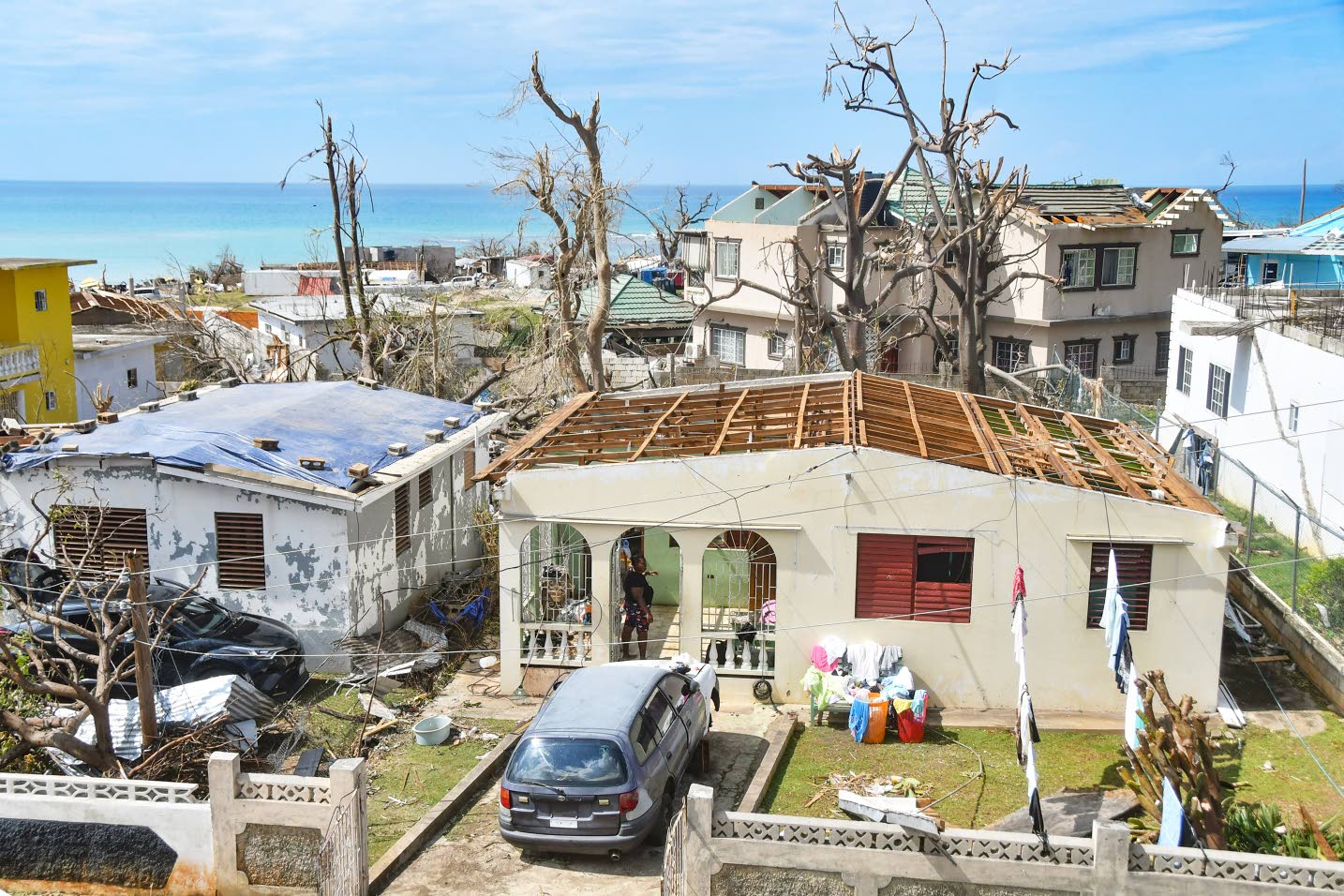
Evidence of the scale of Melissa’s fury is seen in Whitehouse, Westmoreland. (Photo: Garfield Robinson)