



Mental health support for hurricane victims
Local psychiatrists and psychologists join forces to offer counselling
Local doctors who specialise in mental health care have joined forces to provide therapy for victims of Hurricane Melissa which unleashed death and devastation on sections of Jamaica on October 28.
“The Jamaica Psychiatric Association and Jamaica Psychological Society have organised to be in those areas as volunteers. Members are volunteering and are working in conjunction with the roll-out of services there,” consultant psychiatrist Dr Saphire Longmore told the Jamaica Observer on Thursday.
“A lot of people are grieving right now all over Jamaica, not necessarily just based on the loss of lives, but just the general loss of our sense of our country, our vulnerability, and then you can break that down into the communities, into the families and the individuals. There is loss and grief at most levels in the communities that are significantly affected,” said Dr Longmore, a former president of the Jamaica Psychological Society.
“The natural stages of grief are denial, anger, bargaining, depression, acceptance and people will go through these stages. Sometimes it flows as it describes them or they might go through them conjunctively or some may skip a stage and then revert,” she explained.
At the same time, Longmore said it is important for people to get closure in relation to the loss of loved ones and to help with the emotional toll.
“The fact is that these are the stages that most persons go through. It is important, as best as possible, for that process to be facilitated and be coordinated in terms of how the individual and the family heals from the loss of their loved ones,” she said.
The official death toll from the hurricane’s rampage across south-western and north-western parishes has been put at 32 so far. Of that number, 26 deaths have been reported in Westmoreland Eastern. The authorities have also said that the police are probing other reports of deaths.
On Thursday, Dr Longmore pointed to the importance of closure to families of the victims.
“…it brings a significant amount of emotional farewell and that sense of a burial right. The whole burial process is almost like a ceremony that is done to go through the different stages of grief and bereavement and especially when you have an unexpected death and one that is associated with trauma, otherwise it is probably even more critical that a person is able to properly, in some way — even though it might be adjusted due to the circumstances — to have that sense of closure and a proper send off of their relative,” she said.
Dr Longmore pointed to the continued communication challenges which have been affecting Jamaicans in the affected areas and their relatives and friends outside.
“Communication is key, and there are a lot of persons… The [most] damage is along that track, and a lot of those areas that were difficult to reach and to communicate with even before Melissa and so you are having some of these communities, very deep rural, that persons are having a very difficult time to make contact,” she said.
“Perhaps we are having deaths along that track of the eye [of the hurricane] that we are still not sure about. It is a very disheartening feeling that even now, a week after the passing of Melissa, that you have individuals who may have relatives along that track, especially that they are not hearing from. That sense of grief does not have the closure to know what has happened, so you can’t fully move into say, ‘I have lost the individual and go the path of grief’, because there might still be some hope. But as the days go by there is now worry [and] concern about the outcome that if they did survive what state they might be in,” she added.
“There are varying stages and a graduated response, so to speak, that has to happen based on how this [hurricane] tracked across Jamaica and the level of intensity of the emotional damage that goes along with that,” said Dr Longmore.
Already there has been counselling in St Elizabeth with a free therapy session in Black River last Monday.
“It is not just that one parish that needs this type of intervention right now. Just like how the storm hard graduated effects and was very organised, it is the same way the response needs to be and organised,” said Dr Longmore.
“Where the hardest hit places are, the mental health response is going to be almost secondary to the basic needs for survival response. Those people are more concerned about food, water, shelter, clothing and security,” she added.
She said while the focus is primarily on survival and getting aid to people, their mental well-being is also a priority.
“That is the basic human need that needs to be met in the hardest hit places and at the same the acute trauma response to go in and establish a system for persons who may be reacting to the trauma,” she said.
“Some people may not immediately react, but the fact is that they are more concerned about survival,” she added.
Dr Longmore is also calling for support to allow children to play and learn in the affected communities.
“It is very critical for our children, especially the ones who are not back in school, to have some sense of organisation and activity and it may not have to be directly learning, but a sense of some sort of cognitive stimulation happening in this time. They are going to be very vulnerable and some of them are going to feel very marginalised when parts of the country and their age groups are returning to school and they are being left behind,” Longmore told the Observer.
She also suggested that volunteers can go to the affected communities and engage in reading, mobile play zones, as well as book and toy drives to give children “a sense of childhood and a sense of love and sense of play in their lives, especially at this time”.
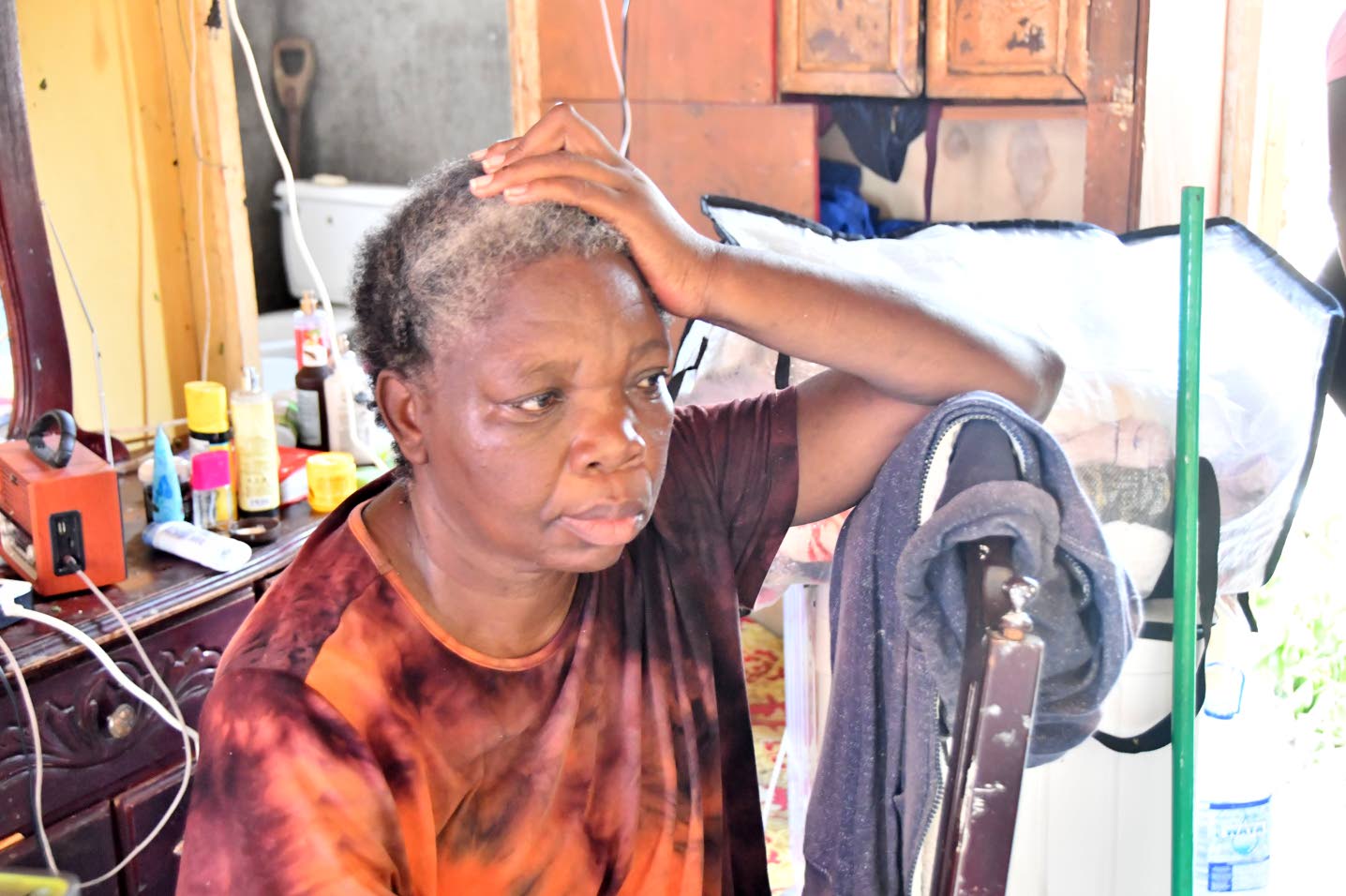
This senior citizen in St Ann reflects on the effects of Hurricane Melissa last week. (Photo: Naphtali Junior)


