



Nunes’ stable rises above hurricane woes, focusing on gratitude, resilience in the face of adversity
As Hurricane Melissa left its mark on Jamaica, trainer Anthony Nunes’ stable suffered significant damage, with six horses losing their roofs in the storm. However, Nunes’ response to the devastation was not one of complaint, but rather gratitude.
Hurricane Melissa made landfall on Jamaica’s south-west coast on Tuesday, October 28, as a powerful Category 5 hurricane. Caymanas Park, Jamaica’s premier horse racing track, suffered damage to five stables, electrical cables, as well as the broadcasting boxes, prompting Supreme Ventures Racing and Entertainment Limited (SVREL) to suspend live racing temporarily.
“It’s difficult to complain about anything on this side of the island or even at the racetrack,” Nunes said, his words reflecting a sense of perspective.
“Yes, we lost a roof over six of our horses. Yes, that side of the stable is not up and running yet; yes, that side doesn’t have electricity, but it’s difficult to really complain about those things when people on the western side of the island had lost their homes and some had lost their lives, and businesses destroyed.
“So it is difficult for us over this side to really complain about anything else. Everything else we have that is not right, right now I am sure it will be sorted out in the shortest time and we have to be extremely grateful on this side of the island that we don’t have what’s going on out west,” Nunes told the
Jamaica Observer’s The Supreme Racing Guide.
Miraculously, all 74 of Nunes’ horses were accounted for, with only minor bruises and scratches. His staff, too, emerged unscathed.
“The six horses are fine. Obviously, you know, we want to get the stables back up and running on that side, but as I said, I’m not going to sit here and complain. There are people who can’t take a shower, there are people who don’t have a place to sleep, and so that’s reality. What problems I may have at my barn right now are very minor to the people on that side of the island. I have 74 horses and all 74 horses are fine. There are little bruises and scratches, but nothing significant. Also, all of my staff is fine, which is great,” Nunes stated.
The storm’s impact on Nunes’ stable was significant, with the roofs being torn off six stalls on the side of a 25-barn set of stables. Despite the chaos, Nunes’ staff had acted quickly, noticing the roofs were about to lift and evacuating the horses just in time.
“It was the second half of the hurricane, and the grooms were actually on the range just checking things out and saw that the roofs were about to lift and they ran out of the way as it careened off one barn and onto the other side of the barn. So that was a bit of chaos at the time and nervousness of the horses, obviously, those who lost their roofs and the one that roof landed on the stable with the roof,” explained Nunes.
As the stable begins to recover, Nunes is focused on getting back to normal.
“One day at a time. We started to recover. The main barn has back electricity, and so that’s good. That side where the six stalls have no roof is, 19 horses have roofs over their heads. The problem is, there’s no electricity over there, and so the horses over there are a little more uncomfortable because it’s hot,” the three-time champion conditioner said.
Despite the challenges, Nunes is optimistic about being ready for the resumption of racing on November 15.
“Maybe not those six horses [that lost the roofs] as I doubt they will be able to run, but everybody else should be ready, especially with the resumption pushing back to the 15th and 16th. That gives us a little more time because we have just gotten back electricity. There are some stables at the park that don’t have electricity and so it is going to be difficult for those guys,” Nunes noted.
Nunes’ training programme was undoubtedly impacted by the hurricane, with the horses losing weight due to reduced feed and lack of electricity. However, he believes the extra time will allow his horses to recover.
“My training programme of the horses was impacted. During the period of the hurricane, you want to cut feed because they weren’t going to work for a couple of days at least, as you don’t want them to get colic, a stomach ache. That’s a life for a horse. It’s not like when a human gets a stomach ache. Also, the lack of electricity for the days they didn’t have, the horses lost some weight, but I mean, the horses are resilient, and they will bounce back, and they will start to put back weight,” he elucidated.
Nunes also made the decision not to administer Lasix to his horses during the hurricane, opting to prioritise their health and hydration.
“We didn’t give them any Lasix because we didn’t want to dehydrate them further, and so that’s why I felt that we needed another week, which the company has put off to November 15th and 16th. I think it’s a good thing, and I can see everyone coming around,” Nunes ended.
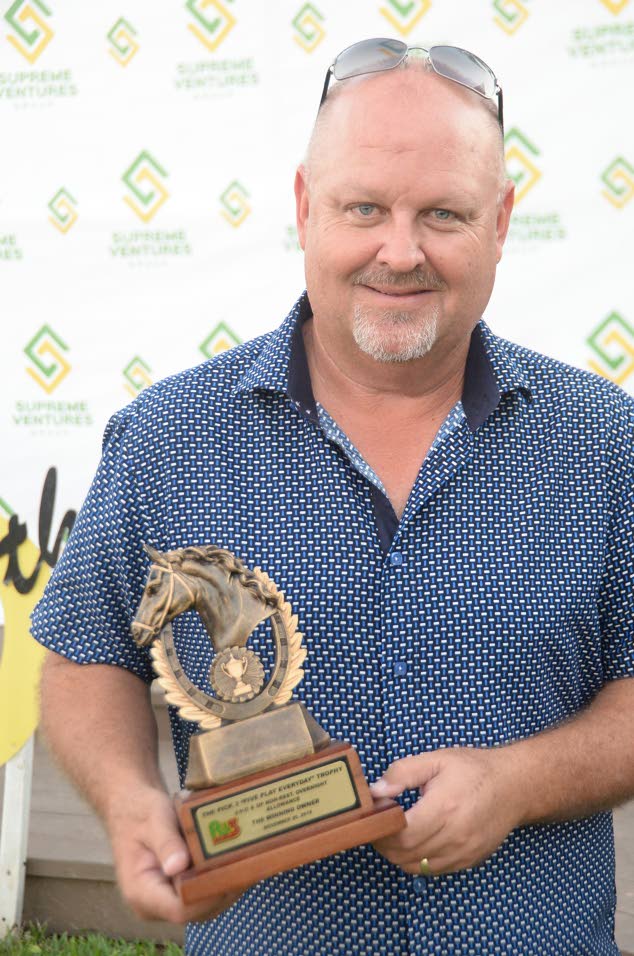
NUNES…the grooms were actually on the range just checking things out and saw that the roofs were about to lift and they ran out of the way as it careened off one barn and onto the other side of the barn.


