



SVREL bets on fractional horse ownership; Gov’t lobbying in fresh racing revival push
SUPREME Ventures Racing and Entertainment Limited (SVREL) is planning new strategies to boost interest in horse racing, unveiling a revival plan that includes creating a fractional ownership market for racehorses and lobbying the Government for financial reforms.
The dual-pronged approach aims to make the sport accessible to a new generation of fans and investors by allowing shared ownership of horses for as little as $10,000, while simultaneously pushing to increase prize money by having unclaimed betting winnings recycled into the racing ecosystem. This represents the latest and most significant push to revitalise the sport’s core economics and public appeal.
The initiative comes as SVREL, the operator of Caymanas Park and a subsidiary of Supreme Ventures Limited, concedes that live racing remains ‘not sustainably’ profitable, hampered by a critical shortage of an estimated 500 thoroughbreds.
“We have about, I think, 1,100 [horses]. But for live racing to become sustainably profitable, you need, I would say, about 1,500 to 1,600 horses,” said Gary Peart, executive chairman of Supreme Ventures Limited (SVL), in an interview Tuesday with the Jamaica Observer. Peart noted that the company has already stripped out significant costs from the operation but admits the company “still hasn’t reached to the level of profitability we want”.
The scale of the challenge is spelled out in SVL’s 2024 annual report. Its horse-racing segment lost $54.8 million last year, and while that was a slight improvement on the $61.7-million loss a year earlier, it shows how deeply unprofitable the core live-racing business remains. The loss has persisted even as racing revenue grew 9 per cent to $1.56 billion, revealing a fundamental cost problem that goes beyond just ticket sales.
Democratising the ‘Sport of Kings’
The centrepiece of the new strategy to bridge that horse gap and stem the financial losses is the introduction of fractional ownership, a model popular in major racing jurisdictions like the United States. The concept would allow hundreds of people to own a small stake in a single racehorse, dramatically lowering the barrier to entry.
“If you go and do your checks, I believe the Kentucky Derby winner… was owned by about 2,000 people,” Peart told BusinessWeek. “So what happens is that many more people can own a piece of a horse. So we try to encourage, hopefully you get to a point where with $10,000 you can own a horse. But you probably have about 1,000 people owning that horse.”
This model is already being piloted. Peart said SVREL will soon announce Girl Power, a syndicate of women formed to buy horses, as a tangible example of this new approach. The goal is to counter an ageing ownership base and attract younger participants who have been drawn to other forms of entertainment.
“Now with all the competition, you don’t have a lot of younger owners. And this is one of the ways to bring younger owners back in,” the official explained. “It allows them to get to understand the business. So when you understand the business, you get more participation.”
The Pursuit of Prize Money
While cultivating new owners, SVREL is also tackling the economic engine of the sport–prize money, or purses. Higher purses are essential to make ownership financially attractive, but SVREL argues it cannot unilaterally raise them without first strengthening the entire ecosystem.
To that end, the company is preparing to formally lobby the Government to redirect unclaimed betting winnings — funds that currently go to the Betting, Gaming and Lotteries Commission (BGLC) and into the central government’s consolidated fund — directly into race purses. Although Peart did not specify the annual sum, he argued vigorously for its return, stating the amount is “not a material amount for the consolidated fund” but would make a “big difference to the racing ecosystem”.
“It’s an opportunity for the Government to give it back. But not only to give it back, but to put it directly to purse. We as SVREL, we won’t take a dollar out of it,” he pledged.
This move, he argued, would accelerate the financial “churn” within the industry without costing the treasury a meaningful sum. Other suggestions from stakeholders include having the rent SVREL pays to the Government also directed to purses.
“So all of the different things that are done to try and move the purses outside of us as promoters are being considered,” he pointed out.
A Calculated Bet on the Future
In the interim, SVREL is not waiting for external owners to fill the gap. The company, in its role as “promoter”, has proactively purchased 10 to 15 horses for its own account to directly increase the horse population.
The company’s own experience with its small stable has provided a key data point to lure new investors: despite the inherent risks of injury and poor performance, they “basically broke even” under the current purse structure.
“It shows that the purse structure is competitive at its current level,” Peart argued, emphasising that the dream of finding an undervalued champion — a horse that could be worth millions — is a core part of the sport’s appeal.
Ultimately, the revival of Caymanas Park is a wager on two long shots: that fractional ownership can create a new generation of owners, and that the government will buy into the vision of a self-sustaining ecosystem. The operator’s bet is that at least one of them will pay off.
“Until we get harmony, the racing won’t get to its full potential,” Peart noted.
Despite Hurricane Melissa causing damage to the Caymanas Park facility, SVREL expects a swift return to normal operations. “We have damage there, but we have put out [crews] and we’ll restart racing, I believe, next week,” Peart said. He expressed confidence in the underlying resilience of the business, concluding, “We as a business will recover.”
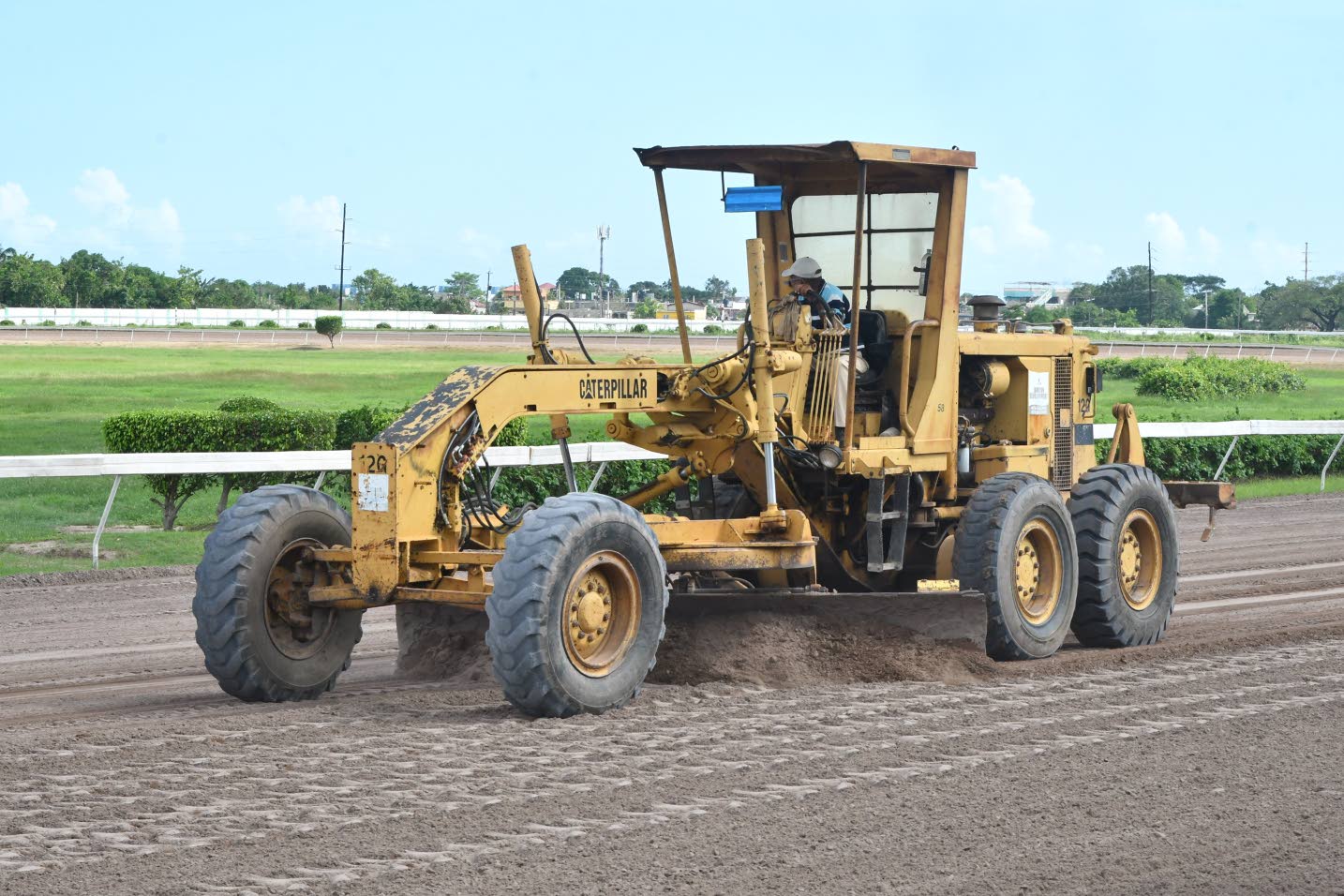
A tractor preparing the racing surface at Caymanas Park on Saturday, November 1, 2025. SVREL, the operators of the park are aiming to resume racing next week. (Photo: Karl Mclarty)


