



CAPACITY TO COPE
Debate continues about mental readiness of athletes for resumption of sports after Melissa
In the aftermath of Hurricane Melissa, which left widespread devastation on Jamaica almost two weeks ago, particularly in the island’s western parishes, the question of when sports should resume has sparked national debate.
Some say restarting competitions, such as the Jamaica Premier League (JPL), could bring a sense of normality and hope to a grieving nation. Others insist it’s far too early, given the physical and psychological toll of the disaster on athletes, coaches, and communities.
The organisers of the JPL have taken a cautious stance, saying the focus right now is ensuring the well-being of all players and staff before even considering resumption. Communication lines remain down across much of the island, and several clubs, including Montego Bay United and Treasure Beach FC, have reported severe damage to their home venues and that players have also been personally impacted.
While those logistical hurdles alone make restarting sports a challenge, the psychological impact adds another. Clinical and Sport Psychologist Dr André Bateman, PhD, offered a nuanced perspective on the issue.
Bateman was careful not to offer a definitive timeline for when sports should resume, saying that “there are so many variables at play”.
“The main issue is the fact that the hurricane affected the island disproportionately,” he tells the
Sunday Observer. “The western side was much more affected than the eastern side. The effects, both practical, physical, and mental, are probably greater for people on the western side. As a result, their adjustment to life after the hurricane could look very different.”
That imbalance, Bateman says, has created a psychological divide in how Jamaicans are processing recovery.
“We are at an impasse where people on the eastern side are just ready for life to continue, whereas people in the west are still struggling,” he says. “I have had that experience personally because my family is in the west. When I saw them for the first time on Monday and told them that I’m going back to work, they looked at me like, ‘What do you mean work? We need to recover from the storm.’ ”
This disparity stresses the importance of sensitivity when considering the resumption of national sporting events.
“I do think that the people in the east, generally speaking, are not as sensitive to what the people in the west are facing,” Bateman says.
Even athletes based in relatively unaffected areas may still carry emotional burdens from the storm, especially if they have family or friends who lost their homes or lives. In some cases they may even experience survivor’s guilt. This is the distress that arises when someone feels guilty for surviving or being spared while others suffer.
From the perspective of organisers, however, the pressure to resume is real.
“Organisers have a responsibility to get things back on track,” Bateman says. “If we sit down and wait for everybody to be ready, we’ll never start anything.”
But Bateman warns that the unique stress athletes already face in competitive environments can amplify post-disaster strain.
“Sports in itself is designed to be stressful,” he says. “If it wasn’t stressful, then anybody could do it. Athletes are a group of people who, every single day, they are put through rigorous stressful environments and the athletes who are better at coping tend to be the most successful.
“However, athletes also must deal with life issues, such as a hurricane, in the same way that the general public does. It places an additional toll on the capacity of athletes to cope. Whenever we go through stressful or even traumatic situations, for human beings, depending on the persons, it will take a different amount of time to recover and get back to somewhat of normal functioning. That is because stressful events place a demand on our capacity to cope. If that demand is in excess of our capacity to cope, it can become traumatic.
“These types of traumatic responses can include things like struggling with intrusive thoughts, having hyper arousal, and struggling with hyper vigilance and interference with their cognitive and emotional processes and avoidance to any reminder of the situation the athlete themselves might try to avoid and not deal with it, and all of those things will directly or indirectly affect their performance on the field of play.”
So how can athletes begin to heal and prepare to return safely to competition? For Bateman, the first step is communication.
“Speaking about their individual circumstances can go a long way in terms of recovery,” he says. “One of the challenges that we’ve been having in the mental health space is that people tend to avoid talking about or dealing with not just the events that they’ve been through that might be traumatic but their thoughts and feelings about the events. Just talking it through with a friend, with a professional at varying degrees — high schools have guidance counsellors, and of course outside of the school system there are clinical and counselling psychologists and so on.
“But keeping it all inside and not talking about it and avoiding the re-experience of it can make matters a lot worse. Obviously, an additional layer is to try to seek help, outside of professional help, to deal with it.”
However, therapy and counselling services can be costly, especially for athletes and families who have lost homes or livelihoods. Bateman says the Government and sporting authorities could play a vital role by providing accessible mental health support.
“I do think that could be a very good option — providing group therapy, especially for people and athletes who have been through this traumatic situation — and I’m thinking mostly of those on the western side — providing group therapy for teens and so on. It would be very very helpful, and if the Government was able to make that accessible to, more specifically, the sports sector, that would go an extremely long way to helping us recover from this.
“One of the things that I would recommend is that if organisers are pushing for the resumption of regular sporting activities, then infrastructure needs to be put in place to help those who are still struggling to cope so that they can perform at their best when sports resume.”
“Yes, but that is part of the problem,” he says. “Wanting a distraction is a form of avoidance behaviour, and that’s a symptom of post-traumatic stress disorder, for example. Distracting yourself is a common term you hear, ‘Oh, I just wanted to distract myself from the difficulties I’m going through in life.’
“But what people don’t recognise is that, that makes things worse. Trying to distract yourself makes things worse because what you’re doing is you are avoiding dealing with the cognitive and emotional damage you’ve experienced throughout the traumatic event.
Still, Bateman admits there’s a fine line.
“For athletes, sport is extremely important, and for many of them it’s a part of their identity,” he says. “So making sport available for them again can also be somewhat of a therapeutic experience because it allows them to re-engage with what is important to them. One of the key determinants of psychological health is a person who can continuously engage in activities and experiences that are important.”
For now, the consensus, even with sports’ organisers, appears to be patience and compassion.
A view of the Montego Bay Sports Complex, home of Jamaica Premier League’s Montego Bay United, with the playing surface now covered in mud after the passage of Hurricane Melissa on Tuesday, October 28. (Photo: Karl McLarty)
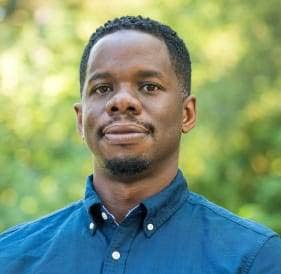
Clinical and Sports Psychologist Dr André Bateman, PhD.


