



A 9-year-old’s message to PM Andrew Holness
Road breakaway forces children, residents to cross rivers, trek through hills in St Andrew
ON a drive through Redlight district and surrounding communities in east rural St Andrew last Thursday, the Jamaica Observer spotted a group of children gleefully running down a hill after school. But, instead of their usual school-appropriate footwear and socks, they were all wearing Crocs shoes and slippers — an unusual sight that immediately piqued the team’s curiosity .
The children, some of whom live in Middleton district, explained that they have to switch to the more casual footwear so they can cross a river to get to school. They said Hurricane Melissa, which battered sections of Jamaica in late October, had washed away several sections of the road at the 17 Mile Post leading to Newcastle and other areas, forcing them and members of affected communities to take a rougher route that requires wading through water just to get to school.
“The hurricane was terrible because we [have] to cross the river every day, and our road is destroyed,” said a nine-year-old girl who attends Craighton Primary School.
She shared that she lives in Middleton district and, before the Category 5 hurricane, she would travel to school via a motor vehicle. However, that is no more. Instead, she has a new daily routine.
“When you cross the river and you reach [the other side], you can change your slippers and Crocs and put on your socks and shoes,” she shared, noting that upon leaving school, students remove their shoes and don Crocs or slippers to again cross the river.
“We do not want to get our shoes wet,” she explained.
The nine-year-old girl said she was scared the first time she crossed the river, but not so much anymore. While her fears have subsided, she said she does not want to continue using the river to get to school.
She questioned if her concerns would be heard by Prime Minister Dr Andrew Holness and stated she had a message for him.
“I was going to ask him when he’s going to get our road fixed because we don’t want to walk every day, because if somebody is sick, how [are] we going to get them to the hospital?” she questioned.
An 11-year-old boy from the same educational institution also shared similar concerns, especially for his friends, who he said live in a community called Settlement and were impacted by the hurricane.
The boy said that a landslide near his home in Redlight district scared him, and when he came out the day after the storm the damage was even more frightening.
“There were stones in the yard, and there was mud at the back of the house, and the rocks [were] falling in the night. When the storm was finished, I took a walk to explore, and trees [had] fallen down, light posts [were] broken, and the road go into the river,” he recalled.
The 11-year-old said some of the roads have been cleared, and he is happy he can go back to school as he works towards his dream of becoming a policeman. However, he said he is sad that landslides and breakaways, which have affected some of his friends, have not yet been fixed.
Member of Parliament for St Andrew East Rural Juliet Holness, in multiple videos on her social media accounts, shared that she is working to assess all affected areas and clear landslides, where possible. She stated that the damage is extensive, with landslides, road breakaways, flooding, and fallen trees in many communities.
“My team and I continue to assess the full extent of the damage and work with the relevant agencies to restore access, and deliver relief, and begin rebuilding. My thoughts remain with everyone affected, and I thank you for your strength and patience as we push forward,” she wrote in a post showing roads affected by Hurricane Melissa.
As the Sunday Observer journeyed deeper into the hills last Thursday, the team saw tractors clearing debris from sections of the road. When the news team approached EITS Café we were told that the road up ahead had eroded and could only be accessed on foot. There the team met Kelvin Henderson, who shared that while the situation does not impact him greatly, he feels for the children and residents on the other side.
“I would like [the Government] to provide a little main road for the youth them or try to fix back the road because it kind of struggling on the youth to walk from up there so to get a bus right here in the morning. And, for example, if somebody get sick up there [Newcastle and beyond] it ago difficult because the only option we have is either to walk from up the hill to come here so or we have to go down through the next side of mountain, so really and truly a road is speedily needed here for the drivers in case of an emergency and for the school kids,” he told the Sunday Observer.
A member of the School of Vision Rasta Camp, Iroy Miller, sat at a section of the roadside near EITS Café with two small gas cylinders beside him. He explained that he had carried the cylinders from the camp and trekked through a narrow pathway just above the breakaway at 17 Mile Post to reach the road, where he was waiting on a resident with a bike to transport them to Kingston.
Miller said the breakaway has made it increasingly difficult to move supplies for his roots drink business. With the road severed, he can only transport small amounts of items at a time across the hillside above the collapse — a slow, exhausting process that has significantly reduced his output.
“When we bring them off the hill, we have to be right here. From [the other] day we can’t even carry out a whole heap of roots because we go [Montego Bay] and Falmouth and them place deh, and we cannot move because the road is rough and the cart stuck over there [the rasta camp] and can’t come this side to move, so we got to do we thing in small amount same way.
“We have to carry them from way around rasta camp, right around here, put them here, and then bring them back. When we coming from Kingston, it’s the same thing,” he shared, pleading for a temporary fix.
A resident of Middleton, Omar White, shared that residents are planning to create a makeshift bridge to improve access until the Government can intervene and urged others in affected areas to do the same. He said he had just walked through a river with herbs and roots, paying a few men to help him carry the items because he can no longer do it alone.
“Jamaica needs to put hands and heart together and try to fix this because it is a massive problem,” said White.
When the Sunday Observer crossed the breakaway through the hills, the team encountered a man who identified himself as Kayan Barrett. He shared that he played a hand in building a guest house that now sat destroyed at the foot of the hill.
“As you can see, everything [is] gone. The last thing I did was a [set of] stairs inside the house, and everything [is] gone. It surprised me,” he said.
Barrett said he was sent several videos of the eroded land, but this was his first time visiting the area. He said he could not believe his eyes as he assessed the damage.
“It was a nice place, but nothing is left…It surprises me to know [that] all of the land [is] gone. If somebody did tell me say all of the land did a go move, I wouldn’t believe it,” he said, giving thanks that no lives were lost, but demanding urgent action to address the area.
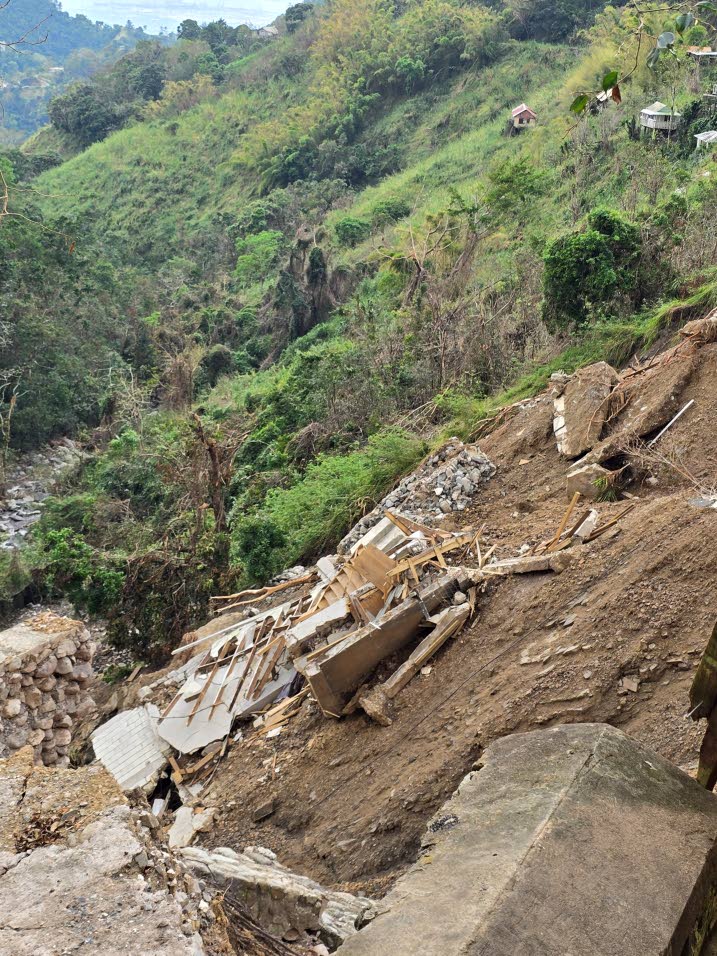
A landslide at a section of the main road leading to Newcastle, St Andrew, destroys a section of the road. In the rubble is a guest house. (Photo: Karl Mclarty)
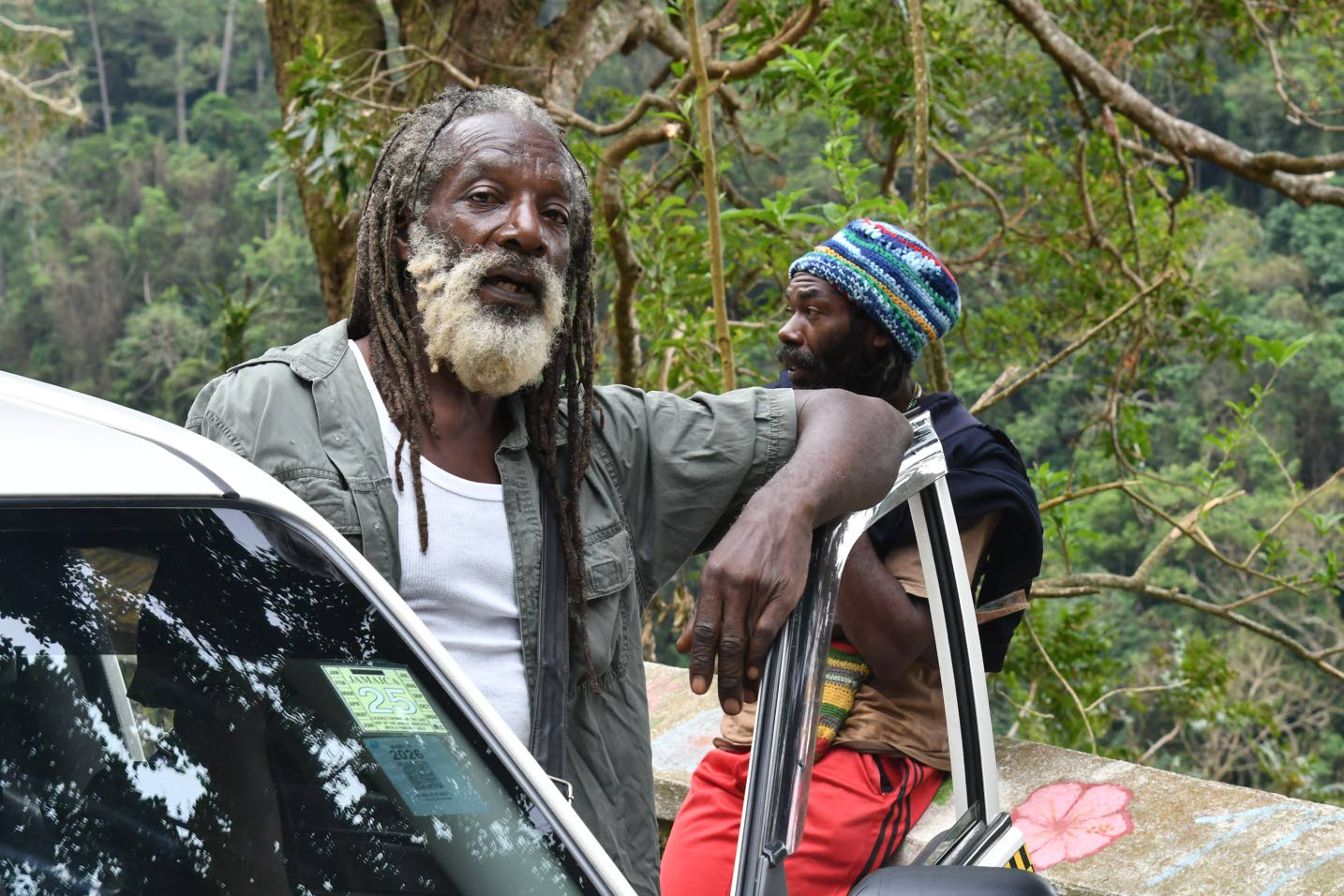
Omar White, a resident of Middleton, St Andrew, speaking to the Jamaica Observer team last Thursday.(Photo: Karl Mclarty)
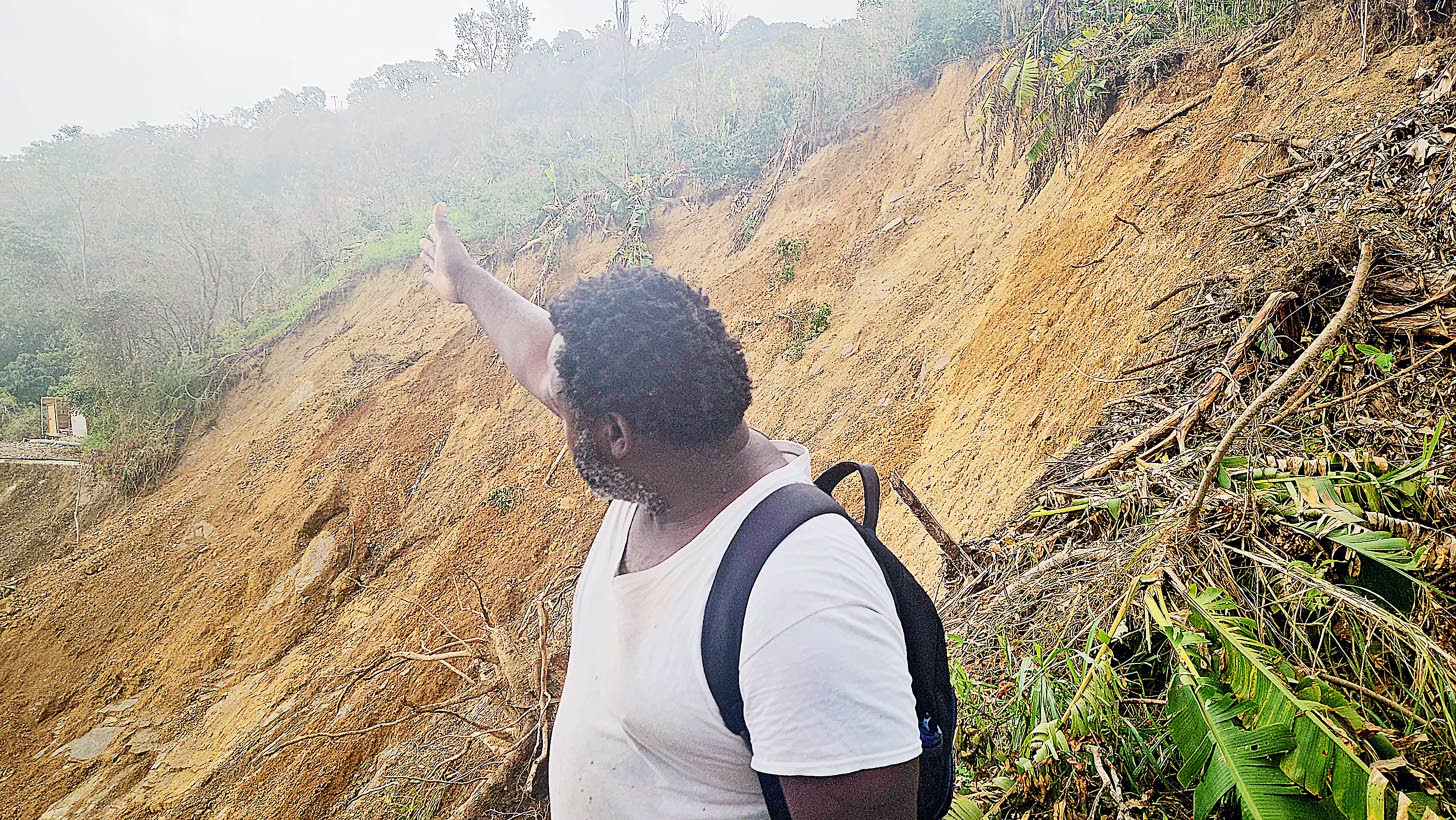
Kayan Barrett points to where a guest house he once worked on was relocated to after a massive landslide broke away sections of the road at 17 Mile Post near Newcastle. (Photo: Tamoy Ashman)

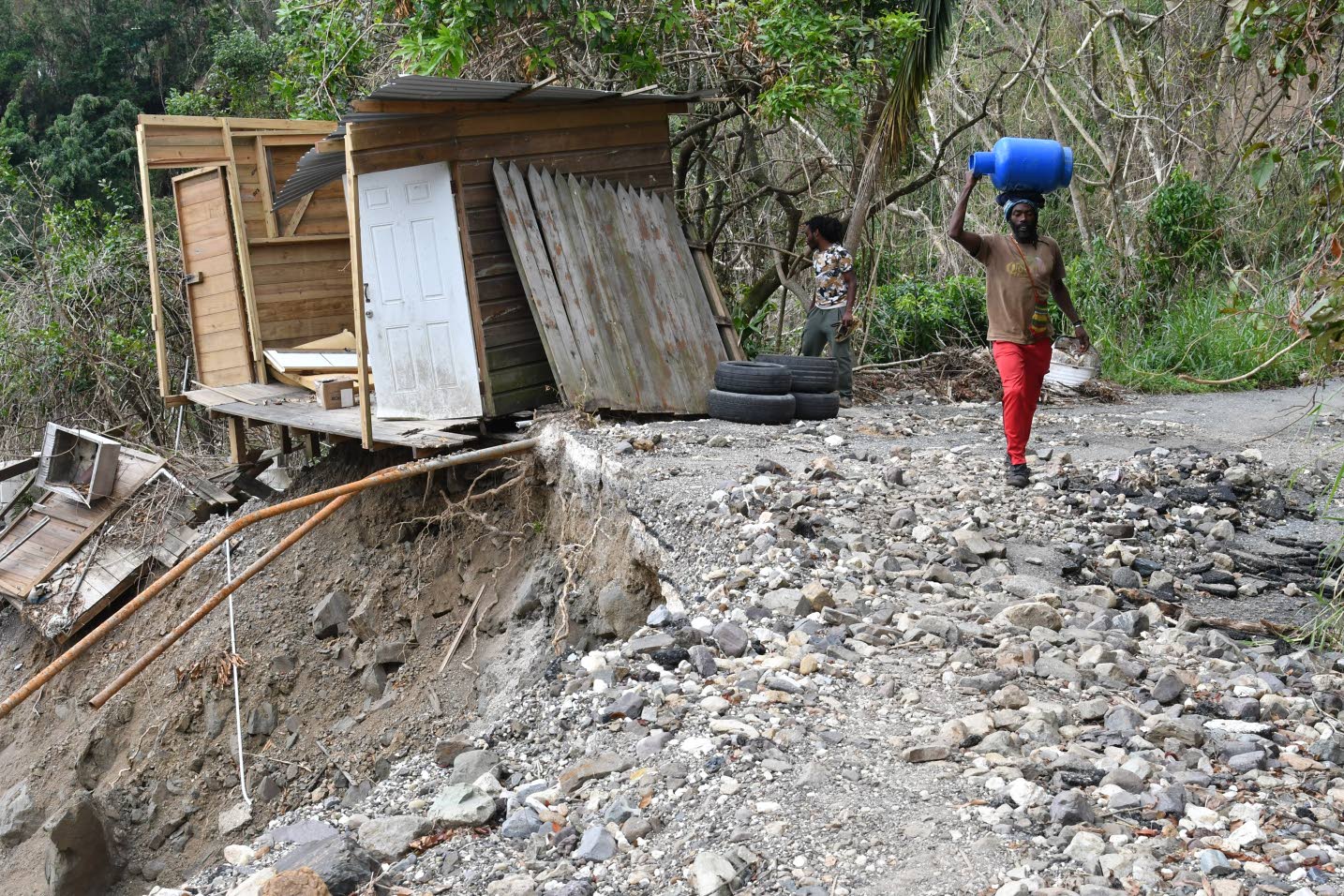
Iroy Miller walks along a section of a breakaway leading to Newcastle, St Andrew, with a gas cylinder on his head. (Photo: Karl Mclarty)


