



Disappearing houses
Content residents despair as groundwater swallows homes
LIVING in Content, Manchester, Horace McFarlane is no stranger to flooding. But staring out at the zinc roof of his house in the distance — the only part of the structure still visible as water swallows sections of the community — he says all he can do now is try to keep it together.
“I used to live down there in Content District but I don’t know, it’s not a district anymore — it’s a beachside,” he said, pointing to the blue-green water that has ruined his home.
McFarlane was among dozens of onlookers gathered to see the community which was flooded, not by rain, but by rising groundwater which, over the course of several days, rose so high that residents can now only make out the roof of their houses.
The phenomenon has drawn so many visitors that vendors have begun to set up shop in the area, selling jerk chicken, snacks, and coconut water.
Amid the bustle of morbid curiosity McFarlane, fondly called Mr Mac, sat quietly in the back of his van and pointed out a white refrigerator just at the edge of the water, along with a blue barrel, indicating that both items belong to him, having floated out of his residence.
It’s not the first time his home has been flooded by groundwater but McFarlane, who has lived in Content for more than 20 years, told the Jamaica Observer he never expected it to be this bad. In fact, the number of houses impacted up to last Thursday stood at 15.
“About 2002 we had a series of rain, and after the rain all the water from the road run down the gully and we noticed it started coming up…right up until it started coming into the downstairs of my house, and we watched it until it reached about the seventh step and [receded]. At that time I was the only one that got affected,” he recounted.
This time around, the incredulity of onlookers is somewhat shared by McFarlane.
“After the [hurricane] I did some cleaning up and went to my bed; I didn’t see any sign of water. I get up early in the morning and I hear water, so I said to the people downstairs, ‘It looks like you left a pipe on and the water come back.’ You see when I opened the balcony door and look? I was looking on the water down there,” he said, pointing to what onlookers are referring to as a river.
The flooding occurred days after the passage of Category 5 Hurricane Melissa, which was forecast to bring up to 30 inches of rainfall to the country.
The volume of rain has also left residents of several communities in St Elizabeth, including sections of the upper Black River Morass near Santa Cruz, on edge as groundwater continues to rise, posing a threat of flooding which has revived memories of the 1979 flood that swallowed New Market in St Elizabeth and led to the eventual development of Lewisville, a few miles from New Market.
McFarlane said upon realising the danger he immediately went to check on his chickens and rabbits in the backyard, moving them out of harm’s way.
“When I moved to their pens the water was at my knees… I was hoping that it was going to stop. Like before, we watch it till it reach the seventh step and when we saw it reach the eighth… we started to panic, and pack up things,” he said.
McFarlane sent his refrigerator, washing machine and other items to safety in one trip via a pickup truck. He also moved his bed. However, by the time the pickup truck returned for a second trip some time later, it was too late to do anything but elevate what was left and get out of the house.
The front of his home is level with the road but the back is elevated, with a basement room underneath. McFarlane believes the extra height is the reason his family was able to escape the rising water.
“That’s why we escape it. It never come so fast the first time but it came really fast this time, and it came on us overnight. If the house was the level of downstairs and we lived there, it would have come in on us…” McFarlane said.
He had been preparing for some amount of water to enter the house, and his family had moved some items to the upper levels, but nothing of the magnitude they are now experiencing was expected.
“I never imagined that it would be like this, so right now [I have] a bed frame, dressing table, and chair pack up on some drums [in there], and all of those things get a beating,” he said.
Pointing to his zinc roof, McFarlane explained to the Sunday Observer that it was brand new, having been installed after Hurricane Beryl in July 2024.
“It’s just after the last hurricane that I repaired it, put on that new roof, new ceiling. And it’s just like I take that money and threw it away because the workman said I have to redo all the electrical work and the ceiling if I go back there. But I don’t want to go back,” he said.
Citing trauma from the incident, McFarlane explained: “My wife says she doesn’t want to go back there.”
As observers came and went, many of them commented on the turquoise colour of the water, likening it to a beach. But for McFarlane, it’s a painful sight. Holding up a paper bag full of medication, he said: “Right now I am [living] at a friend. My wife is somewhere else and my daughter is somewhere else, that’s how we split up… I am trying to talk and smile. I don’t want to think about it because I am a sick person… all this medication is for [high blood] pressure, sugar [diabetes], [poor blood] circulation… I can’t work like before, to start again… I can’t do that.”
Head of the Water Resources Authority Peter Clarke explained the flooding phenomenon in a press briefing last Thursday.
“There is an aquifer. Water is flowing underneath the whole of those lands and properties but it is not the normal aquifer that a lot of you are accustomed to, which is a more sand/earth aquifer — this is more limestone. Because of the limestone, there are a number of caves and conduits that are underground so the groundwater has been flowing into the area,” Clarke said.
Explaining that groundwater advances very slowly, he said this, combined with the intense rainfall leading up to and during the passage of Hurricane Melissa, has caused the overflow. Groundwater measurements from the Content borehole indicate that between September 25 and November 3, Jamaica’s groundwater levels increased by about 100 metres (330 feet).
Clarke explained the water is reaching the surface through sinkholes, which usually pull water away from low-lying areas, but are now operating in reverse, pushing water up.
“The aquifer, in simple terms, filled up, and since it can’t go forward as much, it has been rising instead,” Clarke said.
Further up the road from Content, nearer to Kendal, motorists parked their cars and flocked to see what appeared to be a gushing overflow from the flooding in Content. That overflow has turned what used to be fields into three large water basins, with the tops of trees just visible above the water.
Parties interested in assisting the McFarlane family can reach Horace McFarlane at (876) 771-8925.

The tops of trees peek out above rising groundwater in Content District, also called South Kendal or Kirkvine in Manchester.
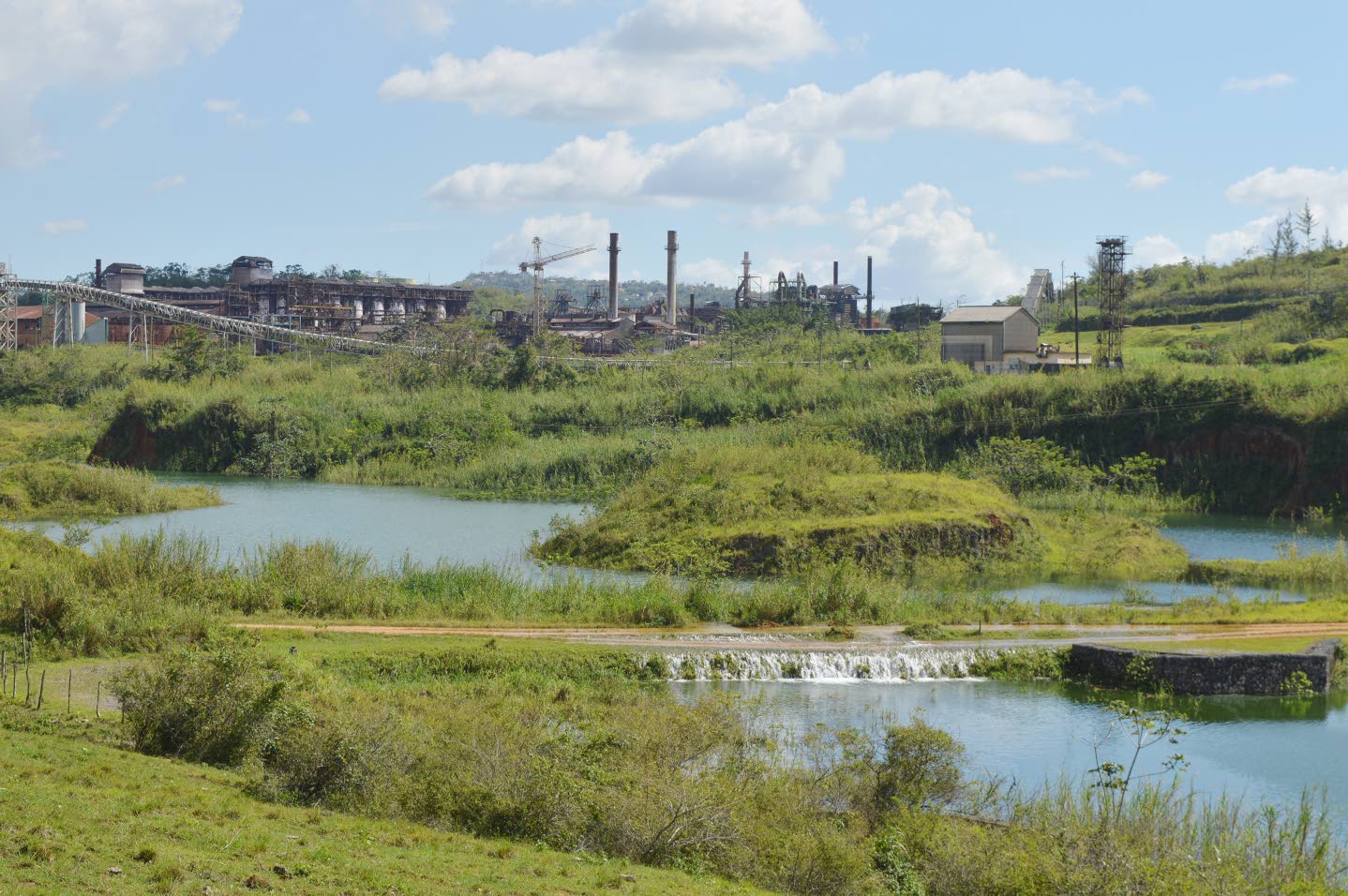
Groundwater rushing over a dirt road, inundating low-lying fields in Content District.

Managing director of the Water Resources Authority, Peter Clarke, gives an update on the flooding in Content, Manchester, caused by a rise in groundwater, during a Special Press Briefing on Hurricane Melissa recovery, held at Jamaica House in Kingston, last Thursday.(Photo: JIS News)


Horace McFarlane points to the zinc roof of his home in Content District, Manchester, which is now submerged in rising groundwater. (Photos: Dana Malcolm)
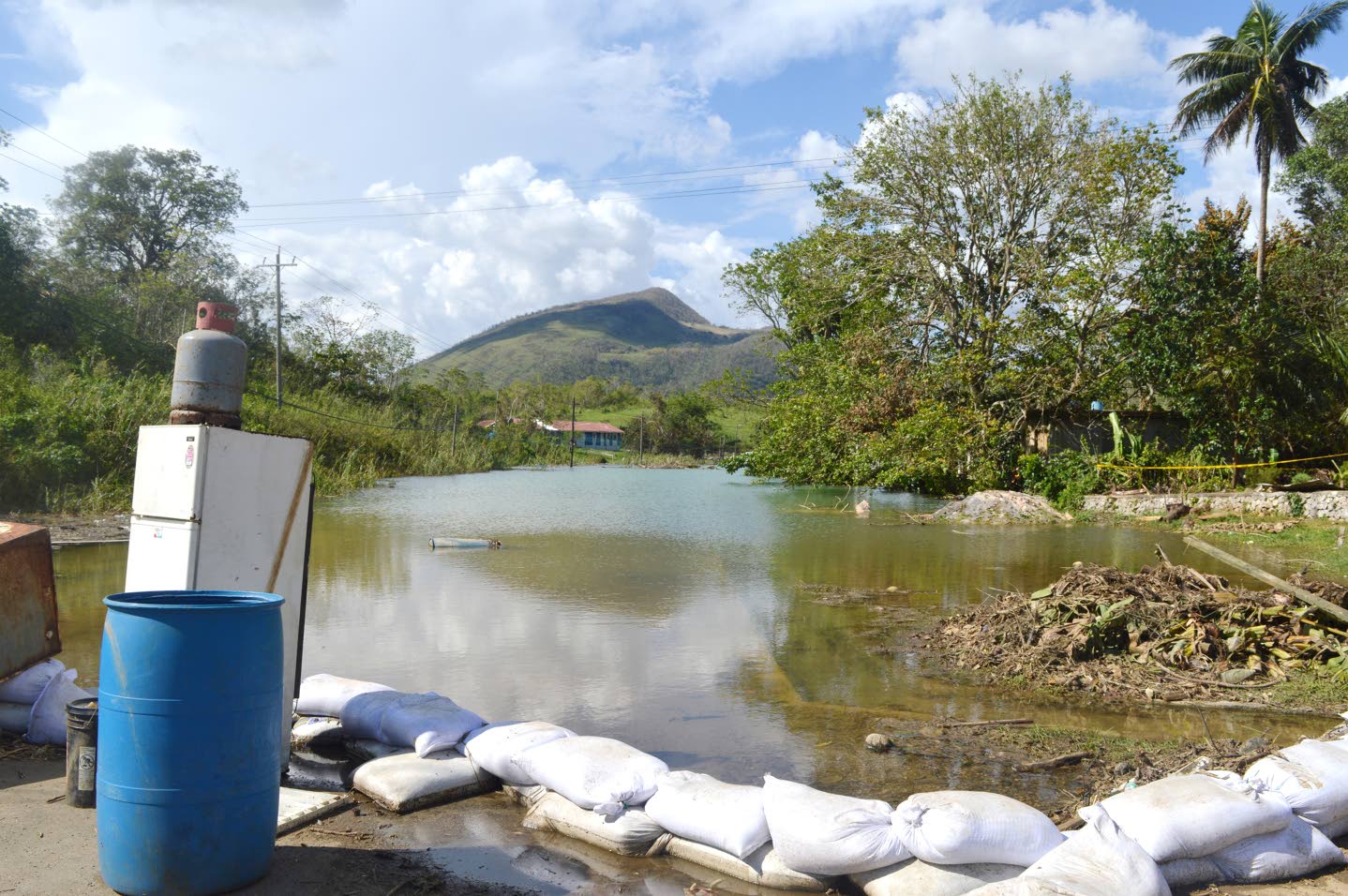
Horace McFarlane’s refrigerator sits at the edge of a pool of groundwater in Content District, Manchester, having floated out of his home.


