



Push for financial relief grows after Melissa
IT’S shaping up to be a bleak Christmas for many individuals and small business owners in eastern Jamaica, who are now facing financial strain, not only from personal losses but also from stepping in to support recovery efforts in the west.
In recent weeks, the Small Business Association of Jamaica (SBAJ) and the Young Entrepreneurs Association (YEA) have both urged the Government to extend support to small business operators through tax breaks and targeted financing, while individuals continue to call for loan moratoria and leniency from financial institutions. Their calls echo growing frustration among entrepreneurs on the ground who told the Jamaica Observer they are stretched thin after weeks of self-funded relief work in communities still awaiting formal Government assistance.
“To get ready for the hurricane, I spent over $50,000 on essentials like food, water, and supplies and made sure the house was as secure as possible with tarps and other materials. When the storm suddenly changed course and hit my family’s homes directly, causing roof damage, loss of livelihoods, and even a life, I had to jump in to help. I ended up spending close to $150,000 of my own money putting together care packages and delivering them,” Nickeba Dunkley shared with the Business Observer.
Dunkley, though not a business owner, estimates she has spent close to $400,000 on relief efforts, with the remainder of the funding coming from small donations.
“It’s definitely been a big financial hit, but at the time, helping others just felt like the right thing to do. I’m worried about monthly expenses for now, but I’m a hustler; I’ll bounce back every time,” she said optimistically.
The situation highlights that while many in the east were spared physical damage, their pockets were not. Some individuals may also find themselves ineligible for loan moratoriums due to the lack of evidence showing direct impact from the hurricane. One individual, who declined to be identified, admitted that their credit cards were maxed out in the aftermath, a reflection of the growing financial strain not only on households but also within small businesses managing tight cash flows.
“Honestly, we’ve been swiping that card and not looking at the charges, which is not ideal, but the only way we can get through is by helping each other. And we’ll make the money back at some point; this is literally a matter of life and death,” expressed Nicolette Richardson, owner of Growth Consulting, a small business.
“I’m always struggling with cash flow; that is always an issue, and the credit card rates are high. My credit card is maxed out, but we still have to help,” shared Carolyn Rose, owner of Liberton, while speaking with the Business Observer.
Richardson admitted that she is worried some of the growth plans she and her husband had for their businesses will now have to be put on hold, and while she remains hopeful, she acknowledged concerns about profitability. There are some businesses, however, that are also impacted by way of refocusing from certain services, putting some businesses at a complete standstill while they are expected to meet employee compensation, which adds another strain.
“Business expenses and overheads remain the same or increase all while the business is in negative. All the above, coupled with the increased spending, from preparing for the hurricane to assisting with relief and giving back ‘social responsibility’, expressed Shudene Ramsay, CEO of Ramsay’s Professional Services Limited.
Another business owner, Nastassia Brown, who operates Kingston’s Catch, a weekly seafood pop-up at Summit Food Village, was forced to halt operations as Hurricane Melissa struck in the middle of her service week. The disruption meant a direct hit to revenue, as each missed Thursday affects the business’s cash flow. Preparing for the storm and later participating in relief efforts also brought unexpected out-of-pocket expenses. Drawing on her project management experience, Brown has been helping to organise relief efforts while managing her own business losses. Still, the dual pressure of reduced income and increased responsibility has taken a financial toll.
“Even though I have my full-time income, I still have business responsibilities, payroll commitments, and personal household expenses. I’m making it work, but I’m definitely paying closer attention to budgeting and prioritising essentials. I am being intentional with every decision to ensure I maintain stability while still fulfilling my responsibility to help where I can,” Brown said.
These small business owners, though never formally called upon, said they felt a sense of duty to help, recognising that the public often looks to entrepreneurs to step up in times of crisis. For Brown, however, the main concern now is maintaining momentum. In the meantime, many have admitted that the upcoming Christmas season feels uncertain. For some, the usual festivities will take on a quieter tone as financial strain and emotional fatigue linger in the wake of the hurricane. Dunkley shared that she is choosing optimism despite the challenges, noting that while big spending may have to be scaled back, the season will still be about family and love. Brown described a similar sentiment, saying this year’s celebrations will likely be “more meaningful and less material”, with a focus on gratitude and community rather than gifts. For others, however, the mood is far less hopeful.
“Christmas is going to be gloomy for sure. There had already been less consumption for the season in the past years, where several small business owners have still been struggling, but now it’s going to be worse because the people are in survival mode,” said Ramsay.
In Parliament on November 4, Prime Minister Andrew Holness indicated that the Government has already activated fiscal and financial instruments to aid in recovery and is engaging international development partners for additional support. He outlined that cash flow assistance to households, emergency social programmes, concessional financing, and targeted industry support will form part of the economic response. While the prime minister noted that help for small businesses is forthcoming, details have not yet been provided. On Sunday, the Young Entrepreneurs Association of Jamaica (YEA) outlined several recommendations for consideration, including tax relief measures and targeted financing for micro, small, and medium-sized enterprises (MSMEs). Among the proposals is the establishment of an Emergency MSME Stabilisation Fund, to be administered through the Development Bank of Jamaica or the EXIM Bank, offering low-interest recovery loans or grant-loan hybrids for businesses directly impacted by Hurricane Melissa. The YEA also recommends temporary tax credits or write-offs for small businesses that contribute goods, services, or labour to the national recovery effort, as well as the waiving of GCT on essential recovery-related materials and services.
“We’re going to try to put together a little stipend; it’s not a pay. We will provide a stipend to assist the restart of economic activity through the clean-up,” Prime Minister Andrew Holness announced in the Parliament on November 4. “The programme is being developed; we will have to budget it, but you can start to prepare for that programme.”
The calls for financial relief have not gone unheard, with several players in the financial sector moving to ease the pressure on customers affected by Hurricane Melissa.
The National Housing Trust was the first to announce a moratorium on mortgage payments for contributors directly impacted by the storm. Soon after, other institutions followed. First Heritage Co-operative Credit Union introduced a three-month moratorium on loan payments for its members, while VM Building Society announced a loan moratorium of up to six months, along with additional financial support measures for members whose homes or livelihoods were affected. Scotiabank Jamaica has also launched its Client Assistance Program (CAP), which allows eligible clients to defer loan and credit card payments for up to three months to help ease financial strain during the recovery period. Applications close December 31, 2025. However, the bank has noted that while payments may be paused, interest and premiums will continue to accrue and become payable later in the loan cycle. Customers not directly impacted are being encouraged to continue regular payments to reduce their debt. Jamaica National Bank has likewise invited customers to visit branches to discuss relief options, including loan moratoria of up to six months. Meanwhile, microfinancing company Dolla Financial is also in the preparation phase for its own moratorium programme for clients in the western parishes most affected by the hurricane.

Smalll business owners were already struggling, but with consumers focused on getting by, this Christmas may be the gloomiest yet.
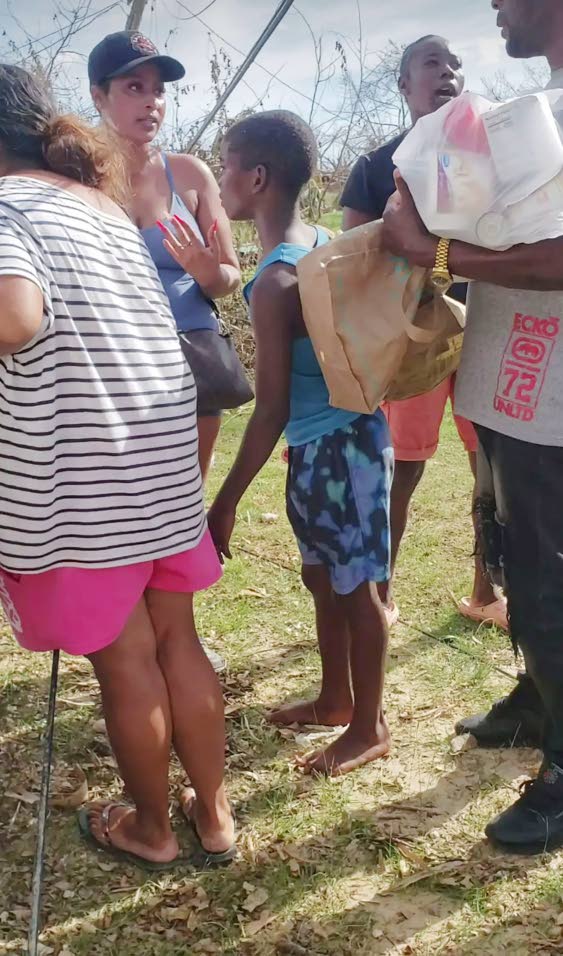
Nickeba Dunkley (in hat) distributes care packages to residents in western Jamaica affected by Hurricane Melissa, helping to fill gaps in relief support.


