



Midfield magic missing
McClaren still searching for answer to midfield conundrum
JAMAICA’S 1-1 draw with Trinidad and Tobago (T&T) in Port of Spain on Thursday kept their FIFA World Cup hopes alive but it again exposed the team’s difficulty linking midfield to attack.
This is a problem that left striker Rumarn Burrell largely isolated and raised further questions about the team’s creative options.
With Jon Russell and Isaac Hayden working as the double pivot, Jamaica had defensive solidity but little forward progression. Both midfielders put in a strong shift defensively yet neither naturally carries the creative responsibility that provides support to the striker up top. That left Burrell battling for loose passes and long diagonals with minimal support around him.
Bobby Reid’s continuing struggle for form in the attacking midfield role compounded this issue. Once a consistent source of link-up play and craft between the lines, Reid again found it difficult to influence the game. His passes rarely broke lines, his movement didn’t unsettle T&T’s defensive block, and Jamaica lacked a central figure capable of combining with Burrell or feeding the wide players early.
This disconnect has lingered through the qualifying campaign.
Head Coach Steve McClaren admitted during the Concacaf Gold Cup last summer that he was still searching for his ideal “number six”, but the challenge now extends beyond that to finding the right balance and synergy in midfield.
Asked about the lack of fluidity in central areas, McClaren spoke on the team’s deliberate shift toward wide play.
“We’ve tried to adapt with that by playing through the wide areas, having good wide players, and that proved again that we’ve got good quality in that area — Demarai Gray, [Renaldo] Cephas. You’ve seen the goal, it’s incredible,” he said. “And the introduction of ‘Whisper’ [Dujuan Richards], he’s just joined us, and in Tyreece Campbell we’ve got real pace in the wide areas. We try and build through that.”
While that approach produced the team’s brightest moment — Cephas’s goal early in the second half — it also reduced the central role Reid is meant to play. With Jamaica bypassing midfield and building directly down the flanks, Reid often received the ball in crowded areas and struggled to turn or make meaningful use of possession.
McClaren says match-specific constraints affected the midfield dynamic.
“I was disappointed with our ball retention,” he said. “You’re absolutely right with how we’ve built up but we wanted to protect Dexter Lembikisa, we wanted to protect Ian Fray [both on yellow cards], and we put Mason Holgate there against [Tyrese] Spicer and I thought he did a great job — they’re a big threat down that left-hand side — and he tied it all together.”
Holgate’s role at right back, as part of the wider reshuffle after defender Richard King’s injury early in the first half, further disrupted the structure. Jamaica led through Cephas in the 53rd minute but retreated deeper as the half wore on, and Kevin Molino’s 85th-minute equaliser punished their inability to maintain control.
McClaren says he is frustrated to drop points.
“Before the game, you said would I take a draw. I said I would, but having been so close to a win it just feels like a disappointment; we have to push that aside,” he said. “The dream is still alive. One game to go — and we’ve got to make it decisive.”
Jamaica’s draw plus Curaçao’s 7-0 win over Bermuda on the same night saw them slip to second in Group B on 10 points.
They now host Curaçao in a scenario on Tuesday night where a win grants them the group and qualification. Anything less and the Reggae Boyz will then have to pay attention to groups A and B to see if they have a second chance via an intercontinental play-off.
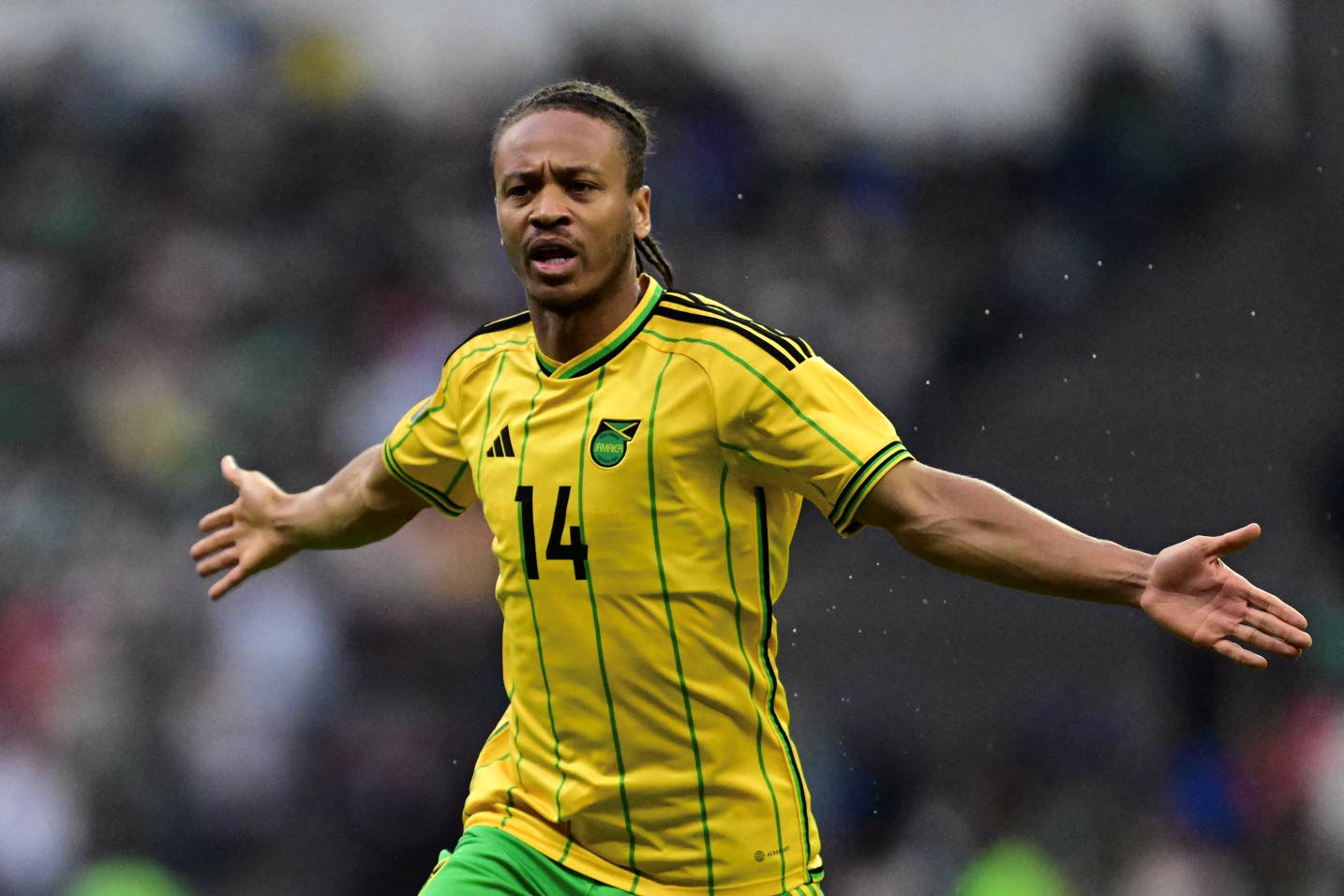
Jamaican midfielder Bobby Reid


