



Big farmers back crop insurance
BY KELLARAY MILES Business reporter milesk@jamaicaobserver.com
MAJOR players in Jamaica’s agricultural sector are backing stronger adoption of crop insurance as farmers continue to suffer catastrophic losses from increasingly frequent weather events — the latest being Hurricane Melissa, the second major storm to devastate the industry in just over a year.
Jeffrey Hall, managing director of Jamaica Producers Group (JPG) comprising the JP Farms subsidiary, told the Jamaica Observer that after two punishing hurricane seasons — Beryl in 2024 and Melissa this year — the sector must urgently rethink its approach to resilience and risk management. To this end, he urged more farmers to take advantage of catastrophic and parametric insurance options.
“There is nothing that can really protect a large farm from a Category 5 hurricane but it does help to have insurance,” Hall further said during a recent interview. “What the industry needs, in collaboration with Government and other stakeholders’ support, is improved access to insurance that can help farmers to recover faster and to provide more security for their workforce in times of disaster.”
Describing Hurricane Melissa as a major event, the large farm operator said the system dealt another heavy blow to many farms, compounding setbacks from Hurricane Beryl and delivering a double whammy for the industry.
The banana industry, which he said has in the past been able to contribute to a catastrophe fund, saw most of those funds depleted due to repeated weather events.
“Going forward, the industry needs to be in a position to contribute to and benefit from the national efforts to secure coverage against catastrophic risks,” he stated.
Following the latest trigger of GraceKennedy’s Weather Protect parametric insurance policy, the company recently began disbursing payouts ranging from $50,000 to $150,000 — more than $5 million in total — to nearly 200 small farmers insured during the programme’s second season. Similar payouts were made after Hurricane Beryl ravaged southern parishes last July.
Launched in 2021, the policy is a joint initiative involving GK General Insurance, the Ministry of Agriculture, and the Rural Agricultural Development Authority (RADA). It offers protection against excessive rainfall, drought, and hurricane-force winds, with farmers able to select individual perils or combine them for broader coverage.
Agriculture Minister Floyd Green, speaking at the recent handover ceremony for 30 female farmers, praised the policy’s efficiency and ability to deliver quick support after disasters. He however stressed the need for wider participation, especially after Melissa caused nearly $30 billion in agricultural losses.
He noted the Government’s support of the programme, which has over the last two seasons received total subsidies of approximately $7.5 million.
With climate risks intensifying across the Caribbean, more private insurers are moving to offer crop-related coverage. Guardian General Insurance Jamaica Limited, one of the island’s largest providers, confirmed that it is currently in the process of developing a crop-insurance product.
“The innovative new product will be designed to better serve the underinsured and small farming segments, helping to close important protection gaps in the market,” President Karen Bhoorasingh recently revealed.
Hall, though welcoming the expansion of crop-insurance options, however lamented the slow uptake — particularly among small farmers who still see insurance as a gamble until disaster leaves them without a financial buffer.
Similar to Hurricane Beryl’s devastation, he said damages sustained by his nine-decades- old JP Farms operation in St Mary continue to hover at about $250 million. This, as more than 90 per cent of the banana and plantain crop on the over 400-acre property were wiped out by the powerful Category 5 storm.
“That’s the range we often have to think about whenever a hurricane hits Jamaica, and it can also be a very significant undertaking,” he said while noting that even as the parish of St Mary ultimately escaped a direct hit from the hurricane, prolonged high wind speed from the outer bands of the system caused crops that were still in recovery from previous events to flatten.
Hall said that with the option of importing bananas or plantains to fill the supply gap being far too risky due to phytosanitary threats, including dangerous fungal diseases that could significantly wipe out domestic production — it becomes even more important that every step be taken to protect the local banana crop. With shortages expected in the coming months as replanting gets underway, he urged consumers to freeze excess product where possible.
“Any effort to import fresh ripe bananas would do great damage to the long-term prospects of the industry and it would also strongly discourage any serious farmer from going back into production,” he said.
For Peter McConnell, managing director of Trade Winds Citrus Limited — operator of a large dairy and produce farm and also manufacturer of the popular Tru-Juice beverages — he said that while damage at his St Catherine-based business was minimal, the availability of insurance coverage will greatly help to cushion fallouts which range from about $120 million for damage sustained by about 10 per cent of citrus crops and some of his sugar cane yields.
“We are lucky, considering what happened out west. Following Hurricane Melissa, homes and critical infrastructure at Trade Winds are all good, though we had some crop damage and the cows — while all surviving — are a bit stressed. We also have some buildings that we will be claiming on, but [those will be for] less than $20 million,” he said to the Business Observer.
Like JP Farms, a robust diversification strategy at Trade Winds has been helping to maintain revenue flows despite reduced yields from affected crops.
“Pineapple damage was minimal due to a new drainage system,” McConnell said. “Our biggest loss will be the drop in sales from the hurricane through to when normalcy returns. As is customary, refrigerated products do not sell when there is no electricity.”

HALL…there is nothing that can really protect a large farm from a Category 5 hurricane but it does help to have insurance
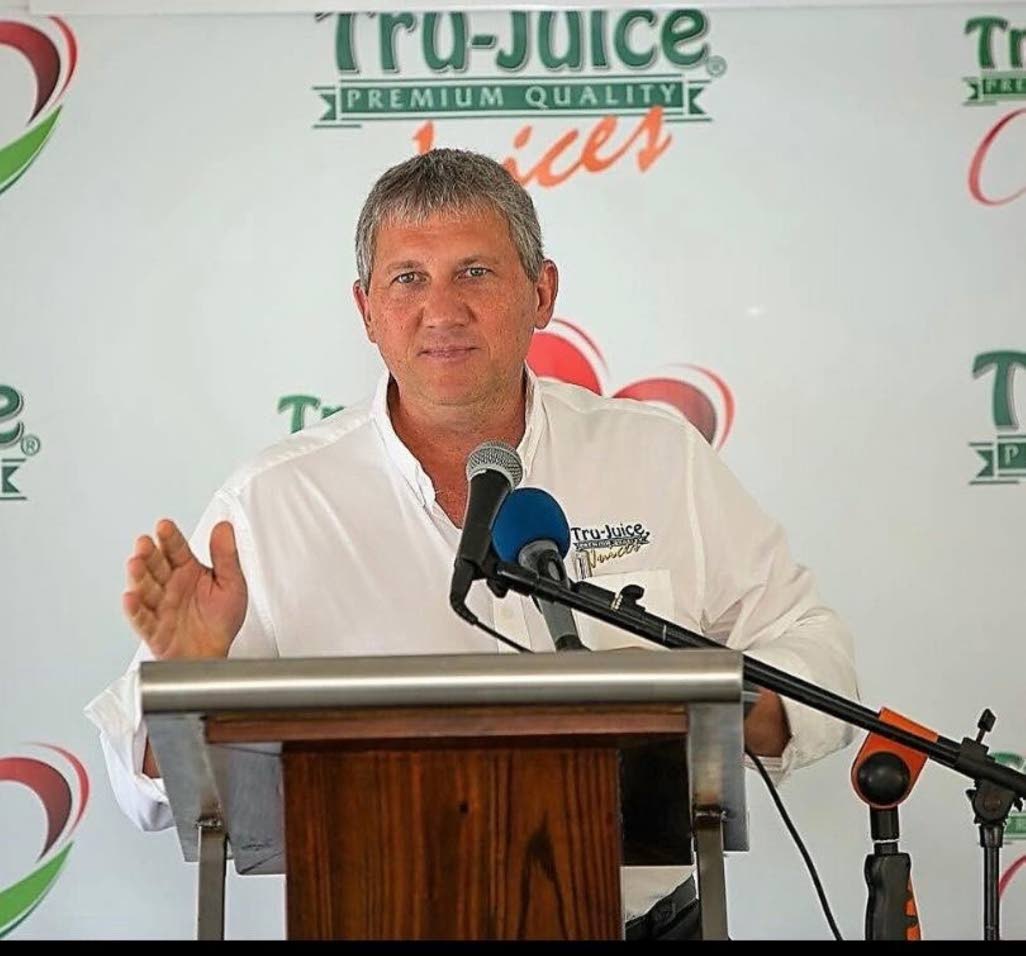
McCONNELL…we are lucky, considering what happened out west. Following Hurricane Melissa, homes and critical infrastructure at Trade Winds are all good, though we had some crop damage and the cows — while all surviving — are a bit stressed. We also have some buildings that we will be claiming on, but less than $20 million


