



Who’s coordinating this chaos?
In the aftermath of Hurricane Melissa I have received messages that broke my heart and brought tears to my eyes.
A friend overseas, desperate and frustrated, asked me to help her reach a family in a Westmoreland community, just off the main road. Another wanted supplies to reach her community in St Elizabeth, which was cut off from Black River. Five days after the hurricane they still had not received water, food, hygiene or other supplies. If the name of your community is not known to the outside world, chances are you will be at the back of the line, unless your family members or friends come to your rescue. Meanwhile, she watched social media and news videos showing mountains of donated supplies, well-meaning convoys delivering aid, and organisations announcing their relief efforts. Her question haunts me: “Where’s the coordination? Who decides who gets what and when?”
Three weeks after Hurricane Melissa battered 170 communities across six parishes, has this changed?
The Problem: Passion Without Professional Execution
Walk through accessible communities near main roads and you will witness some receiving multiple food packages whilst others, deeper in remote areas, receive nothing. Scroll media reports, and you will see children holding placards on the roadside begging for supplies that donors swear they have delivered in abundance.
According to UN reports from November 11, 2025, some 40,000 tarpaulins sit undistributed due to blocked roads, yet no transparent mechanism tells communities when deliveries will arrive or directs eager volunteers to deliver them to isolated households. The elderly woman with mobility challenges three miles up a damaged track and the disabled man who cannot navigate flood debris to reach distribution points, they are invisible in this scramble.
The Gaps That Shouldn’t Exist
The Office of Disaster Preparedness and Emergency Management (ODPEM) holds overall coordination responsibility. Yet, from ground level, the system appears fragmented, frantic, and frustratingly opaque. Can passionate donors simply drive to wherever they feel connected — to family, communities, familiar areas — and distribute supplies? Without centralised tracking, some communities feast whilst others famish.
Another area of concern is that some relief packages arrive untailored to the recipient’s needs. Households of single men receive feminine hygiene products, while families with infants lack diapers and baby food.
When I called ODPEM seeking information about coordinating relief for my friend’s family, the experience underscored the coordination gaps many are experiencing. Thousands have registered as volunteers on multiple platforms — the Support Jamaica website, the Council of Voluntary Social Services (CVSS), and other registration portals — yet three weeks later, many have received no contact; no assignment; no follow-up; no activation.
If more hands are needed — and clearly they are — why haven’t registered volunteers been mobilised? This represents another glaring gap in the coordination process — the political machinery. Councillors, local government workers, Members of Parliament, electoral office workers and their teams mobilise brilliantly for elections, identifying every voter, every household demographic, every access challenge. Why can’t this same passion and precision direct relief supplies?
Community leaders and workers, justices of the peace, church leaders, health-care workers at clinics, doctors, social workers, and other members of the various ministries who work in communities should know their communities intimately. Task them with identifying vulnerable populations who cannot reach distribution points.
The World Food Programme projects that between 98,000 and 359,000 people may require food assistance in the aftermath of Hurricane Melissa. With numbers this staggering, ad hoc delivery approaches guarantee inequitable outcomes.
The Solution: Transparent Systems That Respect Dignity
Jamaica is receiving substantial resources: the United States has delivered nearly US$37 million in assistance, whilst the World Bank has approved a US$150-million catastrophe bond payout, and the Caribbean Catastrophe Risk Insurance Facility has confirmed a US$70.8-million payout.
Relief supplies and money are not the problem. Coordination is.
International best practice from the UN Office for the Coordination of Humanitarian Affairs shows that coordinated needs assessments involving both humanitarian and development actors to optimise crisis response, prevent duplication, and fill gaps.
This is what professional disaster relief coordination requires:
1) Centralised, transparent scheduling — ODPEM must publish real-time schedules on the Support Jamaica website showing which organisations deliver to which communities, when distributions occur, what supplies each area receives, and which communities still need specific items.
2) Tailored relief packages — Packages categorised by household type: single person, couple, family with children under five, family with school-aged children, households with elderly or disabled members.
3) Activated volunteer networks — Assign registered volunteers roles: communication teams to announce distribution schedules, delivery teams for elderly and disabled populations, and needs assessment teams to identify gaps.
4) Leveraged community networks — Create dedicated delivery routes for the housebound using community leaders who know their areas intimately.
5) Multi-channel communication — Utilise SMS alerts and post announcements at police stations, churches, health clinics, and on community bulletin boards. Traditional town criers still work in rural Jamaica — activate them.
6) Toll pass systems — The issuing of toll passes to registered relief organisations allows monitoring and can direct supplies to reach underserved areas rather than clustering in accessible zones.
The Questions That Demand Answers
Prime Minister Dr Andrew Holness acknowledged that even the best-laid plans face challenges against a Category 5 hurricane. True. But three weeks in, it is time to move from passionate scramble to professional execution. No Jamaican child should stand by the roadside begging when warehouses overflow with donations. No elderly person should suffer alone when volunteers wait eagerly for assignments. No community should wonder whether help is coming when millions in relief funding have been secured.
Our questions to ODPEM, to government ministries, to municipal corporations, and to every stakeholder involved are: Who is coordinating this relief effort cohesively? Can donors drive wherever they feel connected, or is there a strategic plan guiding resource allocation and delivery? Are registered volunteers being contacted and deployed, or is that coordination capacity missing? Is there a mechanism ensuring the disabled grandmother in the rural hills receives the same dignity and supplies as the family on the main road?
These aren’t rhetorical questions. They demand transparent answers and immediate action. Because right now, from where many of us sit or stand, both on the ground and overseas watching helplessly, it looks like abundant passion without sufficient purpose.
And passion alone won’t rebuild lives, prevent disease, or restore dignity. Professional coordination will.
Corrine Stewartson is a business and digital consultant. Send comments to the Jamaica Observer or competentcorrine@gmail.com.
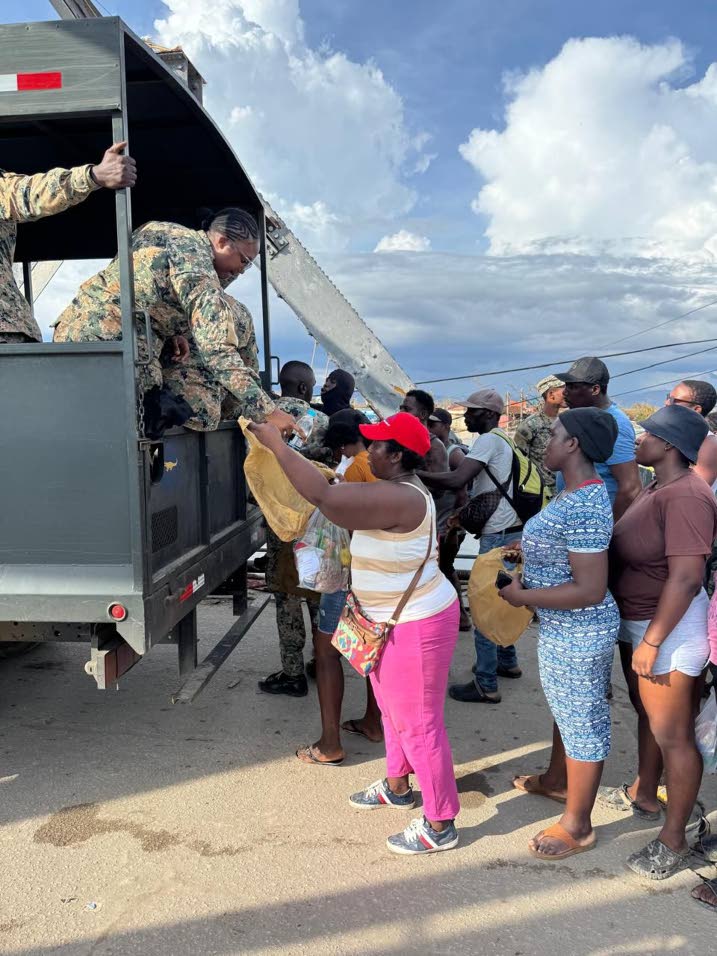
Increasingly there have been complaints of unequal distribution of supplies in the areas impacted by Hurricane Melissa.


