Smart hospitals in Jamaica demonstrate health system resilience
Facilities retrofitted under a PAHO/UK-funded partnership maintained essential care delivery following Hurricane Melissa
The following article was posted by the Pan American Health Organization (PAHO) on its website.
When Hurricane Melissa hit Jamaica with catastrophic force on October 28, Category 5 winds and storm surge tested the island’s capacity to endure and recover, including the robustness of its health facilities.
In the aftermath, more than 450,000 people remained without electricity, and roughly 75 per cent of the hospitals and clinics in the affected areas sustained major damage and were rendered inoperable.
Amid the wreckage and floods, three health facilities in the hurricane’s path stood out among the rest: Mandeville Comprehensive Health Centre, Santa Cruz Health Centre, and St Ann’s Bay Hospital.
Each of the three facilities had received significant structural and resilience upgrades, including roof repairs or replacements, hurricane-rated windows and doors, and back-up systems for energy and water, such as solar panels, generators, and rainwater-harvesting capacity.
The improvements were carried out under the Smart Hospitals Initiative, implemented by PAHO in collaboration with Jamaica’s Ministry of Health and with funding from the United Kingdom. Over the last five years, 12 health facilities in Jamaica have been retrofitted to varying degrees — including four smart hospitals fully upgraded to gold standards and eight that received small to medium interventions.
It took six days after the passage of Melissa for Santa Cruz Health Centre in St Elizabeth to reopen, but the delay had nothing to do with the facility, which is located not far from where the hurricane made landfall.
“Before anything, let me tell you that this was no ordinary hurricane,” explains Sean Brissett, the manager of health services in St Elizabeth. “All of our roads were blocked. We were totally inundated.”
When health workers finally arrived on Monday, November 3, remarkably, the facility that serves a population of 20,000, showed little wear and tear. They used the back-up generator for power and opened doors to the public. The hurricane made the health centre’s water supply system inoperable, so they relied on the water tanks installed under the Smart Hospitals programme.
“You could never predict it, but the rainwater tanks were key to staying open, for washing hands, for patients, for bathrooms,” Brissett said.
Right away, the health facility was able to treat the injuries of people who had been sheltering in place for the past week. It continued providing routine services, including pre- and post-natal care for expecting mothers as well as dental services. This capacity became increasingly important as hospitals in the area directed patients to Santa Cruz.
“We were all surprised to see the damage by the hurricane, but this health centre stood strong, thanks to the retrofitting by PAHO,” Bissett said.
In the days following the hurricane, the fully retrofitted St Ann’s Bay Hospital, located on the north coast, became a critical lifeline in the area. The hurricane caused only minor damage to the hospital’s structure, and the majority of services remained safe and operational. Storm surge flooding led the hospital to close a 25-patient overflow ward and the dietary ward, which is responsible for providing meals to patients.
Already a busy regional facility, St Ann’s Bay Hospital is now operating above capacity as storm-damaged hospitals across the island redirect patients. With the devastation to Falmouth Public Hospital and others functioning at reduced levels, St Ann’s Bay has absorbed a surge of transfers while still caring for its usual caseload.
Despite the sustained gales of 185 mph, Mandeville Comprehensive Health Centre, located in Manchester, also kept its doors open to a community reeling from the disaster. Built to withstand Category 3 hurricane wind forces, the health centre’s roof stayed intact, and the facility showed no visible structural impacts in the face of the Category 5 storm. The solar panels were undamaged, permitting the clinic to access a power supply and continue providing care throughout the emergency.
“Jamaica, like other Caribbean countries, is at risk for severe impacts from disasters, including hurricanes, earthquakes, floods, and new and emerging diseases, which have been observed with increasing scale and frequency in the region over the last decade,” explains Ian Stein, PAHO’s country representative in Jamaica. “Resilient health systems start with resilient facilities. By investing in smart hospitals, we can safeguard the continuity of care, even in the worst emergencies.”
The smart hospital model, which builds on the flagship Safe Hospital Initiative and incorporates green technologies to strengthen energy self-sufficiency and reduce health carbon footprint, was first piloted in 2012 in St Vincent and the Grenadines and in St Kitts and Nevis. Since then, it has grown into one of PAHO’s most successful regional partnerships.
Dr Marion Bullock DuCasse, who works for PAHO in health emergencies in the Caribbean, oversaw the coordination of the smart hospitals initiative in Jamaica.
“By evaluating and upgrading structural, non-structural, functional, and green components, we strengthened the ability of these facilities to withstand major disasters,” she explained. “Hurricanes Beryl (2024) and Melissa have proven how smart retrofitting helps keep essential care available for communities when it is needed most.”
In the Caribbean, a total of 62 smart health facilities have benefited from smart retrofitting interventions in Belize, Dominica, Grenada, Guyana, Haiti, Jamaica, St Lucia and St Vincent and the Grenadines, with financial support from UK Aid, the European Union, and the International Development Bank. Its success has become a benchmark for protecting lives in a changing climate.
Building on the successful experience in the Caribbean, PAHO is now working to expand the smart hospitals initiative in the region, beginning with the adaptation of its tools to other areas of the Americas.
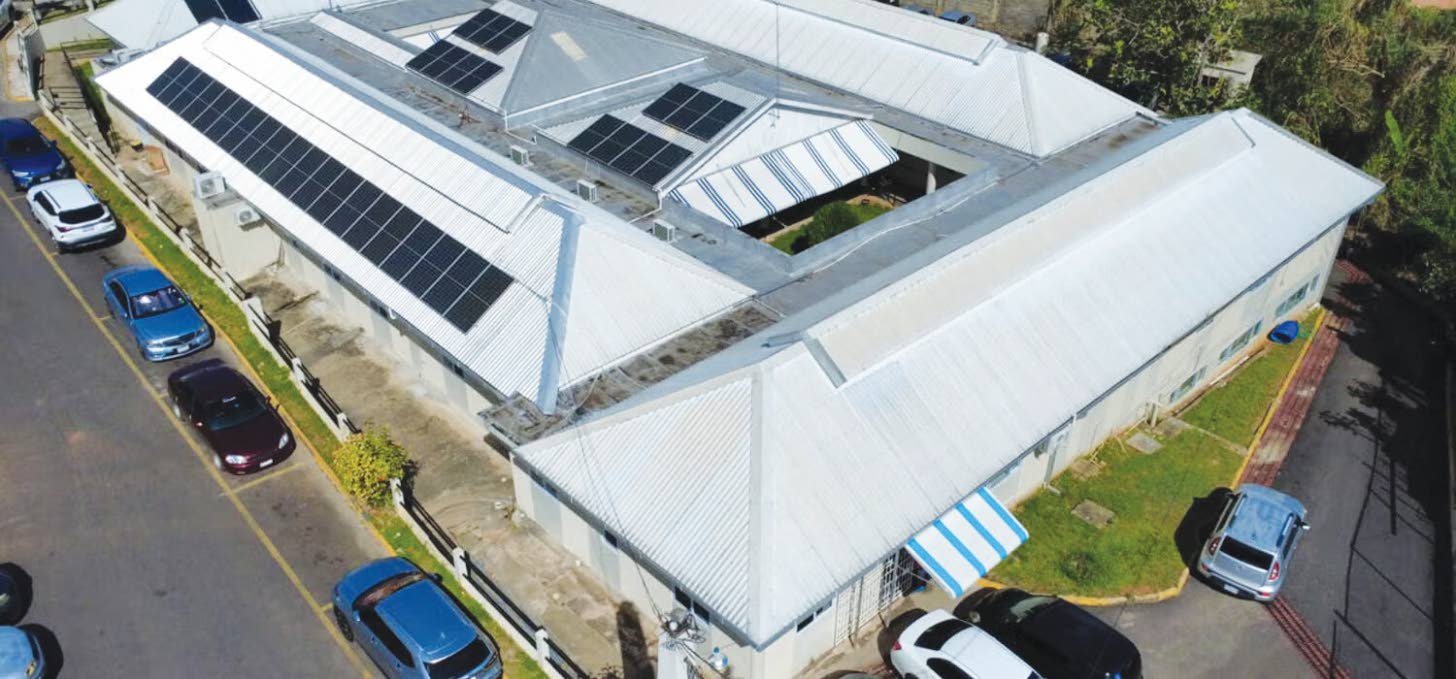
An aerial view of Mandeville Comprehensive Health Centre which received significant structural and resilience upgrades under the Smart Hospitals Initiative, implemented by PAHO in collaboration with Jamaica’s Ministry of Health and with funding from the United Kingdom.
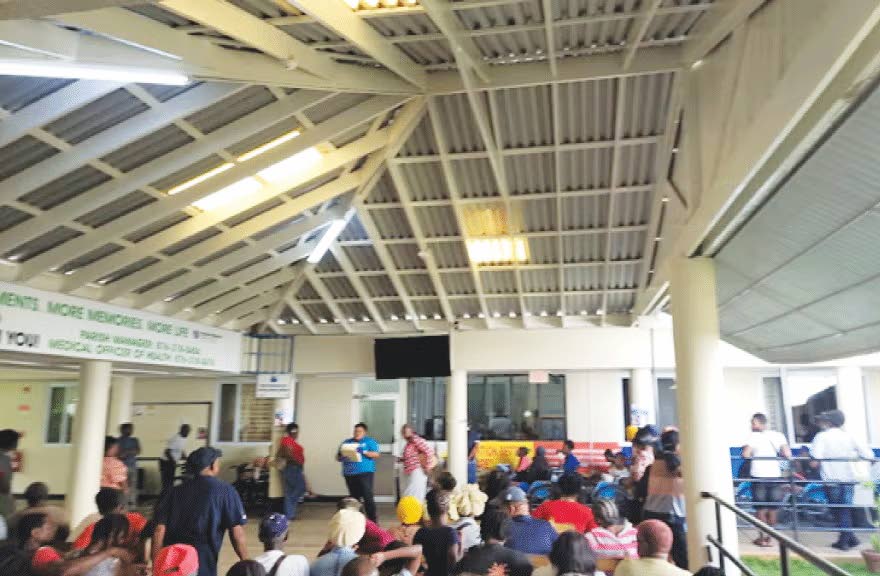
Mandeville Comprehensive Health Centre, located in Manchester, kept its doors open to a community reeling from the disaster.