



Flow fast-tracks nationwide network upgrade as Melissa forces major rebuild
TELECOMS provider Flow is pushing ahead with a major network modernisation programme, fast-tracked by the damage from Hurricane Melissa and now extending into a nationwide overhaul. The upgrade includes new mobile sites, underground fibre routes and satellite-based redundancy systems. Flow has not disclosed the total cost of the rebuild, but a senior executive said it will exceed the company’s US$80-million insurance recovery.
As part of the expansion programme, Flow plans to add 100 new mobile sites over the coming months, increasing its network from 790 to about 890 sites, while ramping up efforts to move vulnerable fibre routes underground, particularly along the corridor between May Pen and Montego Bay.
“We started moving our most vulnerable transport routes underground, and that helped us particularly well during Melissa,” Price told Jamaica Observer in an interview Friday. “We will continue that process — it’s long and arduous because you have to cut roads and instal ducts — but it’s necessary.”
Flow’s subsea fibre ring, which circles the island, remained operational during the storm and supported national connectivity. Work is underway to restore equipment at the Black River landing site, a key node that suffered coastal damage and is expected back online “in about seven days”, Price said.
Restoration Progress
Price said restoration continues islandwide with mobile services recovering the fastest. The company has brought about 70 per cent of its mobile sites back online, returning traffic to roughly 95 per cent of pre-hurricane levels. Full mobile recovery is expected within days.
Fixed services remain more heavily disrupted. Although 80 per cent of fixed nodes are active, only about 59 per cent of broadband customers have been restored, due largely to damage along distribution routes. Flow is working through around 800 fibre breaks nationwide.
Western parishes remain the most severely affected. “Hanover is still 100 per cent down for fixed services — that’s a full rebuild,” Price told Sunday Finance. “St James is coming steadily as JPS restores power, and St Elizabeth is about 40 per cent back up.”
Flow has brought in restoration teams from Trinidad and St Lucia, along with contractors from Ericsson and Huawei, to accelerate the reinstatement of both mobile and fixed networks.
Dependence on JPS
The company’s pace of restoration continues to depend heavily on Jamaica Public Service (JPS), the national electricity utility, which must repair pole routes and restore power before Flow can rebuild its cable infrastructure.
“Once they bring up the primary and secondary power lines, that’s when we can construct our cable routes again,” Price said. He added that repeated power-line burns, debris clearing and intermittent community clean-ups have damaged restored sections, delaying progress.
Flow has also encountered vandalism, including cable cuts, stolen diesel from tower sites and the removal of splicing trays. “That still continues, and it causes setbacks while we try to restore,” he said.
Satellite Technologies
Hurricane Melissa forced Flow to deploy satellite-backed solutions at scale, a strategy Price said will remain part of the company’s long-term resilience plan.
Flow’s emergency satellite-enabled messaging service, Flow Essential, powered by Starlink’s direct-to-cell technology, supported up to 200,000 users during the worst of the outage. “Even now, 40,000 to 50,000 customers still use it daily in areas yet to be fully restored,” Price said.
“Satellite backhaul will become a part of our arsenal moving forward. If our sites get cut off, we can fail over to Starlink backhaul,” he said. The company also used Starlink to help banks restore connectivity to automated banking machines and point-of-sale terminals.
Flow has expanded Voice-over-WiFi and VoLTE to half its mobile network and expects to shut down its 3G network next year. A new product, Flow Always On, launches in December to provide mobile-network back-up for home broadband users.
Financial and Economic Impact
Price said the outages have materially affected fixed-line revenue, with customers without service receiving monthly bill rebates. “By the end of this month, those billed for November who still don’t have service will be rebated,” he said.
However, Price did not quantify the expected rebuild cost or revenue loss, saying Flow is still evaluating the full financial impact.
He warned that broader economic conditions — including imported inflation, FX volatility, BPO downtime and tourism disruptions — could pressure customer spending. “Things are going to get a little more difficult before they get better,” he said. “Some hotels won’t reopen until late next year.”
Despite the disruption, mobile revenues remain robust. “Everybody has been trafficking for the most part,” Price said, noting Flow has gained new users during the recovery.
Humanitarian Efforts
Flow has delivered 2,000 family care packages to western parishes, reaching about 10,000 people, and deployed 70 buses equipped with charging stations. About 250 of the company’s 1,700 employees suffered home damage.
“Our employees are people too,” Price said. “Many were hit hard, but they are still out there working as essential workers to get the country reconnected.”
Price said mobile traffic is expected to exceed pre-Melissa levels shortly, while fixed-line restoration — especially in the west — will take months. “It will be a long, slow journey for the most disconnected areas,” he said.
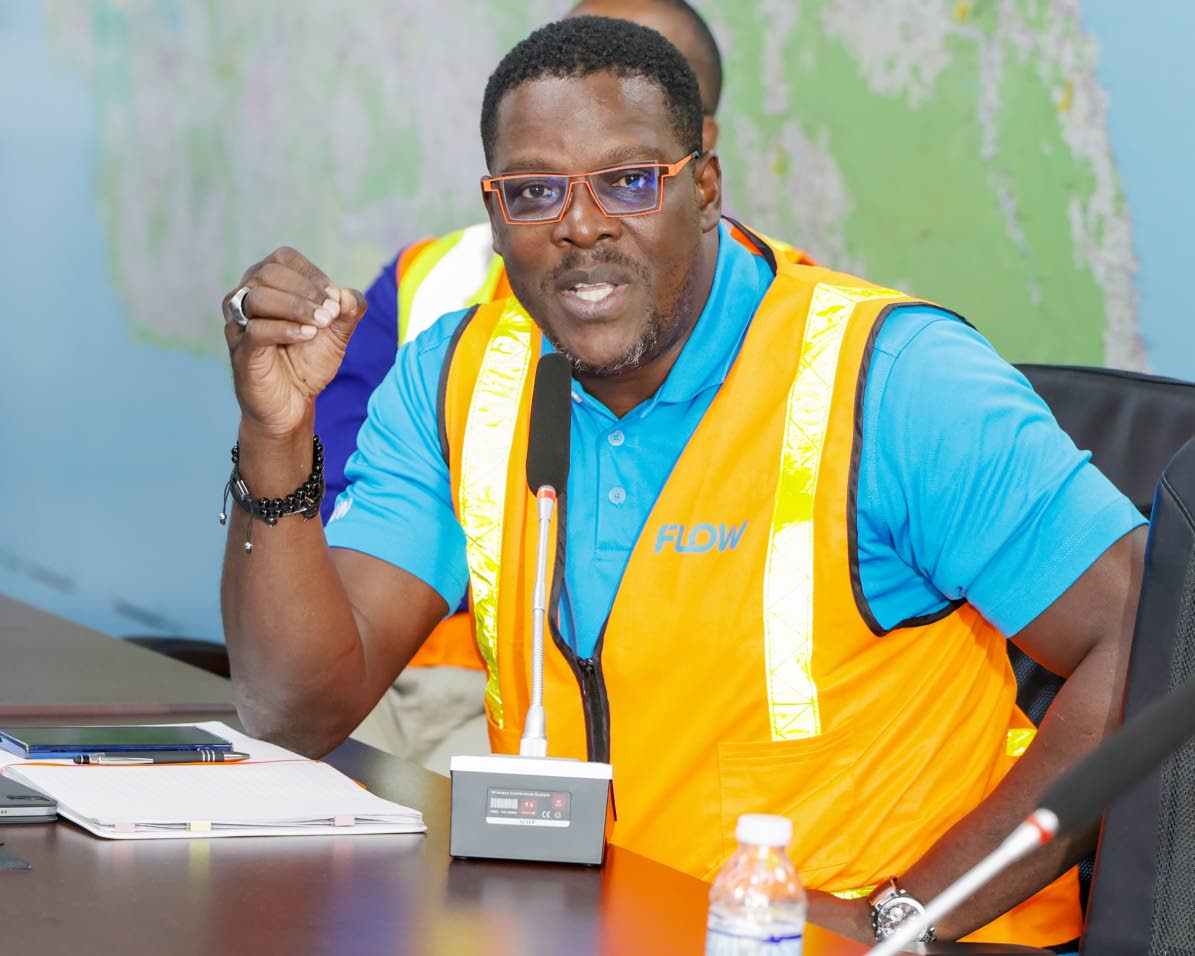
Stephen Price, vice president and general manager, Flow.


