Patterson urges G20 leaders to prioritise climate justice
FORMER Jamaica Prime Minister PJ Patterson is hoping that global leaders now meeting at the G20 summit in Johannesburg, South Africa, will give great focus to the issue of climate justice as they work toward resolving several of the persistent challenges facing the world’s poorest nations.
Patterson, a persistent climate justice advocate, made the call against the background of Hurricane Melissa’s assault on sections of Jamaica late last month, which has left hundreds of people homeless, destroyed infrastructure, and delivered heavy blows to tourism, agriculture and other industries.
The Category 5 hurricane, which made landfall on Jamaica’s south-western coast on October 28, has been blamed for 45 deaths so far while its physical damage to the country has been estimated by the World Bank at US$8.8 billion, which is equivalent to 41 per cent of Jamaica’s gross domestic product (GDP) last year. That, the World Bank said, has made Melissa, “the costliest hurricane in Jamaica’s recorded history”.
South Africa chose ‘Solidarity, Equality, Sustainability’ as the theme of its presidency of the G20, which comprises 19 countries and two regional bodies — the European Union and the African Union — and accounts for 85 per cent of global GDP.
Noting the focus on equality in the theme, Patterson pointed to the decision of the United States Government to eventually send a delegation, though not at the presidential level.
“If ever there is an area where they need immediately to look at global inequality, it is in the area of global warming and climate change,” Patterson told the Jamaica Observer on Saturday.
He said that last month he was invited to join Accra Reset, a group of elders spearheaded by former Nigerian President Olusegun Obasanjo and comprising past heads of Africa’s six regions.
The former prime minister said that he sent an input for the group to present at the G20, urging the importance of addressing the issue of climate change.
Patterson also said he is hoping that Prime Minister Dr Andrew Holness, who is attending the two-day summit which ends on Sunday, November 23, will use the opportunity to speak about Hurricane Melissa’s impact on Jamaica.
“I am hoping that we are going to have a strong statement emerging from that conference on the whole question of climate change, because the Accra Reset group was invited not only to make an input into those deliberations, but is also being charged to assist in the follow-up, and the implementation, and the acceptance of whatever decisions emerge from the Johannesburg summit. And we are particularly — certainly in Jamaica — very much interested in this question of climate justice,” Patterson said.
“Now, there are things that can follow from that, if accepted. We know already about the insurance policies on which we are entitled to draw…” he said.
“But… every time we make a step forward… we are being pushed back by forces outside our control,” he argued.
He described as frightening the argument being advanced by “perhaps the greatest polluter” that climate change “is the greatest hoax ever perpetrated on mankind”, despite “all the scientific evidence which is abundant and which we have been ignoring for so long”.
“So it is a very serious thing, and it is in this context that I think we have to approach our appeal to the international community, because while the disaster occurred in Jamaica, and while it is occurring in the Caribbean, it is really not of our making. It is not within our control. We are not the ones that have caused it but we are the ones that have been the worst victims of it, faced with the possibility, in some cases, of extinction when the sea levels continue to rise over our small island states or we are being ravaged by something like Hurricane Melissa,” Patterson told the Sunday Observer.
He pointed to the World Bank estimate of Melissa’s damage and said that, in his humble judgement, it is at best an approximation of what has been seen so far.
“There are still some portions of the country that have been damaged that are relatively inaccessible, and we won’t really know the full extent of the damage until we have been able to go in and do proper calculations,” said Patterson who, during his 14-year tenure as prime minister, has had to manage the State’s response to a number hurricanes.
He expressed disappointment that the deal reached at the United Nations climate summit (COP30) in Brazil on Saturday does not include what was being pushed as a “road map” to phase out fossil fuels.
“When there is an elimination of any target levels for the reduction and the removal of fossil fuels as a main source of energy, instead of going forward, we’re going backward,” Patterson said.
The COP30 agreement, which was reached after intense negotiations between oil-producing nations and emerging economies, calls on countries to voluntarily “accelerate” their climate action. It recalls the consensus reached in 2023 at COP28 in Dubai, which called for the world to transition away from fossil fuels.
The European Union (EU), which had warned that the COP30 summit could end without a deal if fossil fuels were not addressed, accepted the watered-down language.
Additionally, during the climate summit, developing nations had pushed the EU and other developed economies to pledge more money to help them adapt to the impacts of climate change, such as floods and droughts, and move toward a low-carbon future.
The EU had resisted the appeals but the deal calls for efforts to “at least triple” adaptation finance by 2035.
On Saturday, French news service Agence France Presse reported Brazilian President Luiz Inacio Lula da Silva — who had staked political capital in the success of what he called the “COP of truth” — as telling the G20 summit: “At the COP of truth, science prevailed. Multilateralism won.”
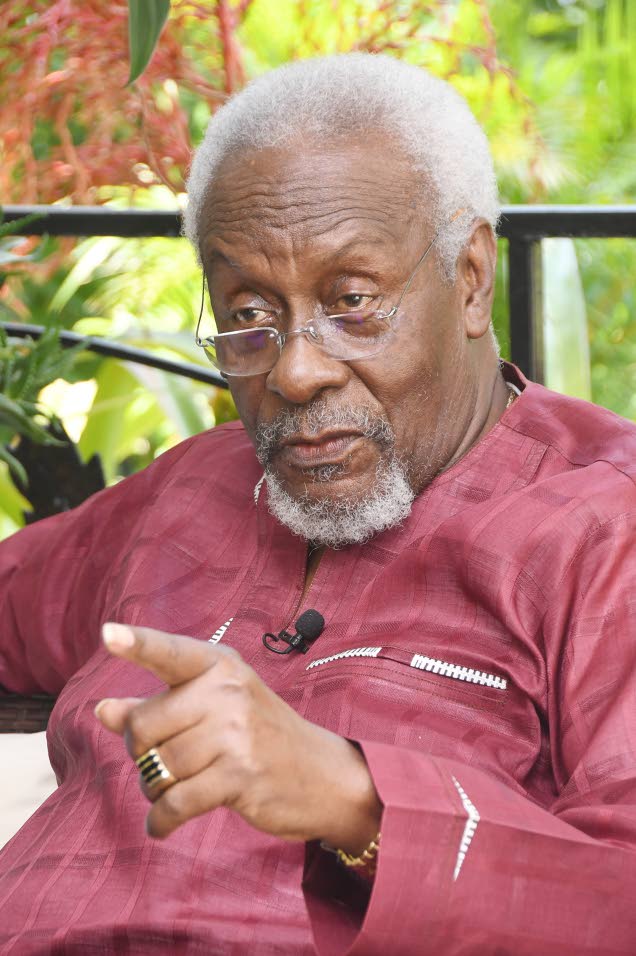
PATTERSON… if ever there is an area where they need immediately to look at global inequality, it is in the area of global warming and climate change