



Ja has ‘shocking’ number of amputations, says regional expert
FALMOUTH, Trelawny — Chairman of the Heart Institute of the Caribbean (HIC) Dr Dainia Baugh has raised concern over what she describes as a frightening spike in the number of amputations among young Jamaicans — many of them women — encountered during recent medical outreach missions held across the island following the passage of Hurricane Melissa.
Speaking with the
Jamaica Observer on Sunday during a free medical mission hosted on the grounds of the Falmouth Seventh-day Adventist Church, Dr Baugh said the pattern emerging from two recent outreach exercises is “not normal, not customary, and deeply alarming”.
“In the last two weeks alone, we have seen an overwhelming number of amputees — many in their 20s, 30s, and 40s. Young women, young men, people with one leg [amputated], sometimes both,” she said.
“If I assess 100 patients, I do not expect to see eight with amputations. That is shocking — and it is frightening,” she continued.
Dr Baugh explained that the findings are consistent with Jamaica’s national statistics, which already rank the country among those with the highest amputation rates globally.
“Since we have started, about eight per cent of patients that we have encountered are amputees. That’s striking. Especially because we have just been in one little region of the country. So to find that, it confirms the Government’s statistics; but that is frightening. We really have to do more about intervening,” she said.
She noted that while diabetes remains the leading cause of limb removal, some cases involved injuries or wounds that escalated unnecessarily.
“One of the men… got cut by a zinc and they said the foot was infected and therefore he got an amputation. But even so, there are so many steps that can be taken before an amputation, there are so many specialists that can be seen to help to revascualise, or bring blood flow back to the leg, before amputation. And so the fact that I am seeing people younger than me… like that’s madness,” she said.
Dr Baugh added that the consequences extend far beyond the physical loss, affecting employment, mental health, and longevity.
“Once you have had an amputation your quality of life diminishes, your ability to work in certain professions diminish. If you are a farmer it’s very difficult to now farm with your one leg. [In terms of] mortality in the years after having an amputation, your risk of death goes up to almost 30 per cent,” she explained.
She stressed that the prevalence of amputations must trigger an urgent national discussion about early intervention, improved patient education and strengthening of care pathways.
“I think our doctors are doing the best they can with the resources that we have. But what I can say is that when we have data that shows that we are heading in a direction that we ought not, we can step back and look at our practices and see what needs to change. Is it our medical practices or is it the inability of patients to understand how to control their diabetes?… So there are a lot of inputs and we are going to contribute to work already being done to attack each arm of those contributors to those conditions,” she underscored.
She said she has begun discussions with Members of Parliament from the affected communities to better understand the gaps and develop solutions.
The HIC, which partnered with a team from the Association of Nigerian Physicians in the Americas (ANPA), led by Dr Cliff Eke, focused on the provision of free screening and advanced cardiac and vascular services to communities affected by Hurricane Melissa during the medical mission.
Over the past two weeks, the teams have served residents in Accompong, St Elizabeth, in addition to both northern and southern Manchester. The Trelawny outreach, which was the third stop, was executed in partnership with Andrews Memorial Hospital, All Well Foundation and Giving JA Foundation. They are expected to return to St Elizabeth, this time Black River for the final stop.
“We are here to help close the gap between what Government can provide and what private care can offer. We want to help Jamaica get back on its feet after the hurricane — and long beyond it ” Dr Baugh said.
She noted that several patients identified at earlier clinics were transported to Kingston for angiography and angioplasty — fully sponsored by the HIC.
“[Saturday] alone, we performed four angioplasties free of cost,” she disclosed.
“People who have been living with chest pain for months or years finally received the care they needed,” she added.
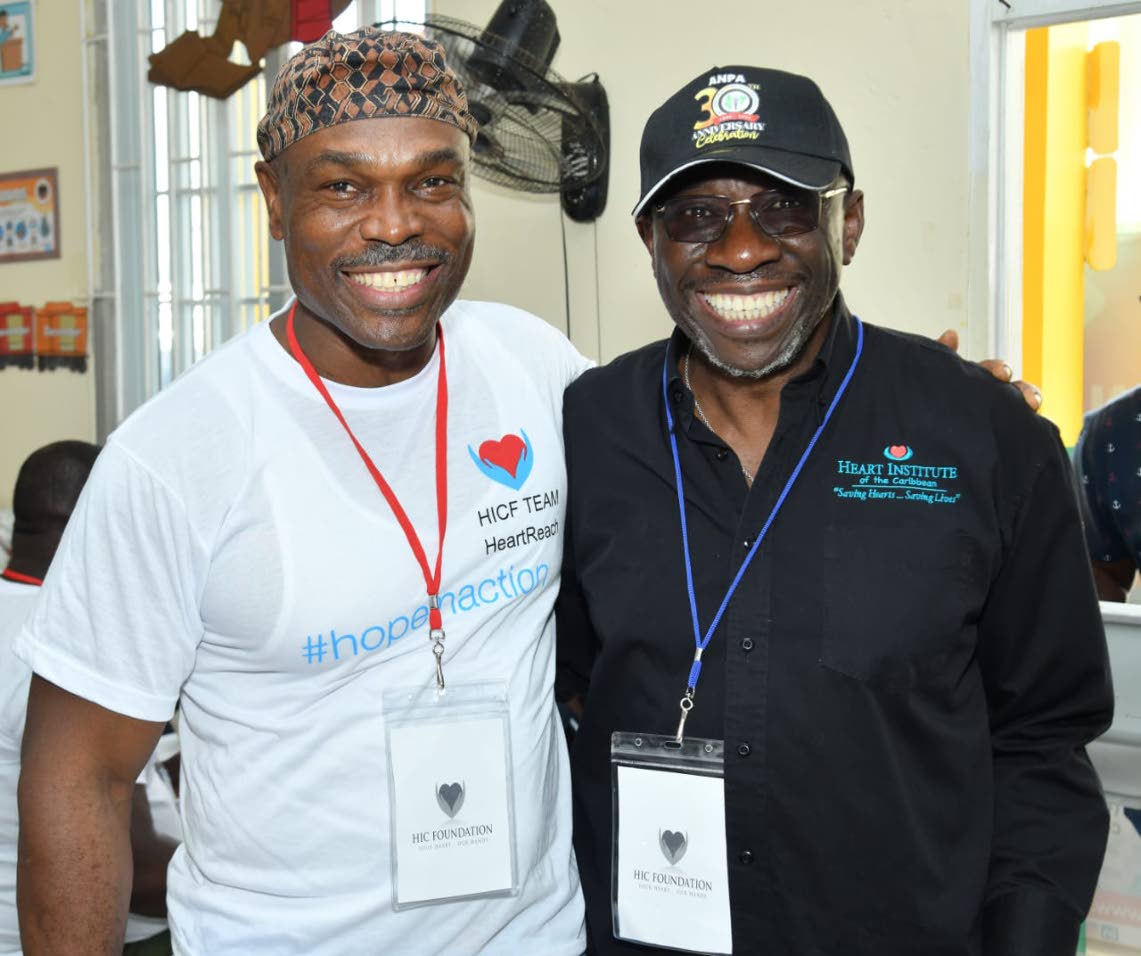
President of the Association of Nigerian Physicians in the Americas Dr Cliff Eke (left) and Dr Ernest Madu pose during the medical mission at Falmouth Seventh-day Adventist Church on Sunday. ,
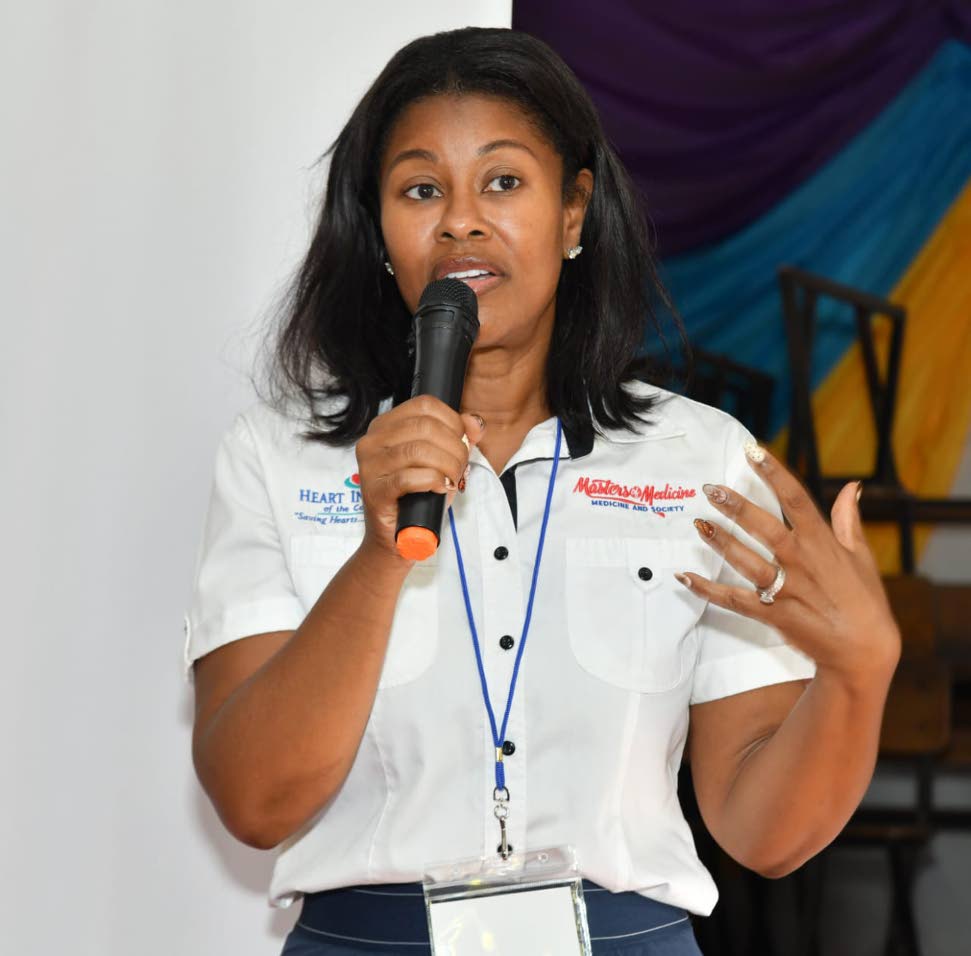
Dr Dainia Baugh, chairman of the Heart Institute of the Caribbean .


