



Classroom crisis in early childhood sector
UWI professor warns that traumatised teachers and students will need urgent intervention
EFFECTIVE counselling intervention has been recommended for teachers and students who are returning to the classroom and expected to function as normal following Hurricane Melissa, particularly at the early childhood level.
Professor of early childhood care and education at The University of the West Indies (The UWI), Zoyah Kinkead-Clark said normality is virtually impossible without this intervention.
“Children who are traumatised or have psychosocial challenges cannot learn. That’s just the long and short of it,” said Kinkead-Clark, who is also manager of the Dudley Grant Early Childhood Resource Centre.
“Now I am also very aware that we have teachers themselves who have also been traumatised…and these are the teachers who we are asking to go back into the schools to teach the children.”
With Jamaica’s education ministry committed to lessening the loss of teaching and learning hours following Hurricane Melissa in October, more than 700 schools have reopened, with other measures being taken to engage students where institutions have not yet recovered.
Kinkead-Clark, who expressed her understanding of the need for children to return to school, told journalists at the latest Jamaica Observer Press Club on Tuesday that educators and students will require immense support to overcome the trauma endured.
“Early childhood teachers have had to be creative for years, because when the sector developed we didn’t have the kind of support system that other tiers of education have always had and so teachers have had to be creative.
“So, because of that, I have no doubt that our teachers will be nimble and will figure it out but it doesn’t mean that they don’t need support. We need more support from the sector. Our children need support,” said Kinkead-Clark.
She argued that a lack of guidance counsellors at the early childhood level, which further complicates the job of these teachers who will now have the extra role of providing students with psychosocial assistance in a time when they may also require therapy.
“I am also the deputy dean of graduate studies and we have collated data on our students, who are also teachers. Our students are principals of institutions. My students have said, many of them, that, ‘I am having significant challenges.’ There are teachers who are living in shelters.
“I have students who have to be driving from one parish to another parish in order to park on the side of the road in order to get connectivity. I have a student who wrote to me and said, ‘I cannot manage. I have lost my house. My roof is gone. I don’t even know how I’m going to manage. I’m ready to quit.’ These teachers are traumatised themselves,” emphasised Kinkead-Clark.
Acknowledging that some work has been done to prioritise the early childhood education sector, she told the Observer Press Club that the efforts so far still were just not enough.
“A lot is being done but with 120,000 children, approximately 11,000 practitioners, over 2,400 institutions, that’s a lot. And the Early Childhood Commission simply doesn’t have the resources that are needed to make the kind of change that is required. The ongoing work that needs to be done in the sector, day by day, needs more resources, human capacity, as well as financing,” said Kinkead-Clark days before today’s opening of The UWI School of Education, the Early Childhood Commission, Jamaica National Foundation, and the Dudley Grant Early Childhood Resource Centre’s first regional colloquium to discuss methods to combat the challenges that exist and plot stronger disaster recovery strategies in the sector.
“At the end of the two days, through the input of the players that we have brought to the table — policymakers, practitioners, teachers, politicians, everybody who is going to be there — we want to be able to identify actionable tactics and strategies that, as a region, we can follow up on implementing for our own countries and resources,” said Kinkead-Clark.
The colloquium will take place at The UWI Regional Headquarters in Mona, St Andrew, today and Friday.

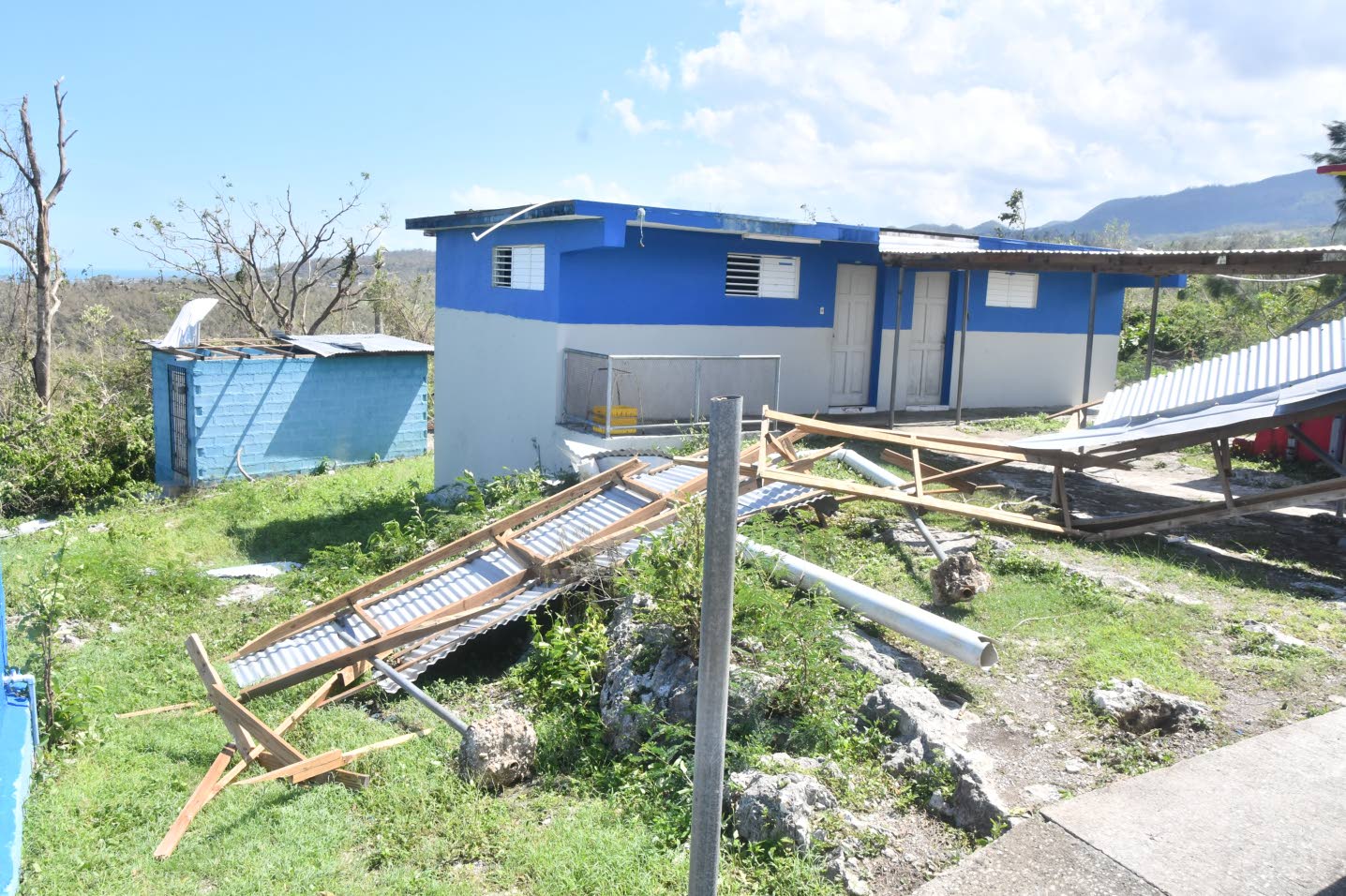
A section of Chester Primary and Infant School in St Ann that was damaged during the passage of Hurricane Melissa (Photo: Naphtali Junior)


