



From homes to makeshift clinics
Hospitable Jamaicans power HANDS International’s post-Melissa medical mission
AFTER Hurricane Melissa, a team of medical practitioners from HANDS International left their homes and travelled to Jamaica to support the communities hardest hit by the historic weather system.
In the midst of disaster they were greeted with an outpouring of hospitality from residents who, despite their own losses, opened their homes and offered invaluable support to the visiting volunteers.
President of the United States, Delaware-based humanitarian medical mission, Dr Reynold Agard said that, together with residents, the team converted St Elizabeth homes into makeshift clinics, using the supplies they brought to deliver care to almost 500 people across Black River, Parottee, and Slipe.
“One of our team members, Marjorie Davis-Reid, her brother’s house, which is in the Black River area, did not sustain any damage, but they were without electricity, so they offered their house for us [to use] and we mobilised transport so that we could get around. We got into Jamaica at night in Kingston and drove the following day to Black River where we met with a gentleman by the name of James Inks.
“Also, on the ground in Kingston, we met Lisa Bowman-Lee; she’s a professional race car driver, and she was really very instrumental in helping with the logistics,” Agard told the Jamaica Observer.
He explained that as the team moved from one community to the next, they were always greeted by locals who were willing to assist them in any way they could, an experience he describes as heart-warming.
“There are some people who open their homes to the team: We were able to operate the clinic from a home, set up a tent in the yard, and we used the fridge that had no electricity as our shelves for medicines. It is just unique, and to these people, we just want to thank them for helping their fellow Jamaicans through these difficult times. Overall, the people are just so welcoming.
“We felt safe, and we felt protected,” he said, adding, “Initially, a lot of people had concerns about security, and I know we always place that at the forefront, but each team that was here did feel safe. We felt as though the local people protected us and we are happy to continue this programme.”
According to Agard, the non-profit organisation has a team of 50 board-certified medical professionals — primarily from the Caribbean — who volunteered their expertise to support Jamaicans in need. The volunteers are deployed in rotating groups of six to 10 members, each serving for seven to 10 days. The first team to arrive in Black River provided care to 300 residents. A second group later assisted an additional 180 people, and a third team is now on the island continuing the mission.
Agard added that two teams of 10 to 12 doctors are expected in the island in December, with some expressing a desire to stay for the Christmas holidays. He said arrangements are also being made for medical missions in January and February. Each group will spend seven to 10 days in Jamaica.
“In January, we will have several bigger teams because we are giving people time to make arrangements. It might be 10 to 15 personnel, including doctors with different specialities. There’s one of the leading ophthalmologists in Delaware, Dr Wayne Dunn, he is a member of our team; he’s planning to come to do ophthalmology services in January…We do bring a lot of eye drops because we see a lot of people have conjunctivitis from the dust, so we have all that taken care of, but for people who have glaucoma and those other complications, we have ophthalmologists signed up,” he told the Sunday Observer of the work the mission team is doing in Jamaica.
He noted that dental services will also be provided at a later date, as the team awaits the arrival of equipment needed to perform the service. Agard said the team is also in the process of procuring a generator to operate equipment for more surgical procedures.
The organisation also brought US$50,000 worth of medication to distribute to residents who lost their medicine during the passage of the Category 5 hurricane as well as to treat illnesses on the ground. He shared that fungal infections, diabetes, anxiety, depression, and high blood pressure are some of the main illnesses they’ve noted among the residents they’ve seen.
“Since we came back, we have doubled [the medication]. I just put in a large order for some medication for diabetes…There’s a lot of need for aspirin. Aspirin is the only medicine that has proven to prevent a stroke and heart attack, so, for aspirin, we have doubled our request for that, and Amlodipine, which is a blood pressure medicine. They use a lot of Enalapril in Jamaica, the sister drug to that, which we have, is Lisinopril, so we’re doing comparable medicines.
“Doxycycline, we have doubled that because of the leptospirosis [outbreak]. We want to make sure we treat these diseases adequately. We’ve seen a lot of fungal infection in-between the toes, some terrible fungal infection, so we have doubled the medicines for those also and for multivitamins, because people feel fatigued, weak, and it’s difficult to get a balanced diet, so we bring in multivitamins also with us,” Agard told the Sunday Observer.
He added that the team has also brought medication for cholesterol, heart disease, and inhalers for asthma exacerbations, which have been distributed to those in need following medical examinations and consultations.
Mental health support for individuals with anxiety, depression, and insomnia brought on by Hurricane Melissa is also provided.
Agard noted that all medications provided are up to date and do not include narcotic drugs, which are addictive. At least a month’s supply of medication is provided, as the demand allows.
“Our goal is to replace the medicines that are lost by a number of people, because one of the challenges that we see in disaster areas is that people lose their homes and they lose their prescriptions. Now, four or five weeks out, you’re going to start seeing things like heart attacks and stroke, these chronic illnesses which previously were stable, but now some of the local people, they don’t have medication,” he said.
“There was an instance where we saw a lady who lost her medication because her house was destroyed, and the day that she came to us, she was literally having a heart attack and we knew for sure that she would not live past that night. We were able to get a family and mobilise an urgent ride to Samaritan’s Purse, which is a field hospital in Black River, and they were able to arrange with the health department to medevac that patient to Kingston, where she received more complicated care. When we were coming back we heard that she was doing well, but we knew that that woman would have died that very day,” Agard shared.
In quoting Mahatma Gandhi, the HANDS International president said the best way to find oneself is to lose it in serving others. He expressed thanks to the medical professionals who, time and time again, have answered the call to serve.
“We consider ourselves now ambassadors in the rebuilding of Jamaica, and we will do whatever it takes to restore hope and restore a sense of normalcy as we bring health and development to Jamaica,” said Agard.
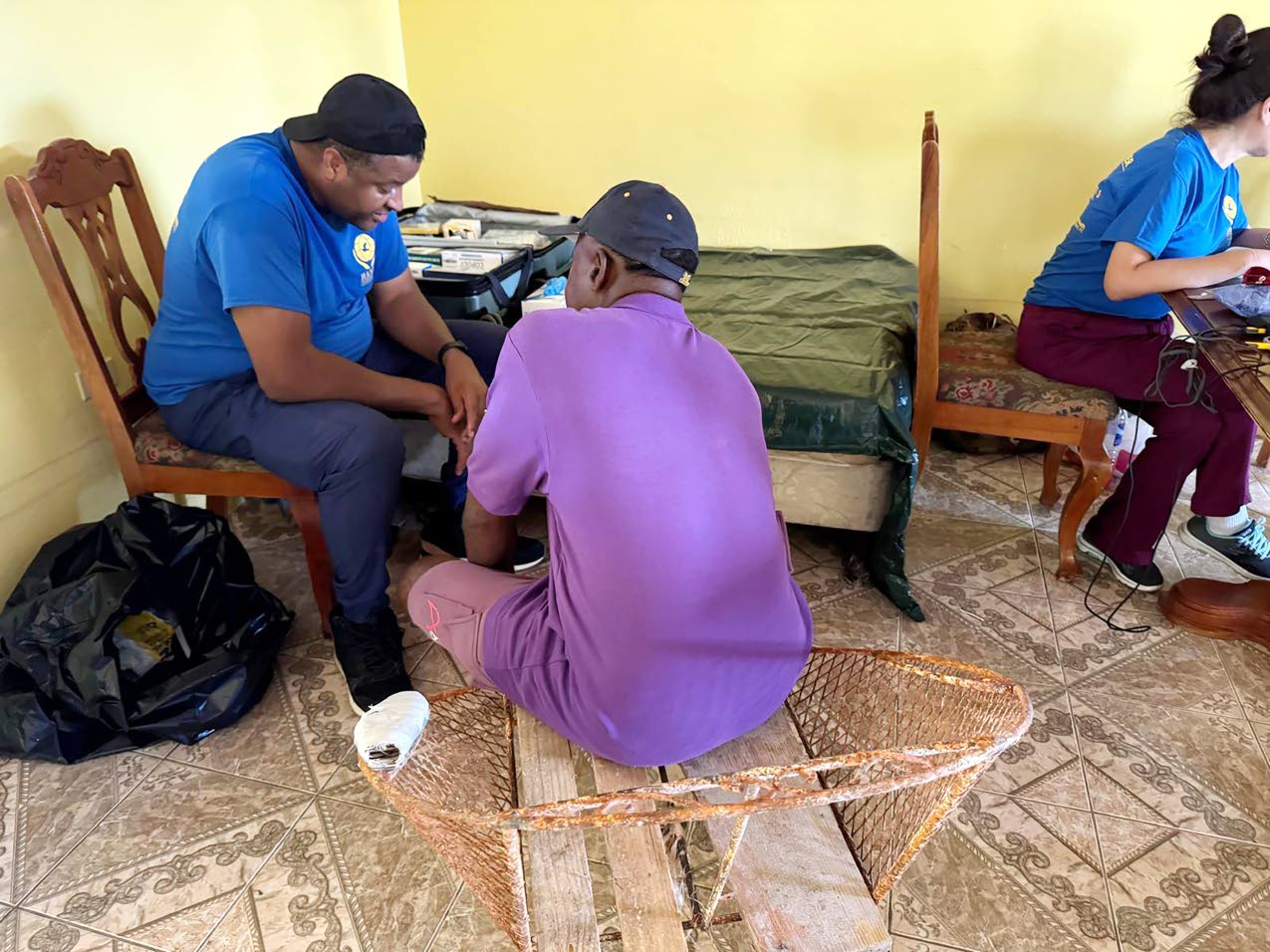
Volunteers from HANDS International administering care inside a house in Parottee, St Elizabeth.
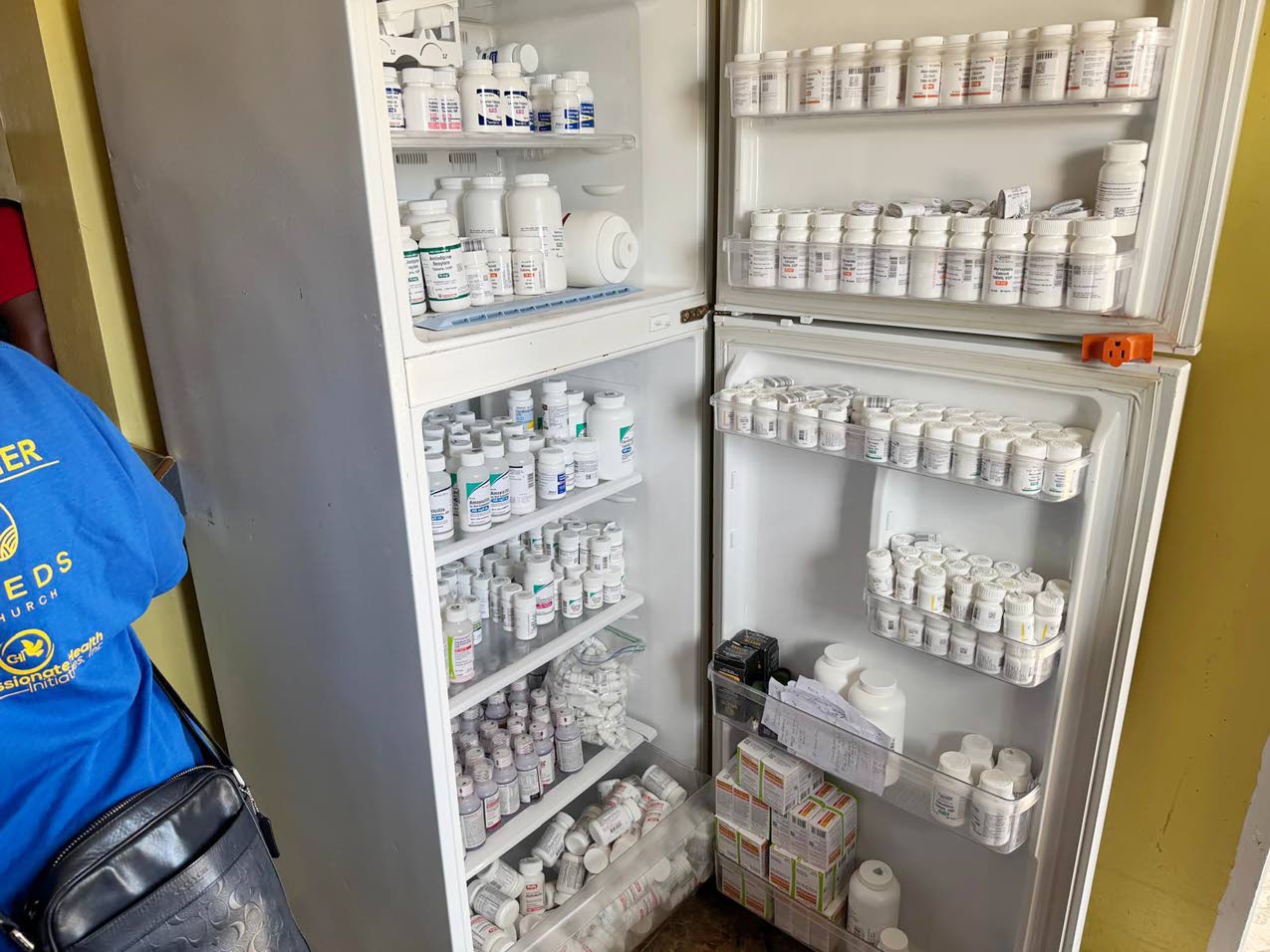
The team from HANDS International, operating from inside a house in St Elizabeth, use a refrigerator to store medication.
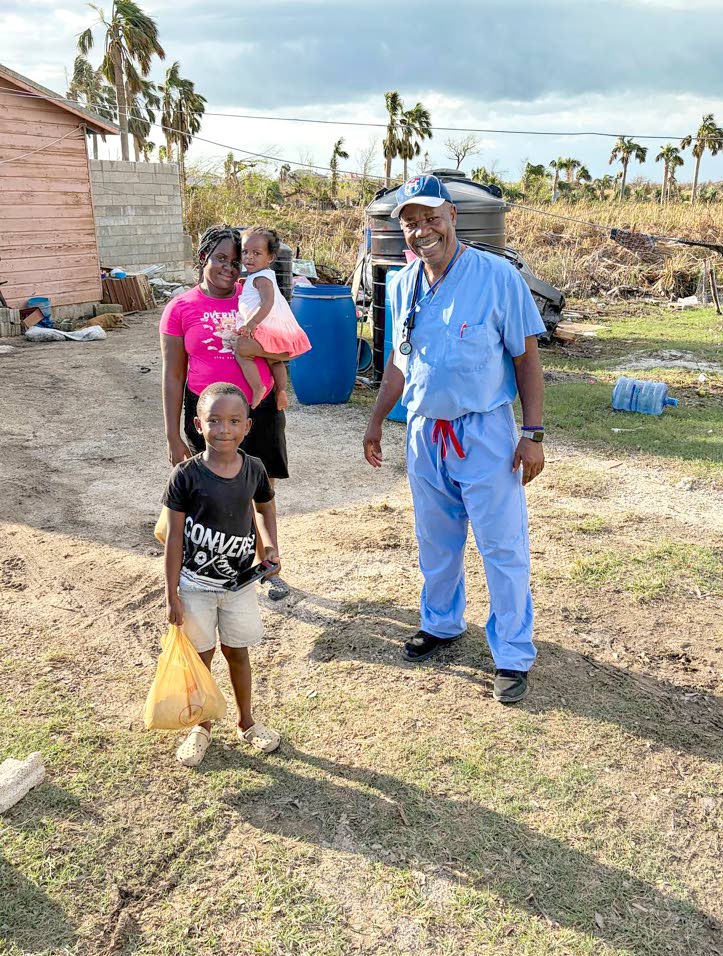
HANDS International President Dr Reynold Agard (right) provides relief supplies to a family in St Elizabeth.


