



‘Living in fear’
Haitian migrant grapples with uncertainty in Jamaica
BRENOR Joseph grapples with uncertainty about his status in Jamaica. He has been waiting more than two years for documentation to validate his residence in the island, and he worries every day that he will be deported.
Sadly, that feeling of uneasiness is nothing new for the middle-aged Haitian native who has spent most of his adult life running from danger.
“Most Haitians be running from Haiti to go to anywhere,” Joseph told the Jamaica Observer. “It’s like the people never fought for Independence.”
In 1804, through an uprising of enslaved people, Haiti won independence from French colonial rule and emerged as the world’s first black-led republic. But, more than two centuries after being slapped with a crippling debt as price for its freedom, the Caribbean country — which shares the island of Hispaniola with the Dominican Republic — remains one of the poorest in the western hemisphere.
Economic, security and political crises have resulted in millions of Haitians fleeing the country over the last several decades. Today, the nation is plagued by gang violence, which forced Joseph to run off.
He shared his account of fleeing his homeland and the uncertainty he has faced since arriving in Jamaica.
Joseph said he left Haiti in 2023 after a near-death experience, travelling by boat for three days with infants and families on-board. The group had planned to reach Cuba, but drifted into Jamaican waters, where they were detained in what he said were inhumane conditions.
“We spent six months in lock-up. It was very hard. We were running from danger, and then we were in prison,” he explained.
Joseph said that although he and others were released to somewhat better living accommodations, they were promised work permits and documentation that never materialised.
“Immigration took our fingerprints and said we would get papers so we could work. Two years later, nothing,” he said. “We work because people help us, but we cannot show ID [identification]. Any police can arrest us.”
Joseph, who does different blue collar jobs for a livelihood, claims that Haitian migrants have waited far longer than other nationalities for documentation.
“You have Cuban people coming after us, and they get papers to work, but we Haitians don’t get anything,” Joseph said. “I am not going to say Jamaica have something against Haitians, but I know Jamaica not giving us paper to work. We feel like we are still in danger of being sent back at any time.”
Attorney-at-law Dr Marcus Goffe, who represents Joseph and several other Haitians currently living in different parishes across the country, claims that there is a “systematic effort” by Jamaican authorities to deny Haitian migrants access to due process, accusing the State of violating both international refugee law and Jamaica’s own constitution.
He said the Government’s handling of recent Haitian boat arrivals has “strayed far” from the obligations outlined in the United Nations Refugee Convention, to which Jamaica is a signatory.
According to Goffe, although Jamaica has no formal refugee legislation, it adopted a 2009 refugee policy meant to guide how asylum claims are handled. He said that in practice, however, Haitians are being denied some of the most basic protections.
“When Haitians arrive, police take them for initial health checks, which is fine,” he said. “But after that lawyers are blocked. We’re denied access at the health centres, we’re denied access at the police stations, and immigration officers from Passport, Immigration Citizenship Agency (PICA) conduct interviews in secret.”
Goffe argued that these interviews become the basis for swift deportations, often in the early hours of the morning.
“By the time we’re notified, boats are already being arranged for them to be sent back. This is intentional,” he claimed. “It denies their constitutional rights to legal representation and violates the principle of non-refoulement,” a core international requirement that bars States from returning people to dangerous conditions.
The attorney also accused Government-paid interpreters of discouraging Haitians from applying for asylum.
“We receive repeated complaints that interpreters tell them to stay quiet, tell them they cannot stay here, or pressure them not to file claims,” Goffe said. “How can someone defend their rights if they don’t speak the language and the person assigned to help them is pushing them to give up?”
He further criticised the Government’s use of outdated colonial-era laws such as the Aliens Act, which allows immigration authorities to deem people “not landed” even while they are physically in Jamaica — a loophole he believes is used to bypass constitutional protections.
Goffe acknowledged that many Jamaicans feel the country cannot support additional migrants, especially those fleeing Haiti’s spiralling violence and instability. But he argued that limited resources cannot override constitutional obligations.
“My rights aren’t dependent on whether someone thinks the State can manage,” he said. “If Jamaica has signed on to protect refugees then we must follow the law, and if the Government no longer wishes to honour that responsibility, then say so openly and withdraw from the convention.”
He confirmed that, in several cases, the courts have granted injunctions preventing the removal of Haitians who have formally filed constitutional claims. But those without legal representation remain vulnerable.
“Some are applying for asylum, some are seeking other immigration options, and some are simply trying to survive,” he said. “But until the State follows its own constitutional duties, these people will continue living in fear.”
Joseph, who has two children in Texas, United States, from where he was deported in 2013 after fleeing to that North American country, dreams of a day where his mind is at ease, free from fear.
He said life in rural Jamaica has been peaceful — no gunfire, no threats — but the uncertainty is constant.
“Today I might be here, tomorrow they might come looking for us to take everybody back,” he said. “If police want to arrest you, they arrest you, because we don’t have ID or anything.”
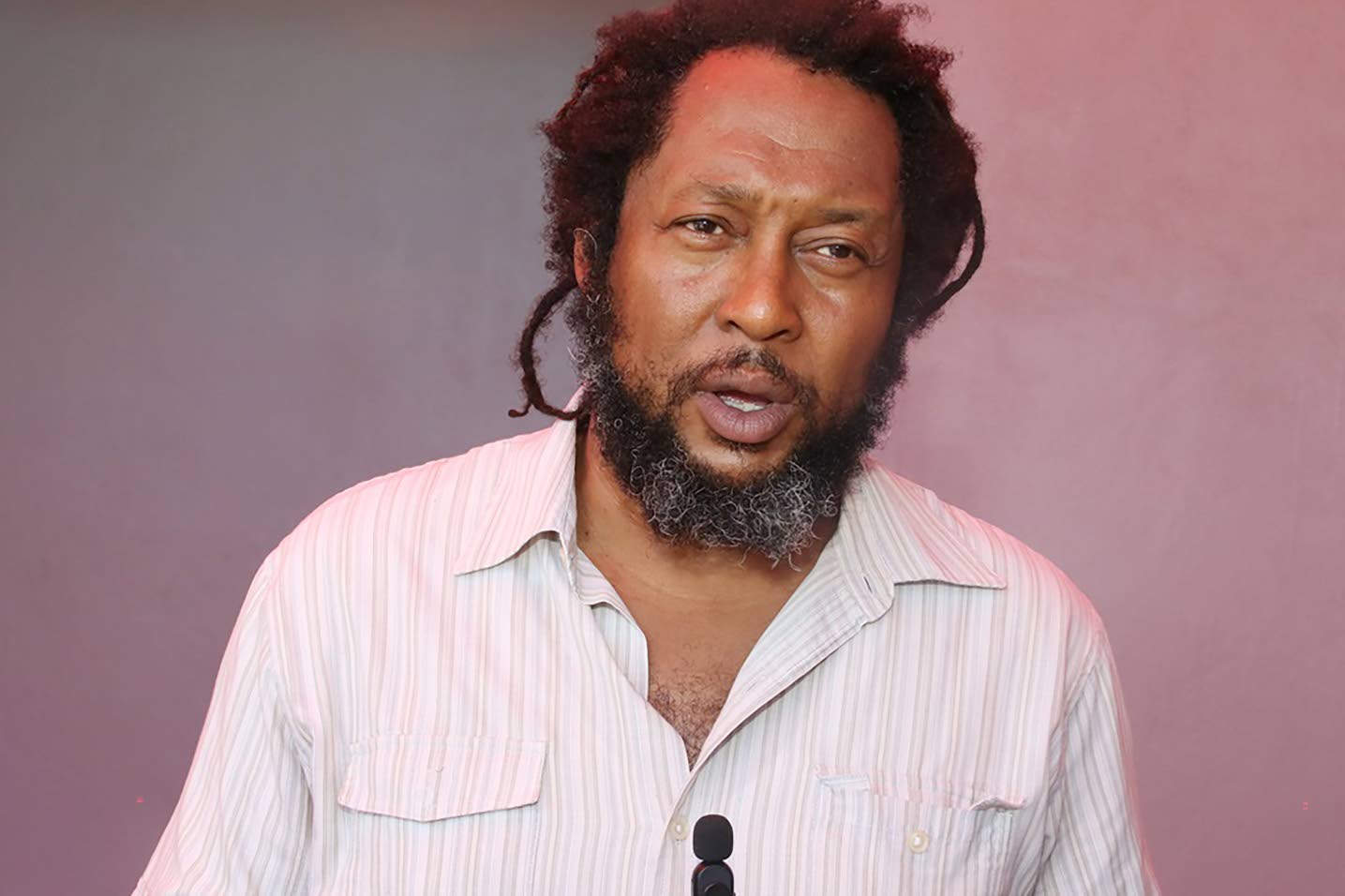
Attorney-at-law Dr Marcus Goffe, who represents a number of Haitians across Jamaica, is blasting what he describes as a “systematic effort” by Jamaican authorities to deny Haitian migrants access to due process.
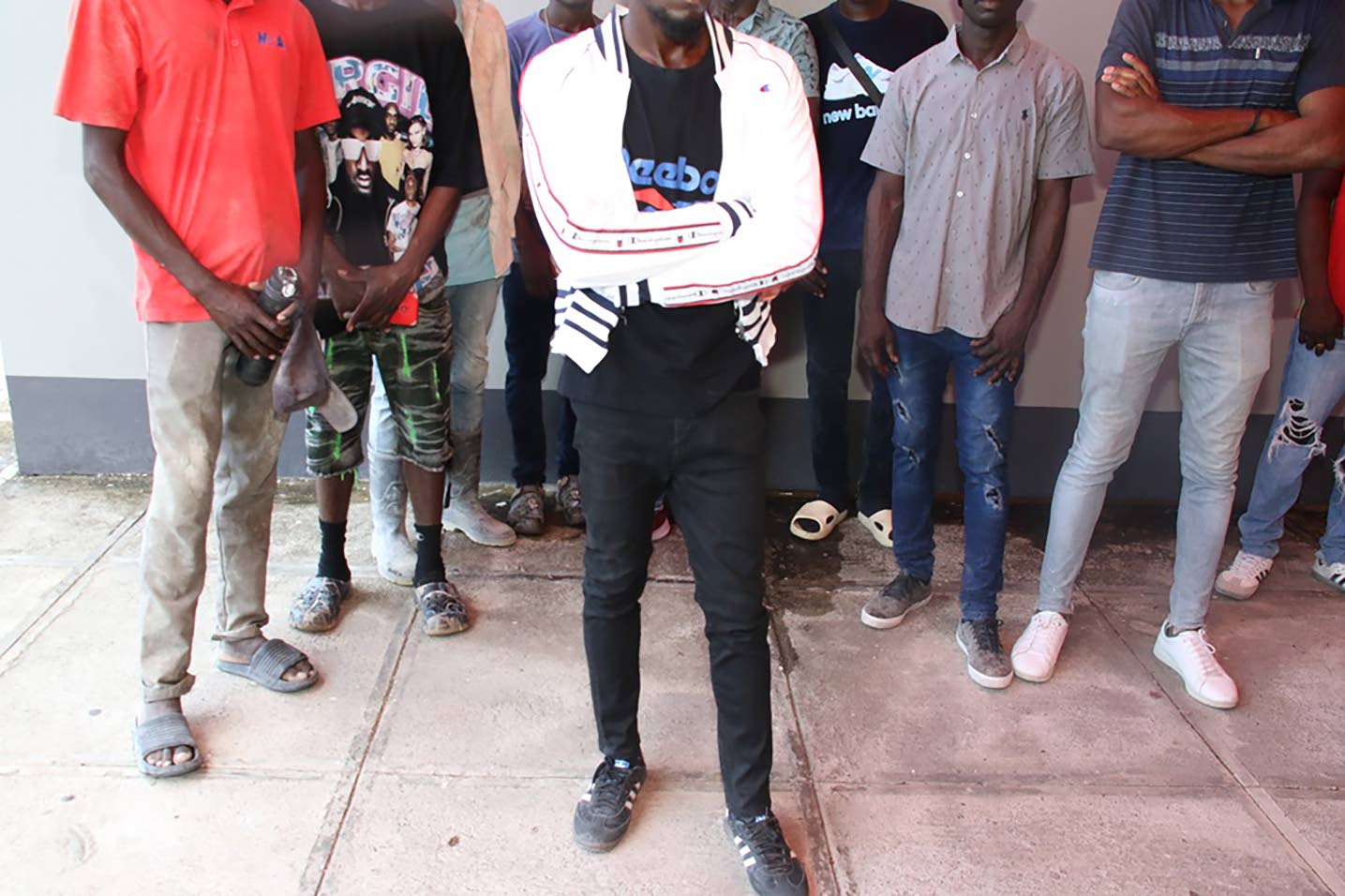
A group of undocumented Haitian migrants in Jamaica.
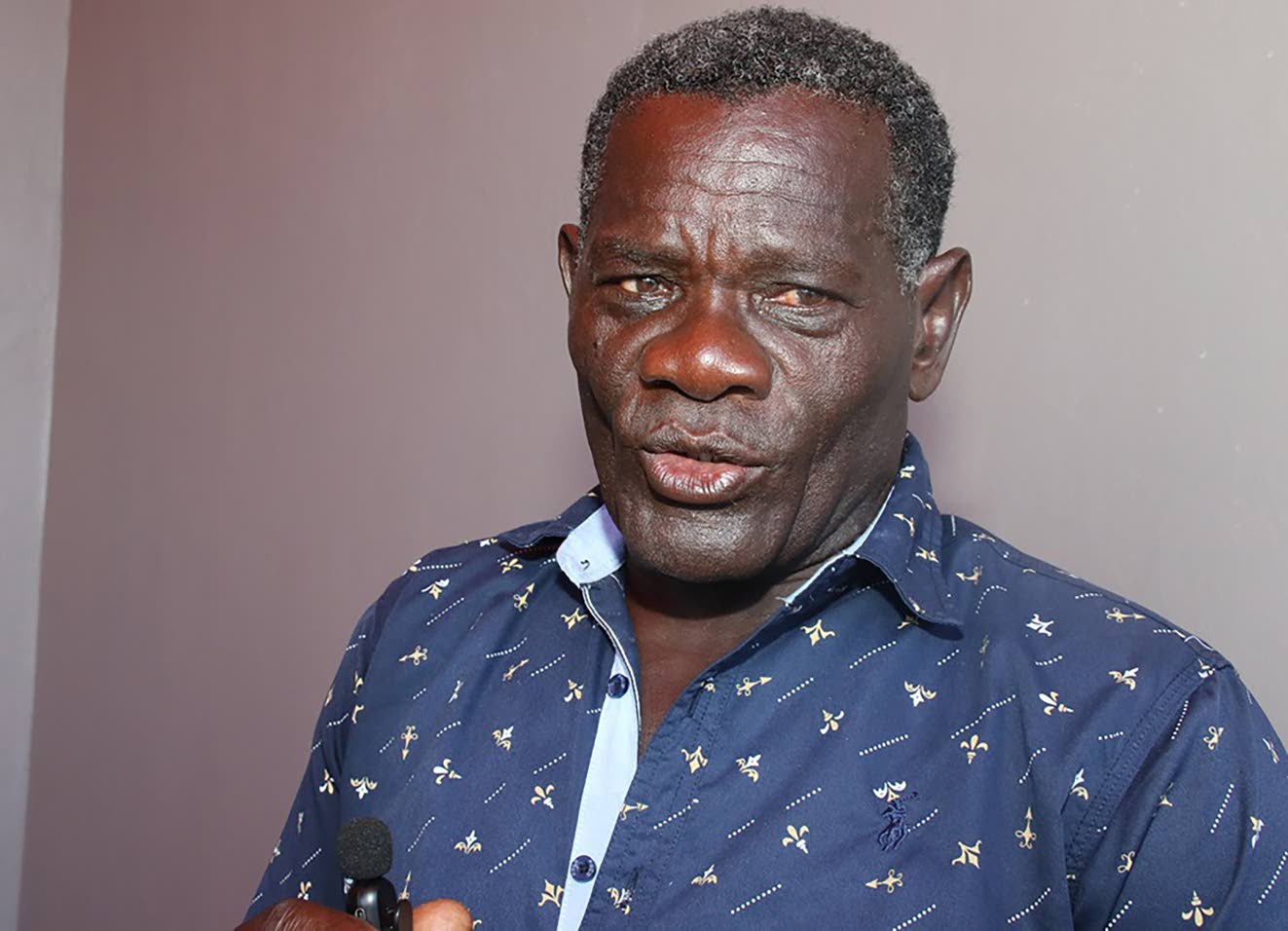
Haitian native Brenor Joseph shares his dream of a life where he is no longer living in fear in a recent interview with the Jamaica Observer. (Photos: Llewellyn Wynter)
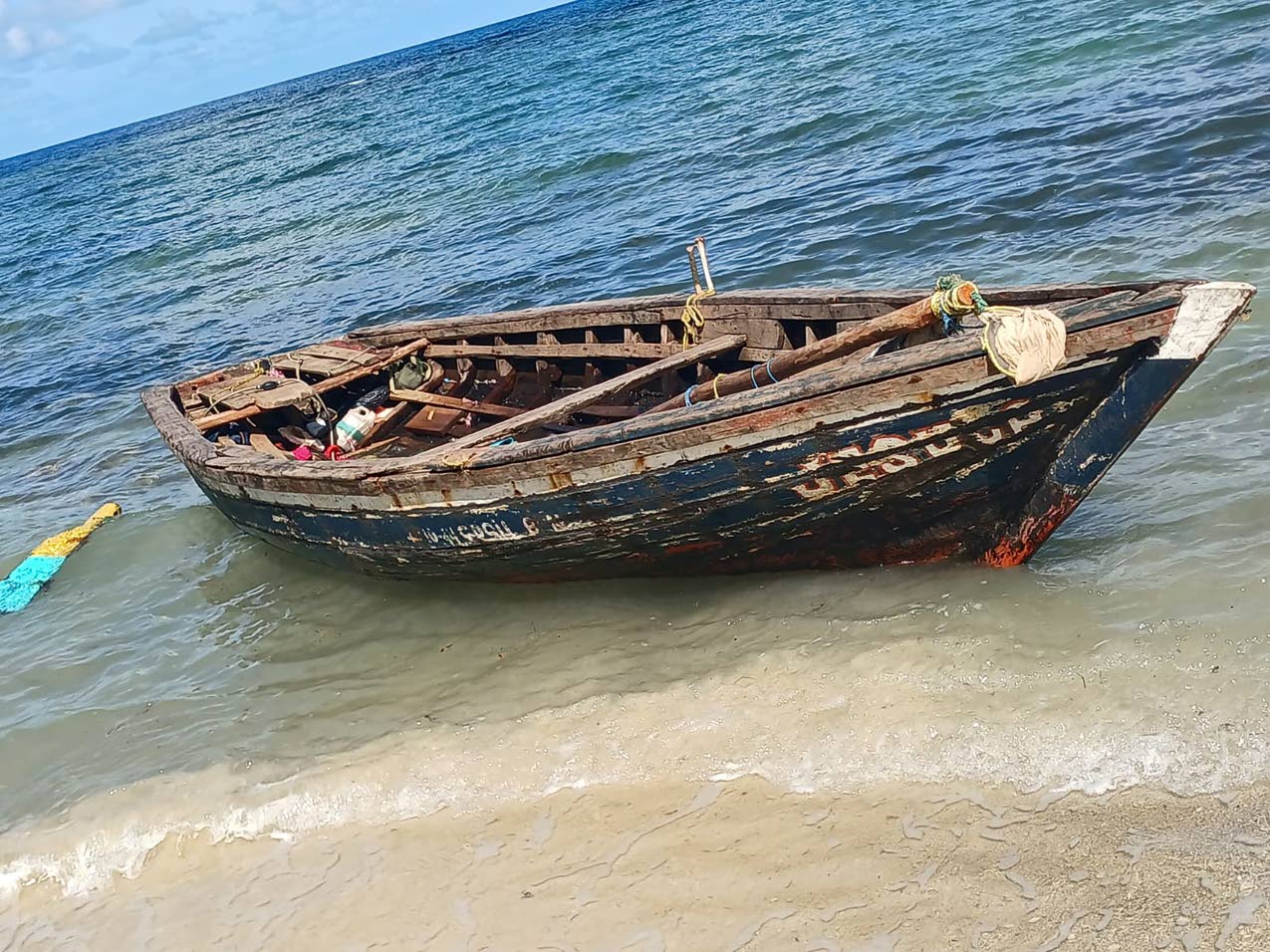
A boat on which 40 Haitians arrived in Kensington, Portland, on September 22, 2025.


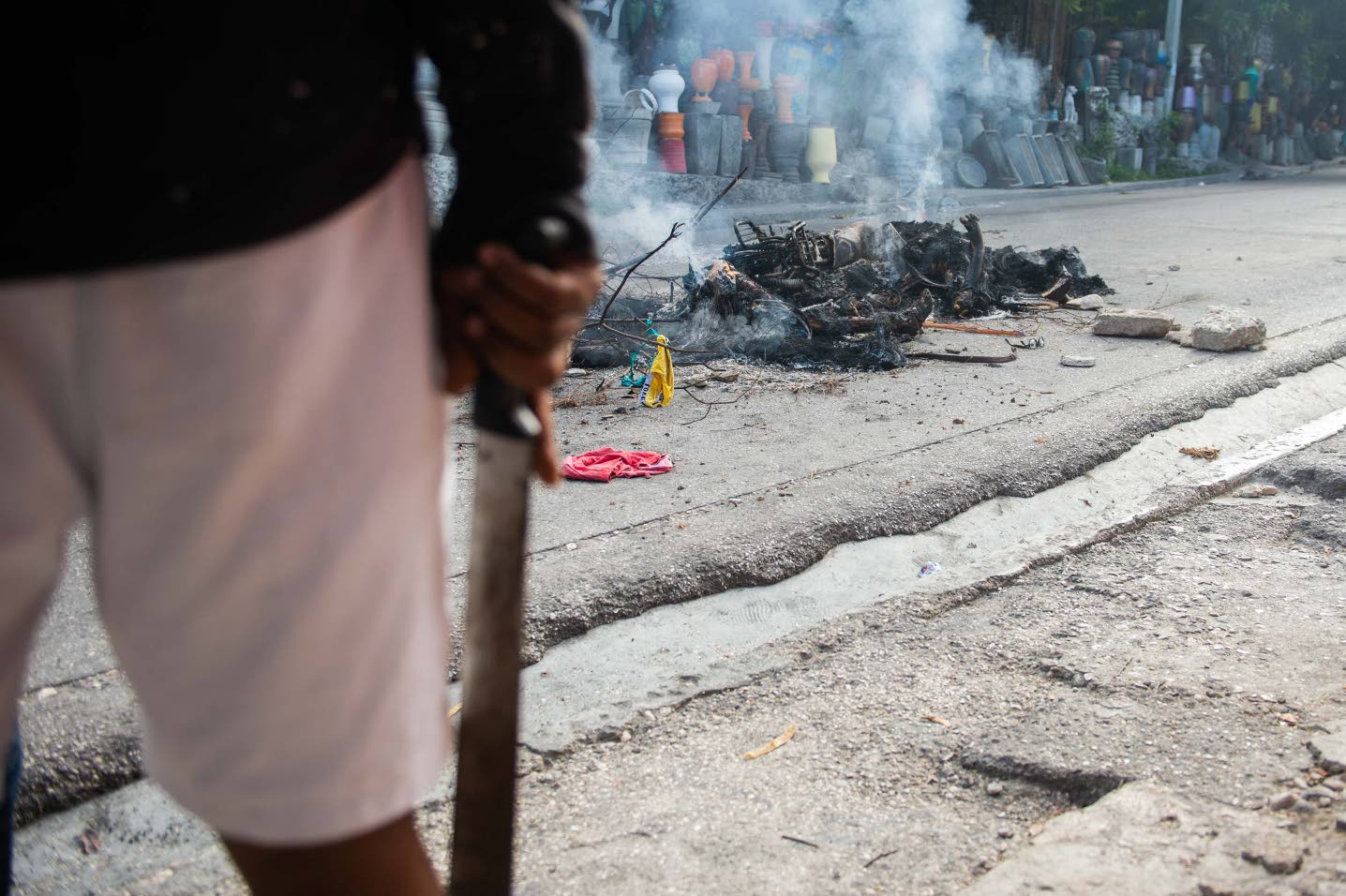
PORT-AU-PRINCE, Haiti — The smoldering remains of the bodies of alleged gang members lay in the street in Petion-Ville, a suburb of Port-au-Prince on November 19, 2024. Police and civilian self-defence groups killed 28 alleged gang members in the Haitian capital Port-au-Prince in an overnight operation, authorities said then. The nation is plagued by gang violence, which forced Brenor Joseph to flee. (Photo: AFP)


