Seven Rivers residents grateful for filtered water
Red Cross, Veolia partner on project
SEVEN RIVERS, St James — Gratitude is an understatement for residents in around the Seven Rivers area of St James who once again have access to potable water, after Hurricane Melissa disrupted supplies more than a month ago.
A compact water filtration system has been set up in the area courtesy of the French Red Cross in partnership with water and waste treatment company Veolia Group, which is based in Europe.
“Without this it would cost me whole heap because we would have to be buying water. Right now the people trucking the water, they are selling the water for at least $1,000 for a small drum,” Carlos Cooke, a farmer, told the Jamaica Observer Monday.
“To fill a big enough drum it’s going to cost a lot, and things not really pretty here now. [It] rough here now because everything around here mash up, farming area mash up, and that is what we survive off,” he explained.
He and his young children previously relied on a spring so this has made things more manageable, especially because another source they were depending on was made unusable by the storm. He said he and many others have been regular visitors to the site since the water system was put in place just under two weeks ago.
“There was a small tank and they changed it and provided a big one, and so it’s a whole heap of people from Cambridge and all about coming to catch water,” said Cooke.
Cambridge Meadows resident Ernest Love is one of them.
“We used to go way down at Reading at the National Water Commission (NWC) site to try and get better water, but right now, with this, this is bailing us out,” he told the Observer.
“This is a cost-saving for me — and more than that, we can drink this right away — but the one from Reading you would have to boil it,” he explained.
He, too, was effusive with his appreciation for the team that set up the system.
“This is what we would call first class [response] that we are getting here right now because, as far as we see, these people rush to the need; we realise that the team did not delay,” he said.
Another resident, retiree Paul White, said accessing the supply is saving him money as it would have cost him $10,000 to fill his 45-gallon tank. He comes every other day to get enough water for him and his wife.
“With this, I am able to get clean water at no cost to me,” he said happily.
“[With] this one, I am certain we are drinking clean water because I see them drink it all the while,” White declared.
The compact water filtration system is mounted on a pick-up and is connected via hoses to a nearby river. The water is pumped into bladders for storage and residents are then able to collect the treated commodity.
“There is a strainer in the water, in the river where you saw the float. It comes up here where there is a small filter here for any debris,” Veolia engineer Daniel Rowe told the Observer.
“Once it comes through we have a flow metre, a pressure regulator, and [it] goes into two cells where there are membranes, which are these string-type things which are hollow on the inside. What happens is, these containers, any dirt and debris, any bacteria stuff like that can’t go through the membranes, so the only thing the pressure will force in is the water and maybe some dissolved solids,” Rowe added.
He said that these are further cleaned though granular-activated carbons, which are porous and will absorb the dissolved solids and any additional things they didn’t get earlier.
“After that, it goes out for testing and then [it’s] ready,” he said.
The only chemical aspect is the addition of chlorine.
Team lead for the French Red Cross Mark Pascal stressed that they test regularly to ensure the water provided is always up to standard.
“We take some of the clean water to the laboratory and we test the chlorine because we have to make sure that it is safe,” he said.
“We have to test it to see how much chlorine is in it because we want to make sure that there is enough and to make sure there is not too much as well,” Pascal explained.
He said that the site was chosen because of the need. It was not an easy decision.
“We chose this area because the area was deeply affected. And, of course, we know there are a lot of other areas affected as well but at some point we had to make a choice — and it was a difficult one,” he said.
For Councillor Javin Baker (Jamaica Labour Party, Cambridge Division) the project is a big deal.
“This is solving, on a scale of one to 10, a level-10 crisis because the majority of the water distribution plants have been significantly damaged,” he explained.
Baker said the usual support mechanism of trucking water into the area has been affected and therefore the help is appreciated and timely.
“Our usual way of getting water into the communities to service the health centres, to service residents, have been severely impacted,” he explained.
“We’re not able to truck as easy because a lot of our contractors got some amount of damage, they got displaced. So, to be able to have this assistance from the Jamaican and the French Red Cross is solving a crisis situation for more than 5,000 persons within this area,” he said.
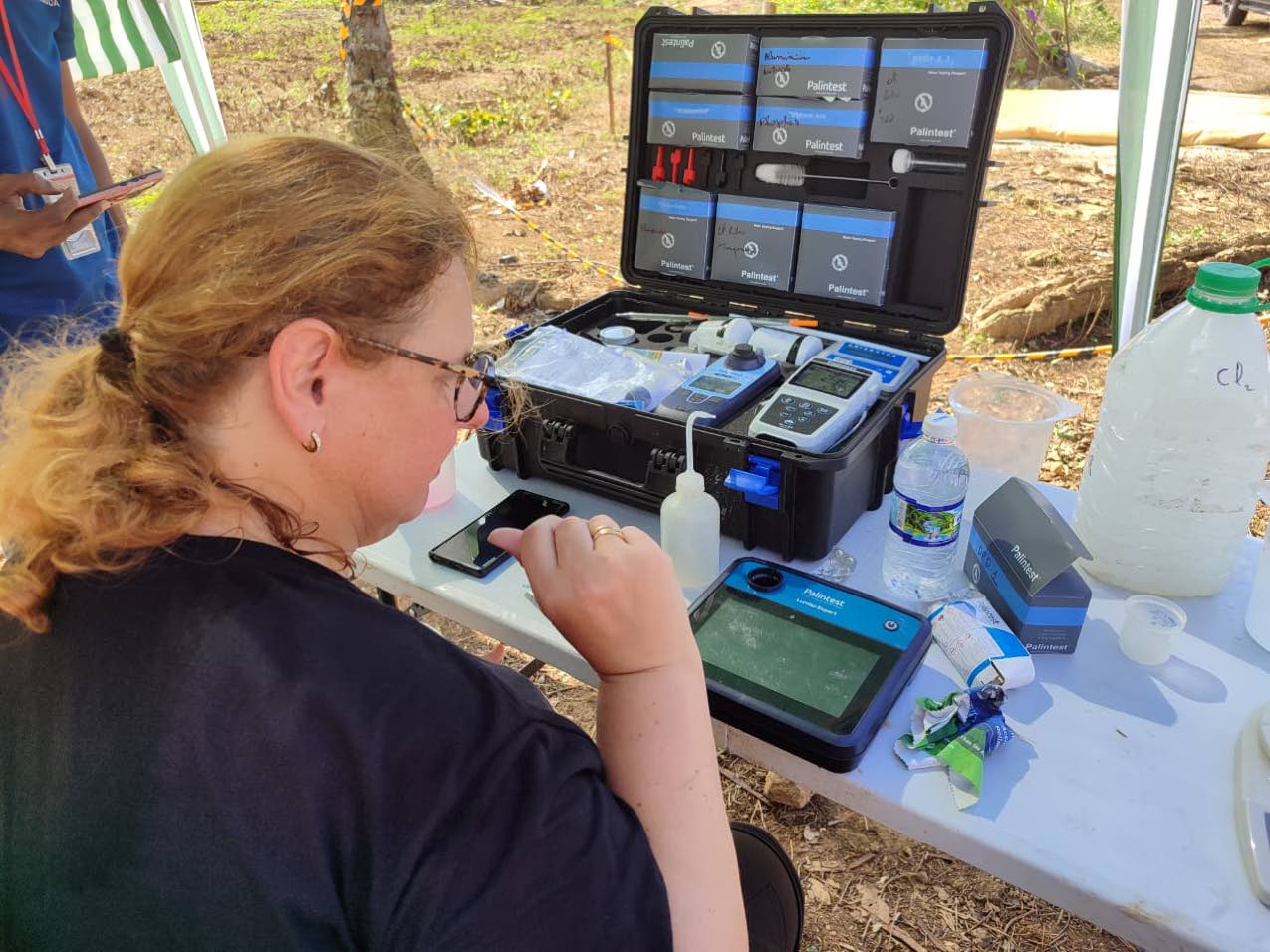
Laboratory specialist Celine Prospy examines samples from a water filtration system in Seven Rivers, St James.
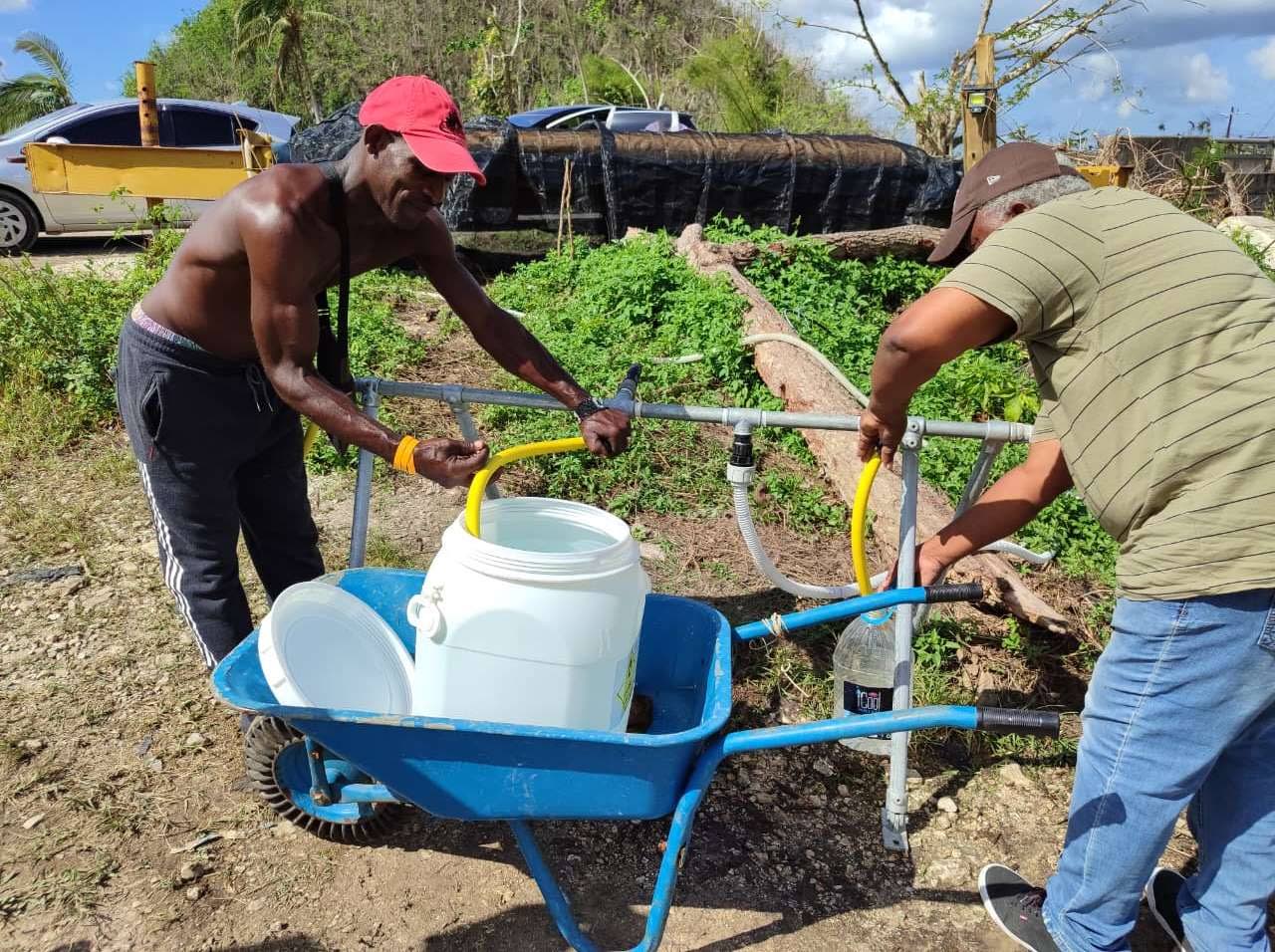
Carlos Cooke (left) and Ernest Love collect water from the filtration system in Seven Rivers, St James, Monday.
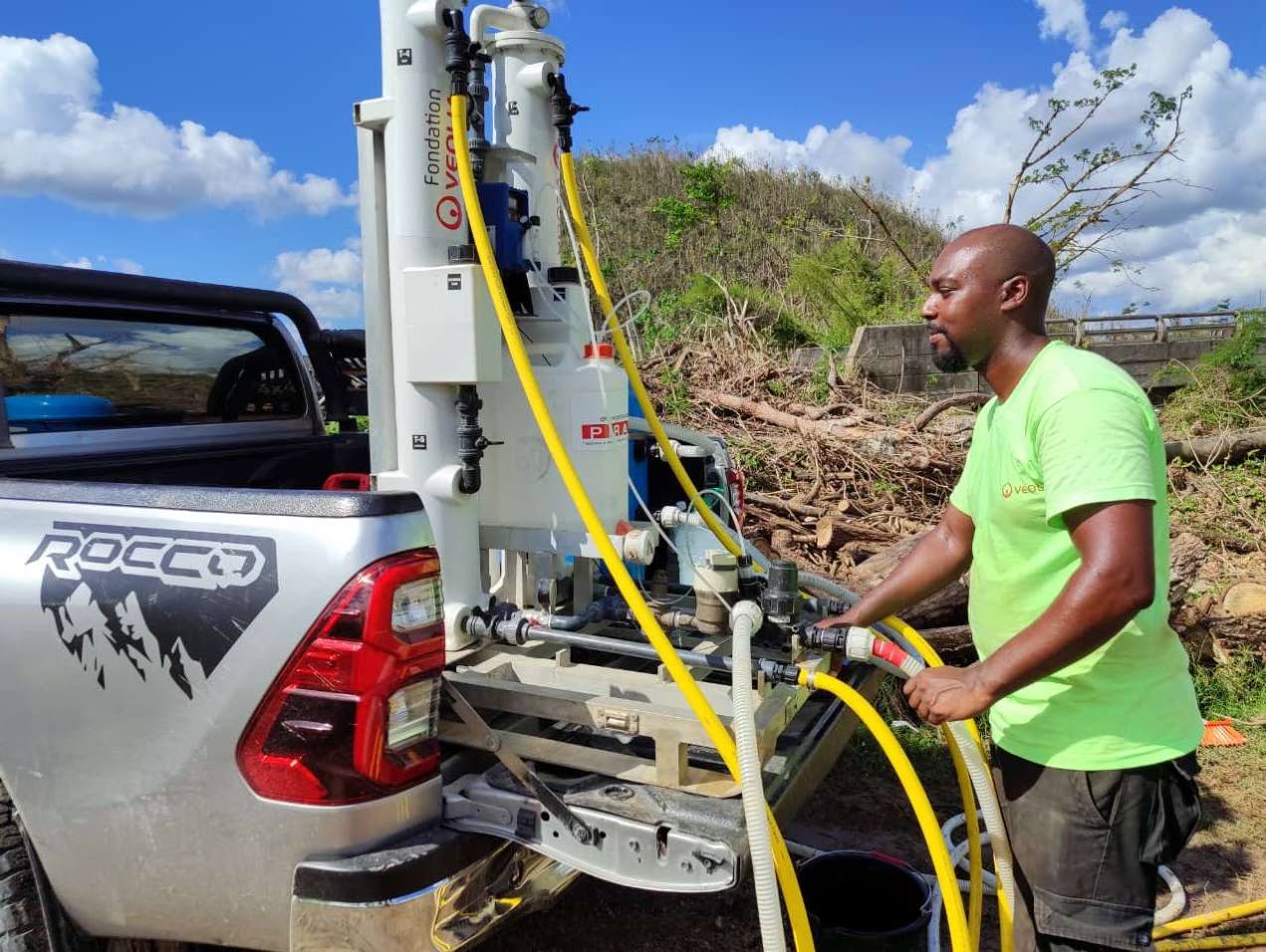
Engineer Daniel Rowe testing the water filtration system in Seven Rivers, St James.