



Climate justice clash
Holness, Golding differ on what Jamaica should expect from wealthy high-emission countries
Prime Minister Dr Andrew Holness, while agreeing with Opposition Leader Mark Golding’s warnings on climate injustice, countered that Jamaica must not depend on the goodwill of richer nations but should instead stand firmly on its own feet as it rebuilds after Hurricane Melissa.
The exchange came during Tuesday’s sitting of the House of Representatives, where the two political leaders outlined sharply contrasting views on how Jamaica should navigate the growing global climate change crisis that continues to leave small island developing states vulnerable.
Golding had warned that Jamaica was being forced into “a massive amount of additional debt” to recover from disasters it did not cause, arguing that wealthy, high-emission nations must shoulder more responsibility.
“It is a sad situation in the configuration of the affairs of this world that we, living in a small island developing state like Jamaica, are the recipients of the increasingly vicious effects of the climate crisis. A crisis which we did very little, if anything, to cause…and yet we, in Jamaica and other islands like ourselves, are suffering the consequences of that on an annual basis,” said Golding.
Holness acknowledged the inequity but insisted that Jamaica must adopt a mindset of self-reliance. He reminded the House that he has long advocated for climate justice on the international stage, including during his time as co-chair of the Global Committee for Climate Financing.
“Yes, there is an injustice in the climate change issues that small island developing states in particular are faced with increasing, in terms of frequency, in terms of intensity, and in terms of the overlapping of disasters that have an impact on our balance sheet as a whole, and the argument is that rich countries that have benefited from using carbon fuels, carbon-based fuels, should compensate. No one argued that, but the position I take is that until then Jamaica must be able to stand on its own two feet,” said Holness.
“But you know, Madam Speaker, I am a strong advocate for climate justice, but the difference between myself and the leader of the Opposition is that I, I am not expecting the international community to give Jamaica anything,” added Holness.
Golding rose on a point of order, insisting he had not argued that Jamaica should expect handouts.
“I was pointing out the injustice of it and the fact that it’s because of the injustice of it that we’re going to have to be taking on this massive amount of additional debt to try and dig ourselves out of this hole,” Golding said, emphasising the burden placed on vulnerable countries.
Holness accepted Golding’s clarification but pressed his case that Jamaica’s fiscal credibility now allows it to secure loans on favourable terms — something he said was unthinkable two decades ago.
The prime minister argued that concessional financing from international financial institutions (IFIs) reflects global confidence in Jamaica’s disciplined fiscal reforms.
He told the House that Jamaica’s improved economic management opened doors that were previously closed to the country.
“Every country borrows. The real issue is what are the terms on which you borrow?” Holness said as he pointed out that Jamaica’s debt-to-gross domestic product (GDP) ratio had fallen sharply over the past decade, giving lenders renewed confidence.
He added that the recovery financing now available to Jamaica is more structured, concessionary, and predictable than anything offered in earlier years.
This, he argued, placed the country in a far stronger position to finance the massive reconstruction effort triggered by Hurricane Melissa.
Holness stressed that the effectiveness of borrowing will depend heavily on how the funds are deployed.
“If you don’t use the money wisely, then you are stuck with high debt. If you use the money wisely, you can expand your GDP and pay back your debt, and you’re in a better position,” he said, urging Parliament to maintain discipline and long-term thinking as the recovery programmes accelerate.
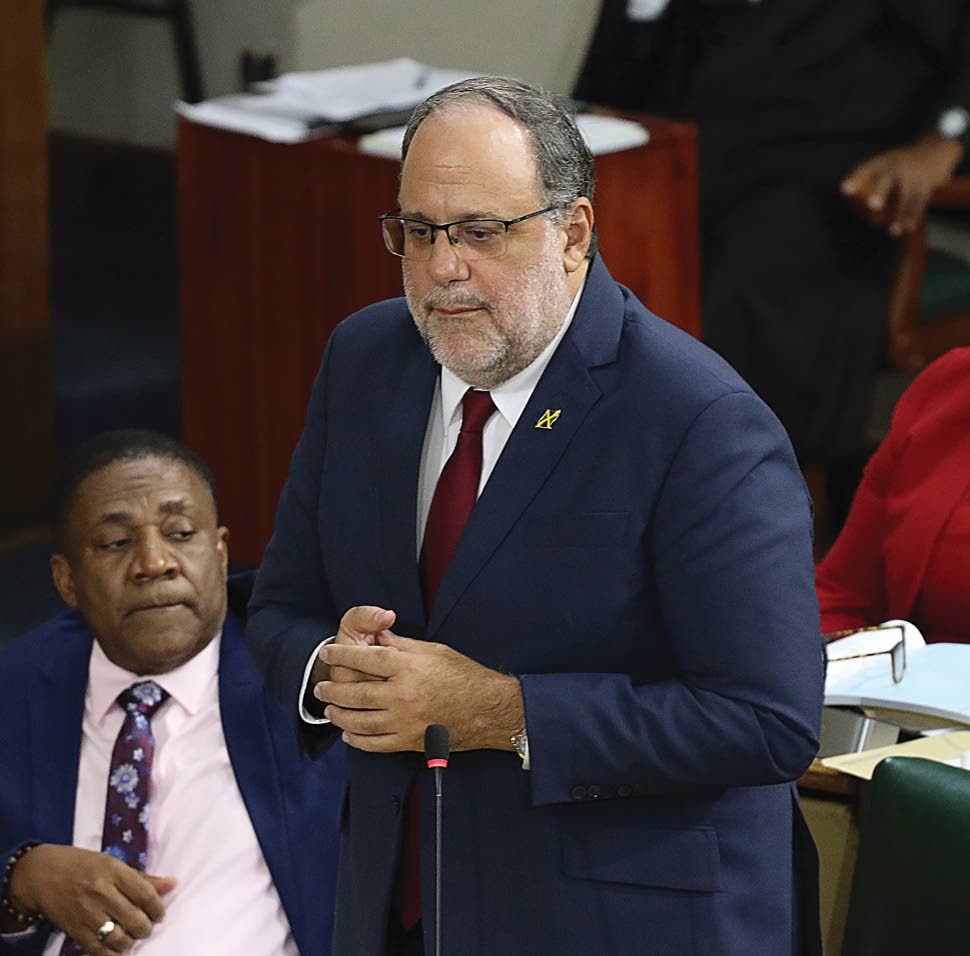
Opposition Leader Mark Golding addressing the House of Representatives on Tuesday. (Photo: Llewellyn Wynter)


