NO RUM SHORTAGE FOR CHRISTMAS
Wray & Nephew confirms ample supply for holiday season
J Wray & Nephew Limited said on Wednesday that last year’s rum shortages have been fully resolved and that Hurricane Melissa caused only minimal disruption to domestic supplies ahead of the critical Christmas season.
Senior Commercial Director Cecil Smith Jr, in an interview with the Jamaica Observer on Wednesday, attributed the previous scarcity to an unanticipated explosion in consumption following the COVID-19 pandemic. He stated all shortages had been rectified since July 2025 and that inventories were now robust nationwide.
“Our consumption ballooned exponentially post-COVID,” Smith said, using a numerical analogy to illustrate the surge. “If we were selling 10, we’re now selling 12. That sudden explosion in growth is impossible to scale for immediately.” He characterised the shortage as a “good problem” stemming from unexpected demand, and firmly denied that stocks of white rum — the unaged spirit used for its flagship overproof brand — had been diverted for ageing to fuel the global expansion of its premium Appleton Estate range. “This is our home market. This is market number one,” Smith Jr said. “Why would we curtail our revenues?”
The company, owned by Italian spirits group Gruppo Campari, holds a staggering 85 per cent share of Jamaica’s overproof rum market, a fiery staple deeply woven into the social and economic fabric of the island. Its flagship Wray & Nephew White Overproof Rum, it says, sells more cases globally than any other rum. The company’s vast portfolio, spanning from the premium Appleton Estate aged rums to Campari, Magnum tonic wine, and a host of local brands, underpins this dominance.
Hurricane Impact ‘Minimal’ for Christmas, But Exports Slowed
While Hurricane Melissa caused severe damage in parts of western Jamaica in October, Smith said the impact on the company’s domestic festive supply was “absolutely minimal”, bordering on zero.
He explained that the storm’s late-October timing was fortuitous from a production standpoint. “All of our production for 2025 was already done. All the rum movement from Appleton and New Yarmouth into Kingston for bottling was already done before we got to October,” Smith Jr said.
Consequently, he stated, “For our own domestic supply, everything… that we could potentially need is in bottles and ready for purchase.”
The primary business impact is on logistics. Congestion at ports damaged by the hurricane will slow some export shipments and delay the import of raw materials needed for 2026 production. “For Jamaica, the congestion at the ports will have no impact on our local business,” Smith Jr emphasised.
2026 Outlook ‘Called Down’ with Flexible Plans
Looking ahead, the company has “called down a bit our outlook for 2026” as it expects consumers in affected areas to prioritise rebuilding essentials over discretionary spending. Smith Jr defined this anticipated “normalcy,” expected by mid-2026, as households once again having budgets that accommodate “some amount of fun, release and relaxation”.
“You don’t buy rum when you’re hungry, you buy rum when your belly is full,” he noted, framing the product’s role in recovery. “Rum will sustain life through sales,” he added, referring to the economic activity it generates, “but rum won’t sustain life through consumption. So rum is a luxury product from that point of view.”
To navigate this period of uncertain demand, the company has adopted a flexible strategy, holding inventory in raw “dry goods versus finished products.” This tactical pivot allows it to conserve capital while staying agile.
“If the demand comes back faster than we anticipated… we can flex the production as the recovery begins,” Smith Jr said, outlining a plan to rapidly convert materials into saleable stock in response to any uptick.
Community Bars: The ‘Lifeblood’ of an ‘On-Trade’ Market
The interview cemented that the core of the business is not in tourist hotels, but in Jamaica’s thousands of community bars — a reality that defines the island as a predominantly “on-trade” market. Smith Jr stated that approximately 70 per cent of all alcohol consumption in Jamaica occurs in these local, often family-run establishments, a figure he said holds true across the industry.
“Our business is built on community bars where regular average Jamaicans like me and you go for a drink after a stressful week of work,” he told BusinessWeek. “That’s the lifeblood of our business.” These bars in western parishes like St James, Hanover, St Elizabeth, and Westmoreland alone account for roughly one-third of the company’s sales, he noted.
Wray & Nephew’s support for this sector, described by Smith Jr as an annual investment of “hundreds of millions of Jamaican dollars”, is strategically pragmatic. Beyond branding, it directly alleviates operating costs for proprietors. “If you think about, you as a business owner… needing to find the money to repaint your bar every two years… here at Wray & Nephew we come in and we take that expense off your head,” he explained. “If you drive across the island, you’ll be hard-pressed to find bars that aren’t painted with our brands.”
Recovery in the West and Price Stability
This community bar network, so vital to sales, was directly in the path of Hurricane Melissa. In the hardest-hit parishes, the devastation is profound. “When I travelled there, physical structures are no longer where they used to be,” Smith said of areas like Black River in St Elizabeth, where new orders are not expected soon.
However, he reported “signs of life” elsewhere in western Jamaica, with an estimated 70 per cent of trade customers in other parishes “already starting to trickle back in some orders”.
He framed the revival of these bars as the catalyst for a wider economic recovery. “We need people back to work in order for them to pick back up their lives,” Smith stressed, referring to bartenders, bar owners, and hotel workers. “It’s that putting people to work that will allow money to come back into the hands of the most impacted to start the rebuilding process.”
The company is also monitoring retailers to prevent price gouging, a concern raised by government ministers. Smith Jr said he was “happy to say” the company was not seeing unfair price increases on its brands and was working with partners to maintain pre-hurricane pricing, calling it important for consumer access.
Smith also highlighted that reviving this network has implications beyond Jamaica’s shores. With nearly four million visitors annually, the island’s community and hotel bars serve as a powerful global showcase. “They’re being bombarded by our local brands,” he said, “and when they go back home they’re going to look out for them.” This, he concluded, is why the Jamaican market’s health is strategically vital not just for Wray & Nephew, but for the global spirits industry at large.
Portfolio and Production Buffers
Beyond the iconic overproof rum, the company’s sprawling portfolio includes Appleton Estate aged rums, Campari, Magnum tonic wine, Red Label Wine, rums creams, and liqueurs like Sangster’s. Smith specifically assured bakers that ample Red Label Wine — a crucial cake ingredient — is available, noting its annual sales spike runs “from late October all the way to right before Christmas”.
The portfolio also includes strategic local brands like Charlie’s JB Overproof, which Smith Jr described as a “brother” to Wray & Nephew White Rum, sharing the same strength but favoured in different regional parishes. Together, he said, these two brands secure the company’s 85 per cent dominance of the local overproof category.
Supporting the commercial assessment, Manufacturing Director Sanjay Bowla said the company has significantly increased inventory buffers, now holding stocks sufficient for two to three months of “average demand”.
He defined that scale precisely: At peak, the company bottles approximately 15,000 cases of white rum (750ml) and a further 12,000 cases of the 1-litre format per day. This metric underscores the vast production scale now safeguarding both Jamaica’s festive tradition and a vital economic sector as recovery takes root.
Boxed and ready: Cases of rum stacked in the J Wray & Nephew warehouse, representing the restored output from its production lines. At peak, the company packages thousands of cases daily to meet local demand, with stock secured for the crucial Christmas period. (Photo: Naphtali Junior)
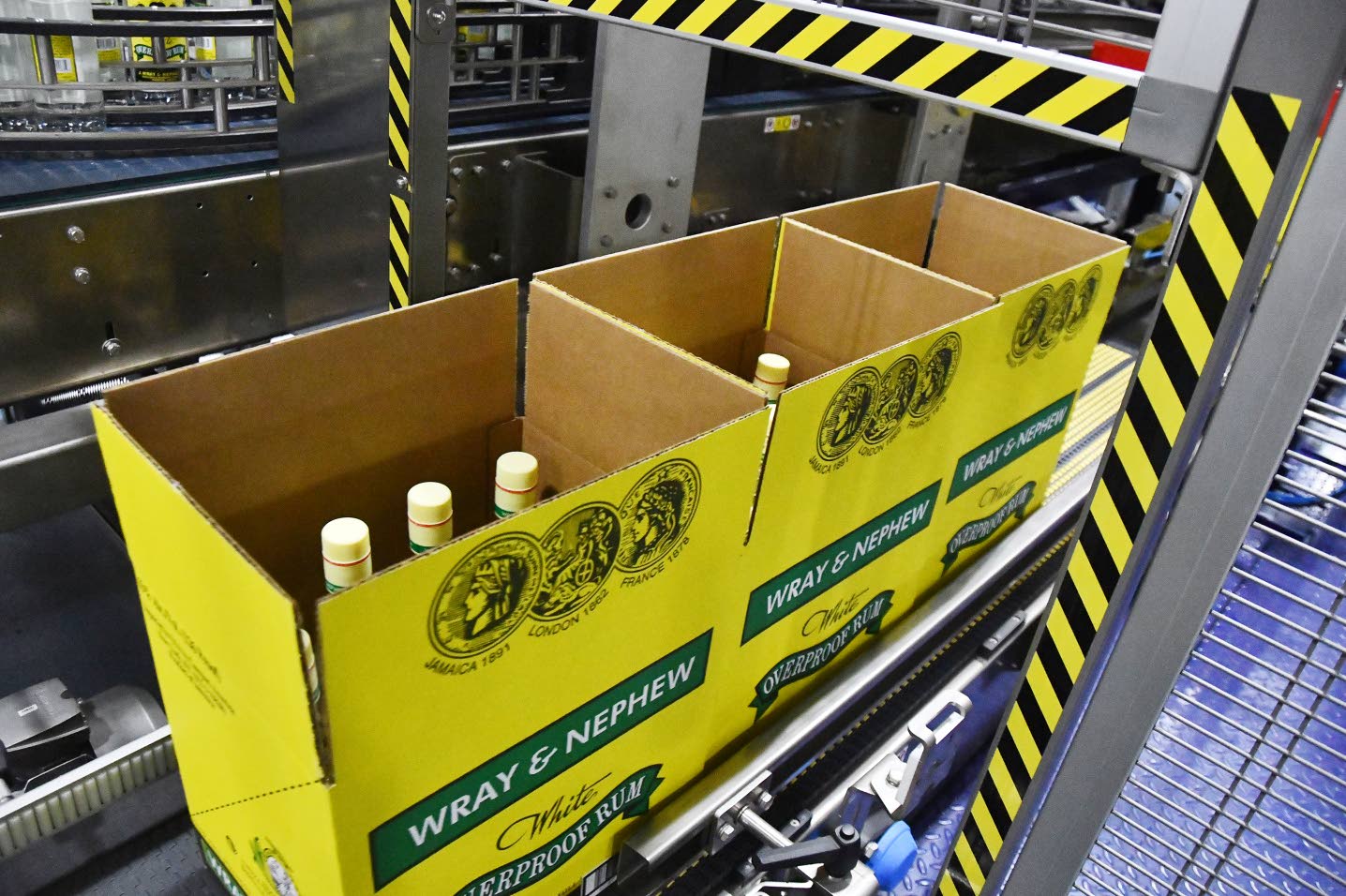
On the line: An open box of Wray & Nephew rum bottles moves through the packaging process at the company’s Kingston facility, a snapshot of the continuous operation now fuelling Jamaica’s holiday supply.Naphtali Junior
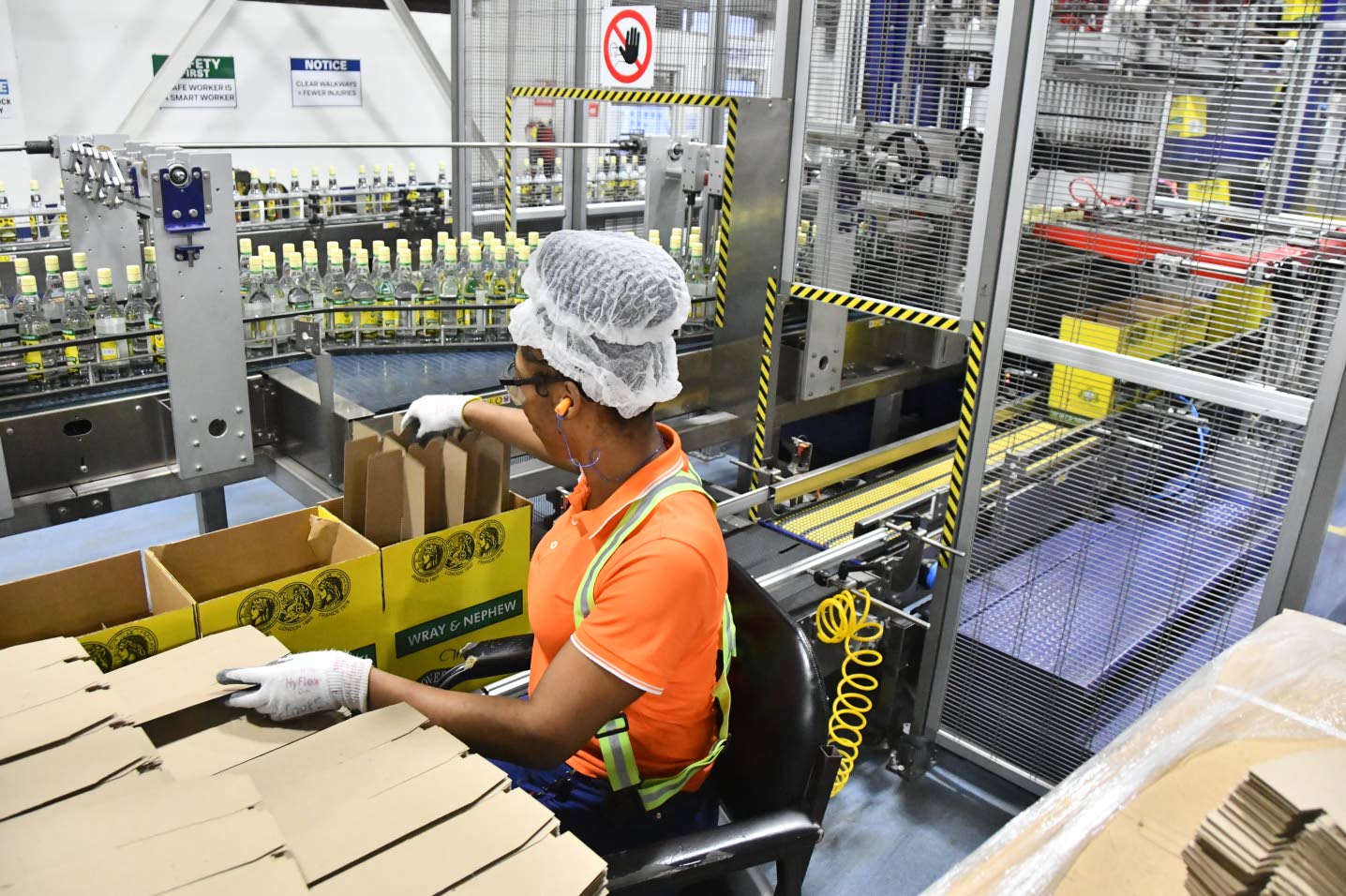
A packaging worker assembles cardboard dividers for a case of Wray & Nephew White Overproof Rum on the production line in Kingston. The manual step is part of the final stage before cases are shipped to wholesalers and retailers across the island.Naphtali Junior
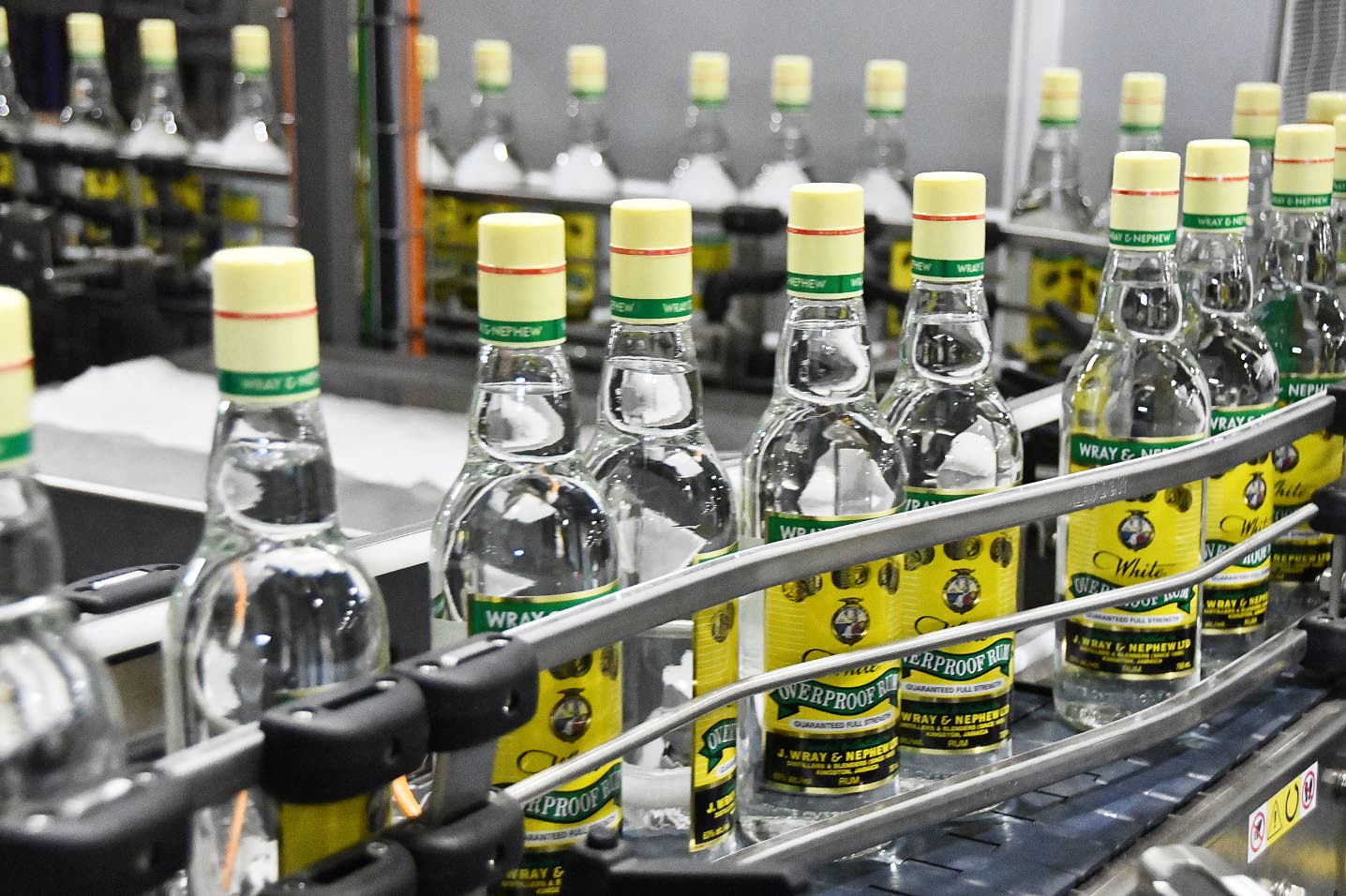
Bottles of Wray & Nephew White Overproof Rum move along the packaging line at the company’s facility in Kingston. At peak operation, the plant bottles approximately 15,000 cases of the 750ml format per day, a scale underscoring the restored supply for the festive season.Naphtali Junior

SMITH JR… we have called down a bit our outlook for 2026… but if demand comes back faster than we anticipated, we can flex production as the recovery beginsNaphtali Junior
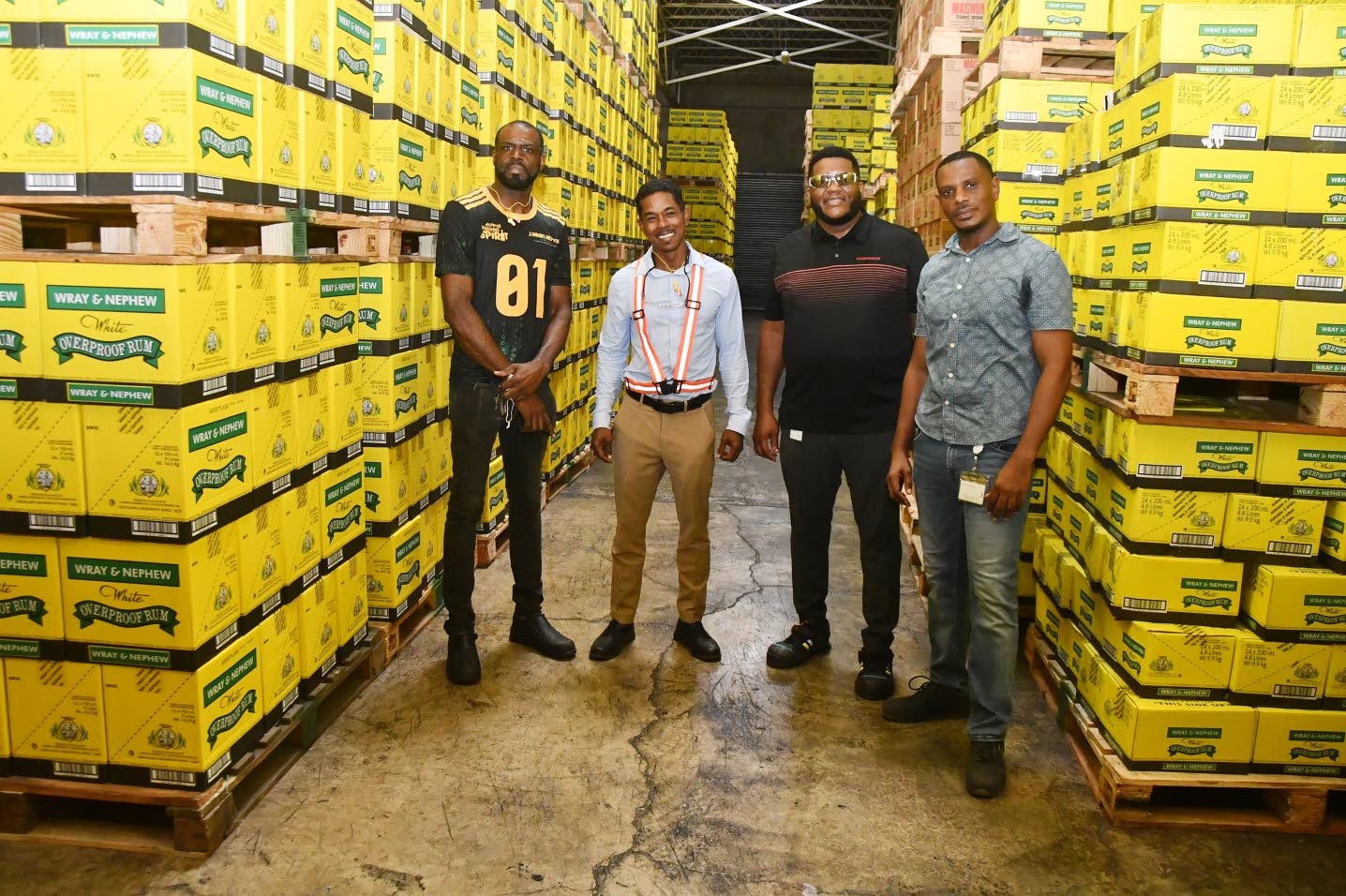
From left: Denton Roberts, acting team leader for packaging operations; Sanjay Bowla, manufacturing director; Cecil Smith Jr, senior commercial director; and Ricardo Anderson, acting packaging manager, inside the company’s “rum room” warehouse in Kingston on Wednesday. The company says it now holds strategic inventory sufficient for up to three months of average demand.Naphtali Junior