



Bird flu caution
Scientist urges vigilance in Jamaica as Cayman Islands suspect avian migrants responsible for outbreak
A presumption by Cayman Islands authorities that the bird flu outbreak detected there just over a week ago was introduced through migratory birds has resulted in a local scientist urging vigilance in Jamaica.
Well known biologist and assistant lecturer at The University of the West Indies’ Department of Life Sciences Damion Whyte is calling on Jamaicans to report sightings of any birds that appear ill.
“If you see a sick bird, put on gloves if you have to move it, and get that information to the authorities — the [Ministry of Agriculture’s] Veterinary Division, NEPA [National Environment and Planning Agency], Bird Life Jamaica, or message me @
roostersworldja [on social media],” Whyte, a wildlife and environment expert widely known for his social media posts, said in a video.
He said that reporting any such sightings will allow the authorities to mobilise teams “to deal with it at that level before it spreads”.
“That is what they are doing in Cayman; they have asked residents to inform the authorities if they have seen any sick birds or any birds acting weird,” Whyte said.
At the same time, Jamaica’s health authorities say they are monitoring the situation in the Cayman Islands and are preparing just in case any cases are detected here.
They said the Veterinary Division conducts surveillance in animals and continues surveillance and testing of flu-like illnesses in humans.
On Friday, long-standing newspaper
Cayman Compass reported that country’s Senior Veterinary Officer Dr Tiffany Chisholm as saying that the bird flu outbreak detected in West Bay is believed to have been introduced through migratory birds or chickens that had contact with them.
According to the newspaper, the first confirmed case was identified on November 28 on a chicken at a farm on Cemetery Road, after several turkeys were found dead.
That, the newspaper said, marked what Chisholm described as the effective start of the local outbreak.
“Subsequent testing detected the virus in chickens, quail, farmed ducks, a wild whistling duck, and a goose at the same site,” the
Cayman Compass report read.
“All 69 birds on the property have since been culled, no other farms have tested positive so far, and two additional sites are now under quarantine as testing continues,” the newspaper added.
According to the
Cayman Compass, after laboratory analysis and virus tracing — conducted with support from the United Kingdom (UK) — Chisholm said the strain detected in Cayman matches the type currently circulating in North America known as H5N1.
“While officials have not been able to pinpoint the precise entry point, she said preliminary tracing indicates the virus was most likely carried in by migratory birds or transmitted via chickens that had been exposed to them,” the
Cayman Compass reported.
“We did source tracking of this virus, with assistance from the UK, and we are fairly confident that it was either brought in by the migratory birds or it was brought onto the farm by the chickens, which were brought in by migratory birds,” the newspaper reported Chisholm as saying at a virtual meeting with farmers on December 2.
“The reality around the world is that migratory birds have played one of the biggest roles in introducing this virus to most countries,” she said.
The newspaper reported that the affected farm remains under quarantine and will continue to be locked down for at least three to four weeks.
Avian influenza, commonly called bird flu, is a viral infection that spreads in birds, cows, and other animals.
Health professionals say it can sometimes spread to people and can cause mild to severe respiratory symptoms as well as pink eye. People who work with poultry, waterfowl and dairy cows are most at risk.
In his post Whyte, a former president and current executive member of Bird Life Jamaica, explained that migratory birds leave North America to escape the winter and normally arrive in the Caribbean from September.
“They chill out in the country, eating. You see them all around — people call them Christmas birds — and they stay here until May, after which they go away,” Whyte said.
“Studies have shown that migratory birds can have the avian influenza and they don’t show signs of sickness. They can pass it on in water, or through saliva, or their feathers,” he explained.
“Also, if the infected bird is dead and a predator — such as mongoose, pig, or other avian predators like chicken hawks — eat it, they can pass on the virus to our birds,” he added.
He urged chicken farmers to ensure that their coops are not damaged so as to prevent wild birds from entering them to drink water or feed.
Additionally, Whyte said that since the passage of Hurricane Melissa on October 28, “we have been getting reports of injured birds but we believe those injuries are from the storm”.
At the same time, he encouraged Jamaicans to keep abreast of developments in the Cayman Islands, “because this can affect our poultry industry, and our local birds”.
Added Whyte: “If you see sick birds, don’t touch them with your naked hands. If you have to rescue them, don’t put them in cages with other birds that are not infected.”
The
Cayman Compass said that the outbreak, “has drawn renewed attention to Cayman’s feral chicken population, which some now fear could become a major vulnerability if the virus spreads beyond the original site”.
The newspaper also reported that the Cayman Government is preparing to roll out targeted culling operations focused on feral birds.
“According to Chisholm, specialist teams are expected to begin work shortly after legal and access arrangements are finalised,” the newspaper report said.
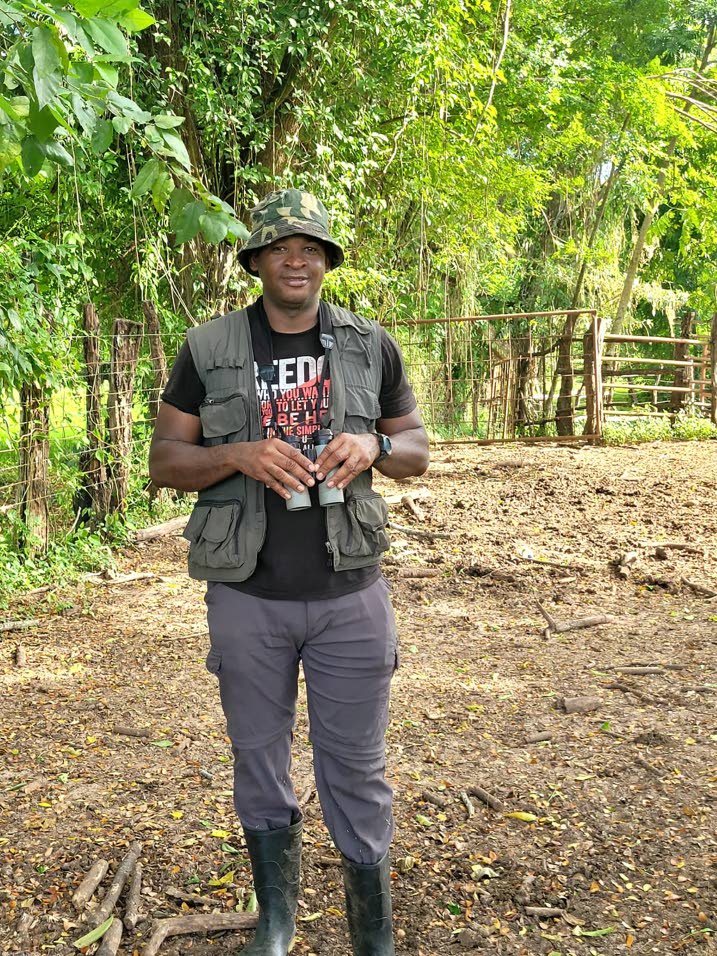
WHYTE…if you see sick birds, don’t touch them with your naked hands


