



Political leadership in a time of crisis
There is perhaps no better time to assess the worth of political leadership than in a time of national tragedy.
In times like these, there are certain imperatives that are imposed on those who lead. In responding to these imperatives, the real strength and moral character of the leader come to the fore. Mental acuities are judged and the ability to plan and execute well-worked out strategies to combat the crisis and get the country back to a healthy path become apparent.
But a national tragedy also shows up some of the most egregious aspects of human nature. They expose the moral weaknesses that have always lurked which incapacitate the will to plan and execute projects in an orderly manner with the highest probity possible. Most importantly, they also reveal personal agendas and expose those who are more bent on self-aggrandisement and self-enrichment.
Those to whom this applies, in any sphere of human endeavour, will inevitably fail to deal resolutely with the problems generated by the crisis. For leaders who are bent on this course, there is no preoccupation with demonstrating the requisite work ethic necessary to get the job done. Neither is there any urgency to attend to the obvious needs of the most vulnerable. In the context of the Melissa recovery effort, their modus operandi is to make the work of the Government or even civil organisations more difficult so that at the end of the day they can point fingers, or say, “I told you so.”
So it is not just the pace of the recovery process that is being watched, but the integrity of the leadership that we have elected to govern us that is under scrutiny. For the Dr Andrew Holness Administration there has never been a greater opportunity to prove its worth to the Jamaican people than that presented by Hurricane Melissa. The most devastating hurricane to hit the country happened just under two months of the Jamaica Labour Party’s (JLP) re-election to a third term. In a quieter and more contemplative moment the prime minister must have asked himself: What did I do to deserve this? If he did, he seemed to have snapped out of that thought process soon enough to recognise that this is what he and his party signed up for.
The Administration had honed some skills in its response to the COVID-19 pandemic which I am sure is assisting it now in responding to this crisis. But COVID-19 did not leave so many people homeless. Homes were destroyed within four hours of a raging menace. The scale of the devastation of livelihoods, the mental toll, and what it will take to rebuild weigh heavily at this time. Any political leader would recognise that in the context of what the country faces, this is not a time for nitpicking, personal gripes, or finger pointing. It would be an insult to the intelligence of the Jamaican people for this to be so. Worse, it would be a disservice to the people who have been badly affected and want to reclaim their lives and livelihoods.
In this context, I am watching the posturing of the Opposition with regard to this crisis. It is the business of the Opposition to ask questions and get relevant and truthful answers to questions asked. Sometimes members of the Opposition can appear to be irritating and may rub some people the wrong way, but this is the nature of the cut and thrust of arguments in a parliamentary democracy. This is particularly so if the questioning and regaling of the government members is done in a respectable manner.
We have often seen how discussions can get derailed into personal invectives in and outside the Parliament. Any Government would wish that it could conduct its business without the gnawing irritation of having to give account of its stewardship. So where there is a vibrant Opposition the business of the people can be well served. And where there are personal agendas, these can be exposed and hopefully cauterised.
From what I have seen, the people are not being served by the seeming lack of equanimity in the interactions between the Government and the Opposition. We had a bruising general election contest and it is obvious that there are still some wounds yet to be healed; some personal hurts and peeves to be overcome; and the need for a large supply of social gripe water to soothe the agony of those who believe in tracing than good orderly discussions.
The leader of the Opposition must be reminded that his party lost an election and that the people have placed the burden of running the country on the shoulders of the JLP under the leadership of Prime Minister Holness. He cannot, therefore, demand to be included in critical areas of the rebuilding process. Any good Government would consult with a well-meaning Opposition. There should be room for it to serve in a consultative or advisory capacity, but to believe it can have a seat at the table of decision-making is quite a stretch.
You can only be invited, like anyone else, to be part of a process. One gets the distinct impression that the Opposition leader wants to do more than this; he wants to make decisions. What is clear is that the responsibility of Government is in the hands of the JLP. If anything goes wrong, the leader of the Opposition will not be called upon to give answers. Most likely he would do a Shaggy on us and say, “It wasn’t me.” There is no sharing of a crown here.
There are areas in which the Opposition can and must get answers to its questions, such as the Public Accounts Committee (PAC) and Public Administration and Appropriations Committee (PAAC), and certainly in Parliament. But the day-to-day management of the recovery is not its remit and it must wait until it is invited to be part of a process.
But there is a caveat. Any well-thinking and sagacious prime minister would see the need to listen to the people’s Opposition, oops, I meant his majesty’s loyal Opposition. It must not be sidelined or relegated to the periphery of the recovery process. No good interest is served by doing that, certainly not that of the Jamaican people. One hopes that there will be a more accommodating atmosphere that lends itself to greater comity and a greater willingness for all parties to work more closely for the good of the country. The times demand this. The people of Jamaica deserve this.
Dr Raulston Nembhard is a priest, social commentator, and author of the books Finding Peace in the Midst of Life’s Storms; Your Self-esteem Guide to a Better Life; and Beyond Petulance: Republican Politics and the Future of America. He hosts a podcast — Mango Tree Dialogues — on his YouTube channel. Send comments to the Jamaica Observer or stead6655@aol.com.
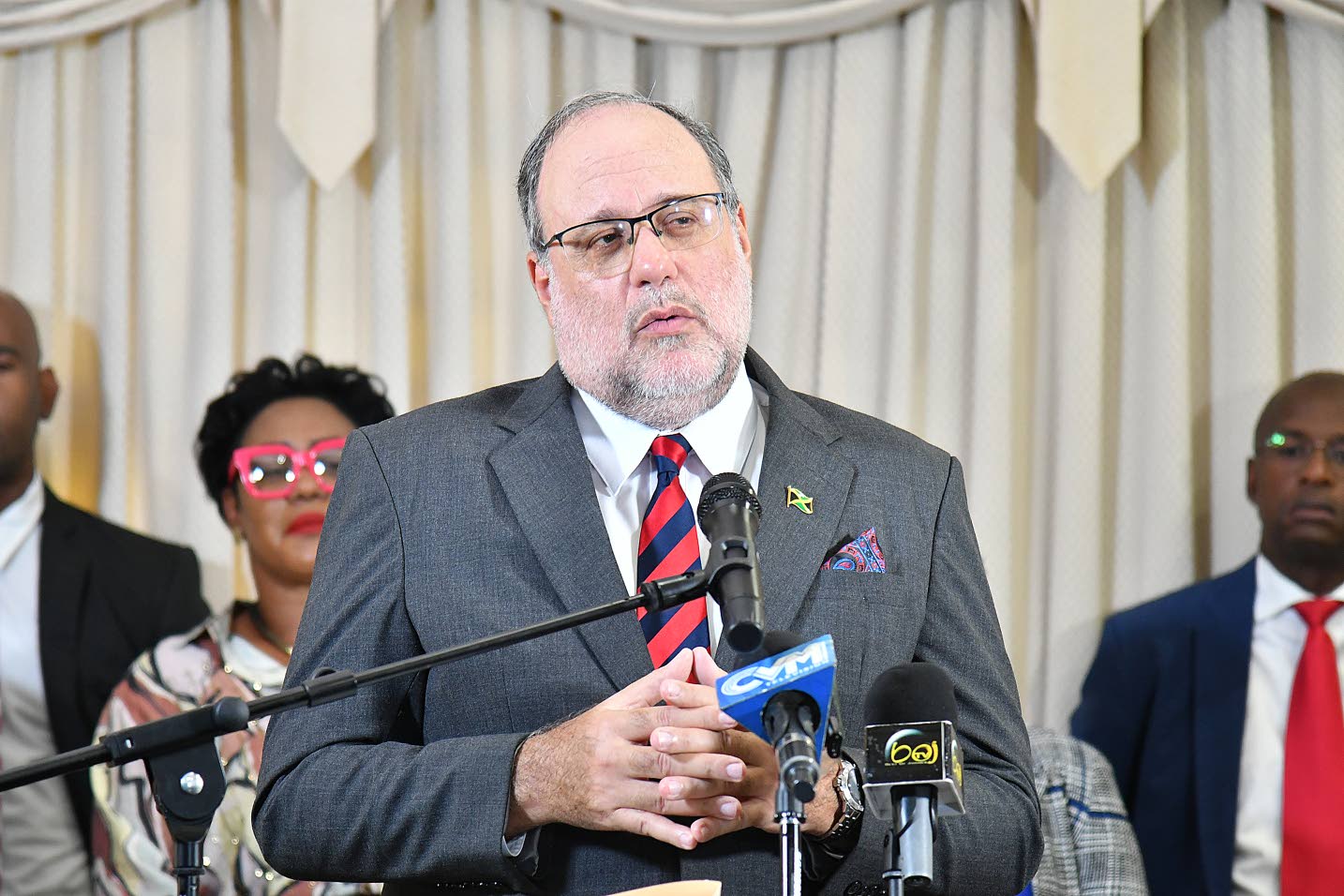
Mark Golding (Photo: Karl Mclarty)
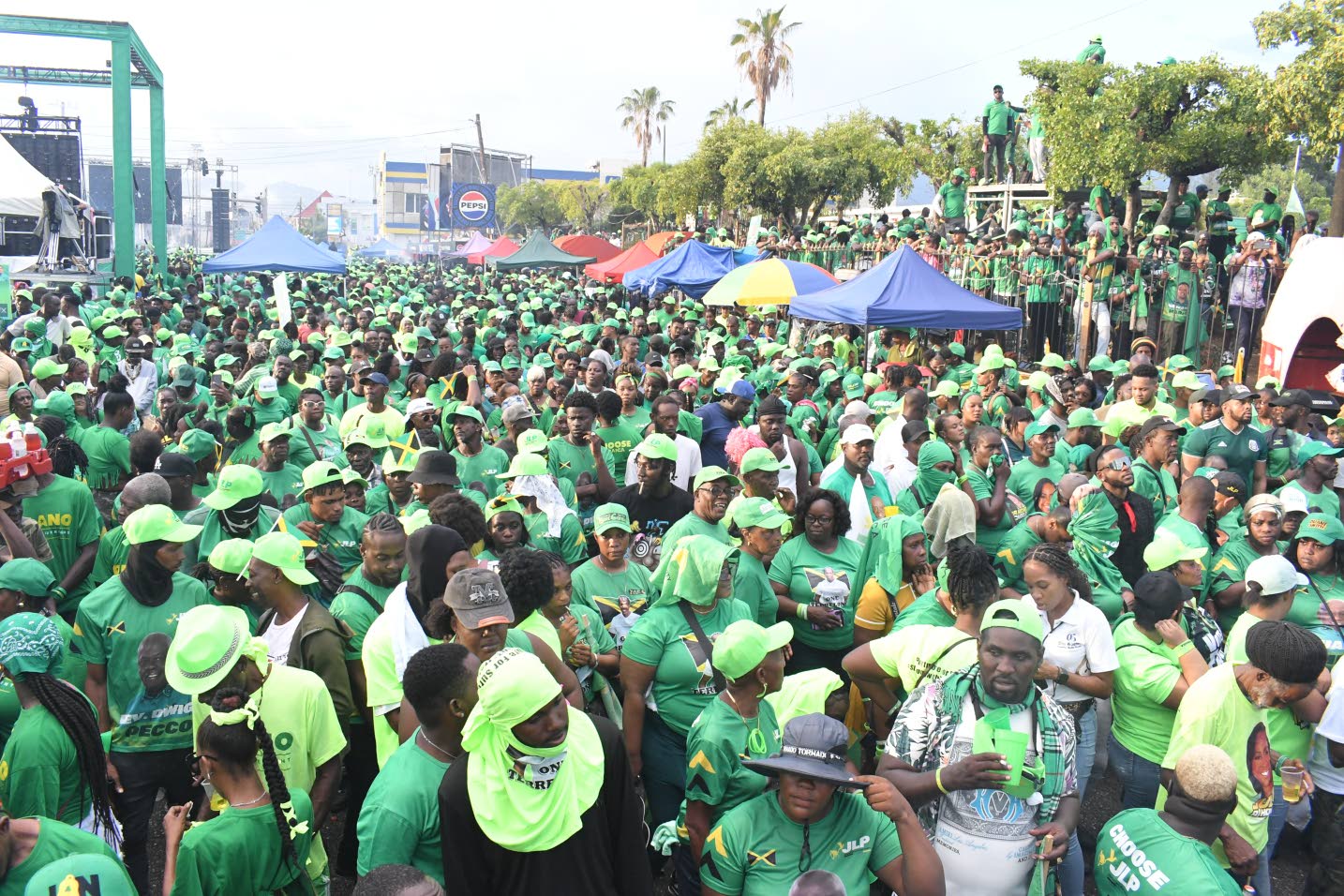
The most devastating hurricane to hit the country happened just under two months of the Jamaica Labour Party’s (JLP) re-election to a third term. (Photo: Karl Mclarty)
Raulston Nembhard


