



WEST INDIES PETROLEUM TERMINAL FILES FOR $5.59-B JSE LISTING
Move aims to provide liquidity for shareholders and raise profile of Jamaica’s secondlargest fuel storage facility
WEST Indies Petroleum Terminal Limited (WIP Terminal) is seeking a listing on the Jamaica Stock Exchange (JSE) in a move to raise its corporate profile and provide liquidity for shareholders, amid falling profitability and low cash reserves.
Anchored by its 740,000-barrel West Indies Petroleum South Terminal at Port Esquivel in St Catherine, the firm plans to list 11.18 billion existing shares by introduction at $0.50 each. The transaction implies a market capitalisation of approximately $5.59 billion (US$36.1 million) and will not raise new capital for the company.
The listing, however, creates a public market for shares largely held by WIP Energy Limited (79.84 per cent) and World Energy Solutions Limited (19.96 per cent). It follows a May 2025 reorganisation where WIP Energy acquired the majority stake from the ultimate parent, West Indies Petroleum Limited — a step described in corporate documents as one to “maximise shareholder returns and facilitate capital markets activities”. WIP Energy is the fuel distribution arm of West Indies Petroleum, which itself manages the bunkering business, while WIP Terminal operates the group’s substantial storage infrastructure.
A Calculated Corporate Evolution
The listing represents the latest step in a deliberate, near-decade-long corporate build-out. West Indies Petroleum group entered the storage business in 2016 with the acquisition of the Port Esquivel terminal — then a 600,000-barrel ethanol facility — from Jamaica Broilers Group. The move was described by group leadership at the time as a pivotal shift “from a bunkering specialist into a full-service energy company”, designed to provide the captive capacity needed to secure major supply contracts.
This vertical integration was finalised in a May 2025 reorganisation, which the group’s CEO stated was designed to “facilitate capital markets activities” — a goal now realised with this listing. The public listing of this terminal asset now tests whether that strategic build-out can translate into sustainable value for public shareholders.
That test is amplified by a profound market contradiction. The company is coming to market at a moment of tension for the regional energy sector. While Latin America and the Caribbean still derive over 40 per cent of primary energy from oil — with persistent demand in transport — the long-term trend is toward electrification and cleaner fuels. This dual-track reality underpins WIP Terminal’s investment case: Its infrastructure has clear utility today, underpinned by the group’s claimed dominance in local bunkering (60 per cent) and retail fuel supply (30 per cent), but its long-term strategic value may be contingent on an ability to adapt its assets to a changing energy mix.
Still, the pursuit of a public listing comes after a year of sharply declining earnings. For the year ended December 31, 2024 WIP Terminal’s revenue from storage and throughput fees grew 8.3 per cent to US$8.21 million, however, net profit fell 51.9 per cent to US$1.04 million. The profit squeeze was driven by two primary factors, which together amounted to over US$2.1 million in additional charges against earnings. Finance costs more than tripled to US$1.08 million following a series of corporate bond issuances in 2023 and 2024. Concurrently, the company recorded a US$1.04-million impairment loss against a 15-year promissory note issued by World Energy Solutions Limited. This note was the sole consideration for World Energy’s 19.96 per cent equity stake, acquired in April 2024. The full provision indicates management has significant doubt about its recoverability.
Alongside these declining profits the company’s balance sheet expanded. Total assets increased by 20 per cent to US$41.82 million. This growth was propelled not by cash generation but by a US$4.81-million non-cash revaluation gain on its terminal property and the recognition of US$1.72 million in right-of-use assets from new lease agreements.
This paper strength stands in contrast to the company’s immediate financial liquidity. Cash and bank balances dwindled to US$11,213 at year end, down from US$128,041 a year earlier. This leaves the company with a negligible buffer against its US$5.95 million in current liabilities, which includes US$4.35 million owed to its related parent company. These short-term debts comprise borrowings (US$0.67 million), lease obligations (US$0.36 million), trade payables (US$0.43 million), tax due (US$0.15 million), and — most significantly — US$4.35 million owed to its related parent company. Financial notes show US$5.01 million of total liabilities are due within the next three months. This means the company holds less than one cent in cash for every dollar of debt due within the next quarter.
Covenants Met, But Cash is King
Formally, the company remains in compliance with its debt obligations. Key financial covenants, including a conservative debt-to-equity ratio of 0.22 times and a debt-to-EBITDA (earnings before interest, taxes, depreciation, and amortization) ratio of 1.19 times against a 4.5 times limit, are well within required thresholds. These metrics, however, are based on earnings and asset values. They do not directly address the immediate liquidity mismatch highlighted by the cash position.
The company has navigated covenant issues before. Its 2024 financial statements include a restatement for 2023, following a 2025 amendment to a trust deed that corrected a “manifest error” in a debt-to-equity covenant. The reclassification of borrowings from current to non-current liabilities allowed the company to report continued covenant compliance. Such technical restatements, while permissible, are often scrutinised by investors as an indicator of the fragility of covenant compliance, adding another layer of scrutiny to a balance sheet already under pressure from liquidity constraints.
Despite these technical and liquidity concerns, the company’s fundamental appeal to investors rests on its tangible assets and market position. WIP Terminal’s investment case is anchored in its physical infrastructure and market position. Its terminal operates within a Special Economic Zone, granting it a favourable corporate tax rate of 12.5 per cent. The company also asserts that its ultimate parent, West Indies Petroleum Limited, controls an estimated 60 per cent of Jamaica’s domestic bunker fuel market — a claim that provides the rationale for a core base of demand but is not independently verified.
Management is attempting to diversify this revenue stream. While 93 per cent of revenue for the nine months to September 2024 was derived from its parent, the company has since signed storage agreements with third parties including Musket Corp, TotalEnergies, and Sunoco LP. Its corporate strategy outlines ambitions to expand its storage footprint into strategic regional locations such as Panama and The Bahamas, though details about when this would be achieved were not present in its filings.
VM Wealth Management Limited is acting as the sponsor and broker for the listing. The company’s auditors are PricewaterhouseCoopers East Caribbean, which provided an unqualified opinion on the 2024 financial statements — a standard audit sign-off indicating the statements are free of material misstatement, which forms a basis for investor trust in the listing. The board of directors includes independent members Kurt Boothe, Amanda Levien, and Karl Townsend, who also chair its audit and compensation committees.
WIP Energy Limited, is the the direct parent and majority owner (79.8 per cent) of the listed WIP Terminal.

Charles Chambers is the CEO of West Indies Petroleum.
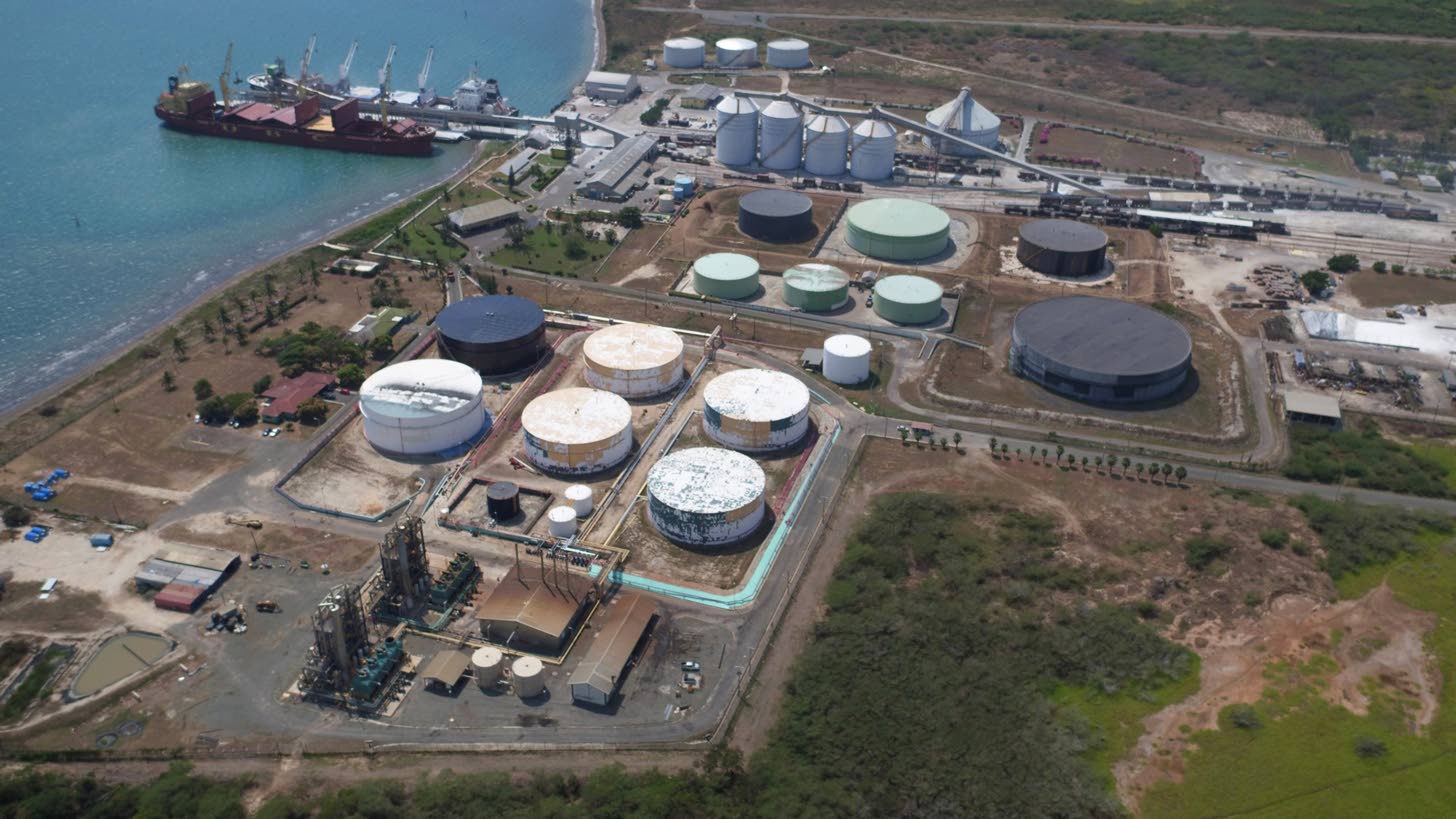
Strategic Infrastructure: The 740,000-barrel West Indies Petroleum South Terminal at Port Esquivel, Jamaica, forms the physical cornerstone of WIP Terminal’s $5.59-billion listing bid.
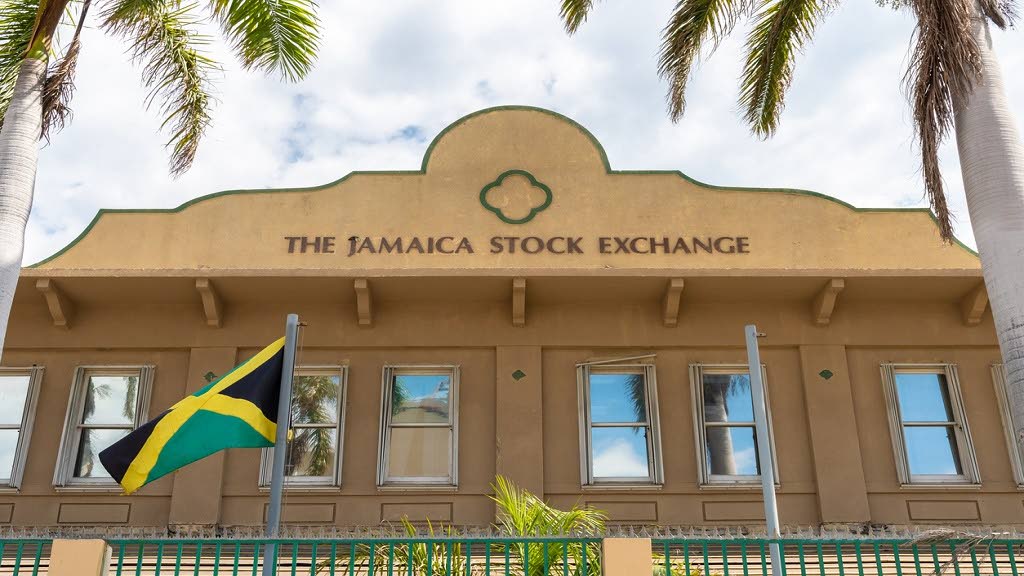
A $5.6-b bet on Jamaica’s fuel future hits the JSE with WIP Terminals set to list by introduction.


