Berger brightens national clean-up drive
BERGER Paints Jamaica has extended its commitment to national recovery efforts in the aftermath of Hurricane Melissa with the donation of more than 1,000 drums to support the national clean-up programme.
This contribution marks a significant boost to the company’s ongoing partnership with the National Solid Waste Management Authority (NSWMA).
So far the NSWMA has deployed more than 500 of these drums in the most critically affected communities, strategically placing them to improve the containerisation of waste, enabling more efficient collection and disposal during this critical recovery period.
As recovery operations intensify across the island, the additional drums are expected to play an essential role in preventing waste buildup, reducing health risks, and supporting the restoration of safe, liveable environments for families and businesses.
According to Dwaine Williams, general manager of Berger Paints Jamaica, the initiative underscores the company’s long-standing belief that sustainable communities are built through collaboration, responsibility, and continuous engagement, especially in times of national hardship.
“At a time when communities across Jamaica are working to rebuild, we believe it is our responsibility to stand with the nation and contribute in practical, meaningful ways. Proper waste management is critical to restoring normalcy after a disaster of this magnitude, and we are proud to partner with the NSWMA to play our part in helping Jamaica recover,” said Williams.
He added that through its ‘Berger Cares’ programme, the company and the NSWMA remain committed to expanding this drum-distribution initiative to support proper garbage collection across the country throughout the ongoing relief operations and beyond the hurricane recovery phase.
“These drums are more than containers, they are tools that help to protect public health and maintain cleaner, safer communities during a very challenging period. This is a very necessary step we have made, and we are already seeing a measurable difference on the ground,” Williams pointed out.
He said this initiative follows the recent drinking water drive that Berger Paints embarked on, providing approximately 10,000 new food-grade gallon buckets to aid in the provision of clean and safe drinking water to those who have been displaced by the hurricane.
“To date, our most vulnerable communities have been supplied with close to 50,000 litres of drinking water through our partnership with water providers across the island. Berger Paints has invested over $10 million thus far into the programme, solidifying the Berger Cares philosophy.
“The programme is a true demonstration of corporate balancing commerce and compassion in these times,” said Williams.
The Berger Paints Jamaica head added that the company remains committed to supporting national resilience and community well-being.
“The company pledges to continue working alongside key agencies and stakeholders to strengthen preparedness, improve waste-management infrastructure, and contribute to long-term sustainability across the island,” declared Williams.
Last Friday Minister of Local Government and Community Development Desmond McKenzie launched a national clean-up programme designed to remove debris, clear drainage systems, and address environmental hazards that have compounded residents’ vulnerabilities in the aftermath of Melissa.
Speaking during the official launch in Darliston, Westmoreland, McKenzie said the programme represents a coordinated, multi-parish and multi-constituency response.
He explained that the programme is designed to accelerate clean-up and rehabilitation efforts in the communities most severely impacted by the hurricane.
“This programme is not simply about sweeping streets. It is about cleansing communities, restoring livelihoods, and reinforcing the social fabric that makes Jamaica strong,” said McKenzie.
He added that the initiative will cover 16 affected constituencies across five parishes and operate over the next four to six weeks.
Activities will extend beyond major thoroughfares to reach smaller, underserved neighbourhoods, ensuring that no community is left behind in the national recovery effort.
According to McKenzie, by extending efforts into communities beyond main corridors, officials hope to prevent secondary problems such as flooding and disease, while supporting small businesses and local services that are central to post-disaster recovery.
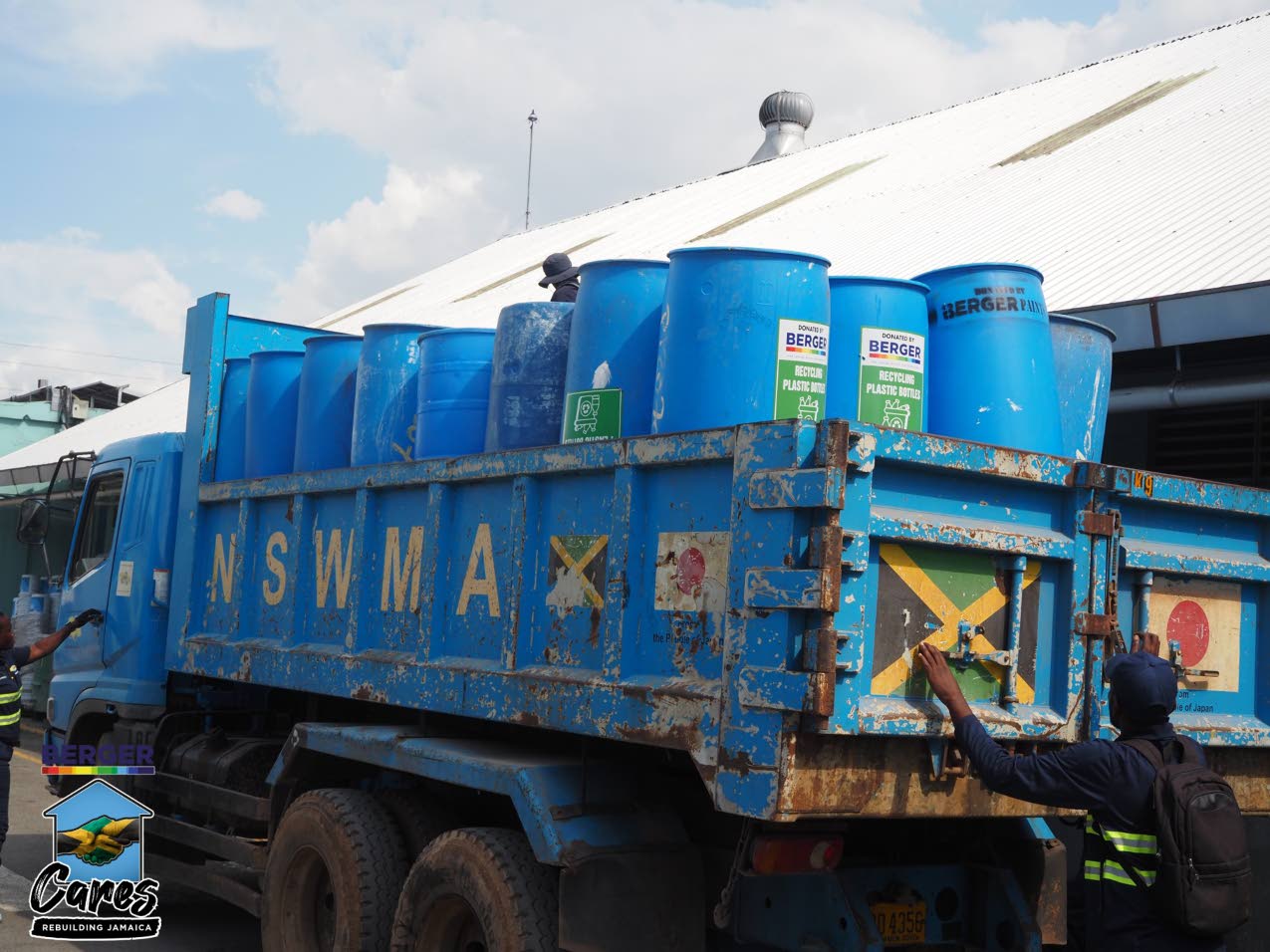
A NSWMA truck filled with drums donated by Berger Jamaica to aid in national clean-up efforts
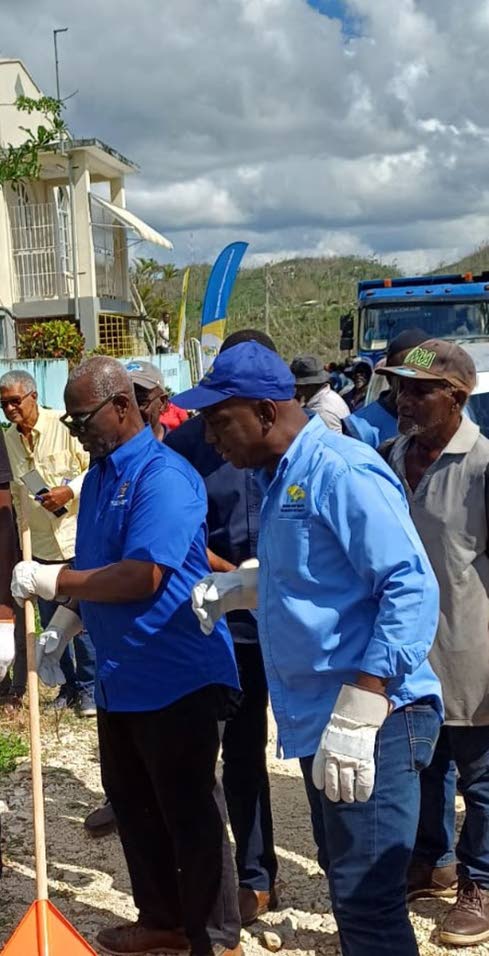
Minister of Local Government and Community Development, Desmond McKenzie (left), and executive director of the National Solid Waste Management Authority (NSWMA) Audley Gordon, prepare to participate in post-hurricane clean-up activities in Darliston, Westmoreland, last Friday. (Photo: JIS)