



Jamaica watching reported planned US shift on cannabis, says Seiveright
MAJOR players in Jamaica’s cannabis industry are closely monitoring developments in the United States amid reports that President Donald Trump could be prepared to significantly ease federal restrictions on marijuana tomorrow.
US media outlets, including The Washington Post, CNBC, and several business publications, have reported that Trump is expected to direct federal agencies to shift marijuana to Schedule III, with an executive order.
This follows a multi-year federal review in which health and justice authorities assessed cannabis scheduling and proposed a move from Schedule I — where it is still grouped with heroin — to Schedule III, which recognises accepted medical use and lower abuse potential.
On Saturday, minister of state in the Ministry of Industry, Investment and Commerce Delano Seiveright told the Jamaica Observer that he is closely monitoring the developments in the US.
Seiveright said while no final US federal decision has yet been issued, Jamaica’s posture is cautious and engaged.
“We are treating these reports with the necessary caution because nothing has been formally concluded in Washington. However, if the United States does move cannabis from Schedule I to Schedule III it would be one of the most consequential developments in global cannabis policy in decades,” said Seiveright.
He noted that the international context is also important, as under the United Nations (UN) 1961 Single Convention on Narcotic Drugs, cannabis remains listed in Schedule I, although in 2020 the UN removed it from Schedule IV, the category reserved for substances with little to no medical value.
“That move acknowledged growing scientific evidence but did not change the core Schedule I status that still influences how many countries approach regulation.
“The current UN classification means that even as some countries modernise their laws, others remain bound by conservative interpretations. A shift in the US — the world’s most influential financial and regulatory system — could accelerate global policy alignment over time,” added Seiveright.
He pointed out that despite federal prohibition, cannabis is already legalised for recreational use in 24 US states, and medical cannabis is legal in more than 38 states and territories.
According to Seiveright, this duality underscores how outdated the federal Schedule I designation has become.
“For years, one of the biggest external constraints on Jamaica’s cannabis industry has been the way it is treated under US federal law,” Seiveright explained.
“The Schedule I classification has fed a very conservative approach among international banks and has contributed to serious correspondent banking challenges for otherwise fully compliant, licensed operators in Jamaica and beyond,” added Seiveright during an interview with the Sunday Observer.
He noted that while US rescheduling alone may not eliminate all financial sector risk, global banking experts have confirmed that a move to Schedule III would significantly lower the federal risk profile, potentially easing restrictions that prevent Caribbean banks from maintaining stable correspondent banking relationships.
“If the move to Schedule III is confirmed and implemented, it could gradually ease pressure on correspondent banking; make banks more willing to work with the sector; and unlock new avenues for investment, research, manufacturing, and trade.
“That would be good news for Jamaican farmers, processors, researchers, and investors who have been operating within a strict regulatory framework but facing global headwinds,” added Sevieright as he underscored that Jamaica’s legal cannabis programme is strictly regulated and focused exclusively on medical, therapeutic, and scientific purposes, with licences issued and monitored by the Cannabis Licensing Authority (CLA) in keeping with Jamaica’s international obligations.
The CLA — which regulates the legal ganja and hemp industry — is an agency of the Ministry of Industry, Investment and Commerce established in 2015, under amendments to the Dangerous Drugs Act, to oversee medical, therapeutic, and scientific use of the weed.
“We have deliberately built a rules-based, transparent system. If the global environment becomes more rational, including in the United States, it strengthens Jamaica’s ability to attract credible investors, deepen research partnerships, and expand value-added exports — all while maintaining high standards of public health and security,” said Seiveright.
He pointed out that a potential US shift to Schedule III would not amount to federal legalisation, and many restrictions — including limits on interstate commerce — would likely remain.
“This is not a green light for anything goes,” cautioned Seiveright.
“But it may be a very important step towards a more coherent global framework that recognises the medical value, supports financial stability, and creates space for responsible countries like Jamaica to grow a legitimate industry,” he added.
Sevieright told the Sunday Observer that his ministry is in continuous dialogue with the CLA, local financial institutions, and other government bodies, and will continue tracking developments.
“We will keep a close eye on the situation and, once there is official clarity from the United States, we will carefully assess the implications for Jamaica’s regulatory framework, correspondent banking arrangements, and opportunities for sector growth,” Seiveright said.
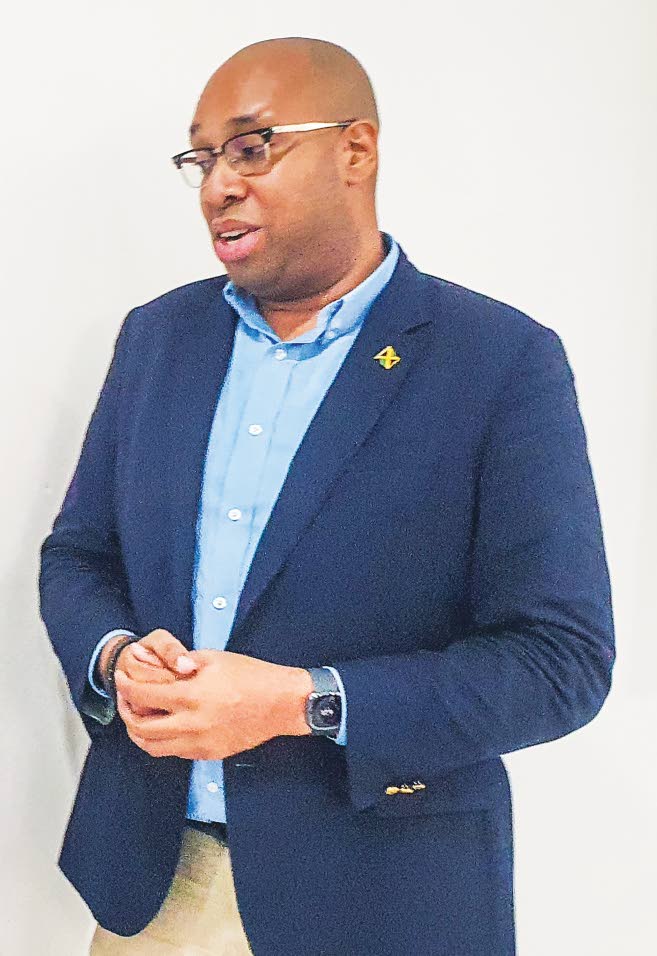
SEVIERIGHT…for years one of the biggest external constraints on Jamaica’s cannabis industry has been the way it is treated under US federal law


