‘Mi lamp a mi current’
Passed-down Home Sweet Home lamp getting Westmoreland man through dark nights
GROWING up in Bluefields, Westmoreland, Jason McKenzie knew the soft glow of a Home Sweet Home lamp long before he knew light from electricity. As his circumstances changed over the years, the 73-year-old was minded to discard the lamp, but sentimental attachment kept it on the shelf in his home.
Now, in the aftermath of Hurricane Melissa, that old kerosene oil lamp has become his lifeline, illuminating his home that has been in darkness since October 28, when the Category 5 weather system struck the island.
McKenzie said the lamp has been in his family for more than 100 years, passed down from one generation to the next.
“My grandparents [left] it give me, and one time I [went] to throw it away, and then I said, ‘No, mi can’t throw it away because when current [electricity] gone I can have it to use.’ And see, the storm come now and I have to draw for it,” he told the Jamaica Observer on a visit to the parish last Tuesday.
“Mi not really living in the dark because I have my current [electricity] — I have my lamp — so I have to give thanks for it. Mi lamp a mi current until current come back and mi can sort out back myself,” he added.
According to a December 7 power restoration update from the Jamaica Public Service (JPS), there are more than 30,000 residents in Westmoreland who have not had electricity since the passage of the hurricane. While efforts continue to restore power islandwide, with more than 80 per cent of Jamaicans connected, many might not get back electricity until 2026.
A staple in Jamaican households before the advent of electricity, the Home Sweet Home lamp became popular in the late 1800s. The nostalgic glass lamp would bring light to living rooms, guide children through their homework, and stand as the default lighting source during a hurricane.
For families like McKenzie’s, who could not afford electricity or running water, it was security. He laughed as he questioned whether this reporter knew about the origins of the lamp. Despite the reassurance, he jumped at the opportunity to speak about the cultural item and his childhood memories.
“This lamp here, it works with kerosene oil. I light it, clean the shade, and put on the shade because it’s an old-time lamp. I don’t grow inna current, so [because] we nuh grow inna current, we did have to use the lamp to see,” he told the Sunday Observer.
“A morning time when it [the lamp] black up, we take a tissue and clean the shade so it doesn’t [leave] too much black in the house… The smoke doesn’t affect me because I put it far away. You have to put it somewhere so that it doesn’t turn over.
“You see the shade, it do it days, so I have to take time [with it], because if this drops off, it mash up the shade, and if the shade drops off, we would have to keep on burning, so in here would black up the top of the house,” he explained.
McKenzie continued: “Some young people don’t know about lamps; they know about current [electricity], but when I was born I came to see my family poor…I don’t born inna current; I don’t born with no pipe. Morning time, I have to go to the river for water to bathe to go to school, so it’s a hard life I live in, but now we can find certain things.
“We don’t have to sleep on the floor. We have a bed now and can buy a mattress and lay down on bed, so the first time we sit down on the floor, and now we nah lay down pon floor — a civilised time now,” he declared.
However, he said he will always keep his Home Sweet Home lamp close to his heart.
“Mi give thanks for it, because if mi never have it mi nuh know wah mi woulda do. I would have to use a candle, and candle and board nuh make place, so I have to give thanks for it,” said McKenzie.
He later added: “The money I use to buy candles, I use it to buy [kerosene] oil. It’s expensive to buy the candle and you can’t sleep [because] you have to sleep and watch it because it will drop off and burn me up, so the lamp, nothing nah do it. From you put it right there, all tomorrow it [will] stay right there — not moving,” he shared.
McKenzie said the lamp typically provides him with light for a week before he has to refill it with kerosene oil. He pays $800 for a small bottle of kerosene oil as opposed to $200 to $300 for a pack of candles — which has eight in it — that would last a day or two.
“When I go to my bed by [certain] hours, I lock off the lamp and just [lay] down in the dark because me nuh have enough money to always buy kerosene oil. I have to just gwaan do that until the current [electricity] comes back,” he told the Sunday Observer.
As he recounted the events of October 28, McKenzie said Hurricane Melissa destroyed his roof. While he has managed to repair a small section of it that covers his bedroom, the rest of the house is still exposed to the elements. He is asking for assistance to fix his home.
“A one terrible storm, [because] you know say it trapped me in my house and I wanted to come out and couldn’t come out…One of the time, about three times I go under the bed to lie down because all of the zinc them come off and I [couldn’t] come out…until it [was] over, so you have to be a soldier sometimes,” he shared.
“When it [was] over, I came out and [went] up the road, and when I went up the road I can’t get any rescue either. I have to still come back and [lie down] around here,” he reasoned.
Despite it all, he said he is grateful to be alive and will wait patiently until power is restored and he is able to get some help.
“The roof is gone already, so weh mi ago do again? I have to just give thanks that I’m alive,” said McKenzie.
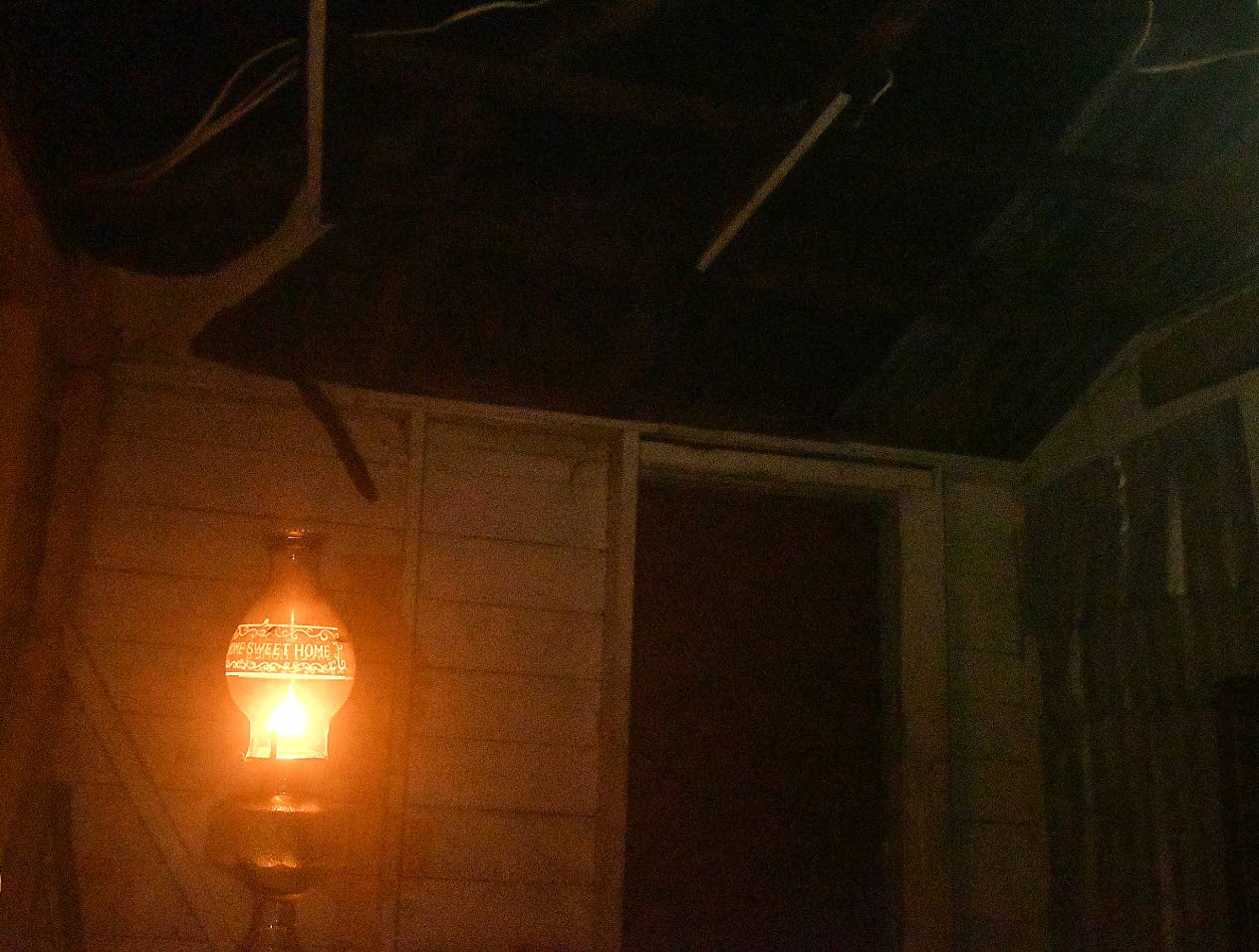
A staple in many Jamaican households before the advent of electricity, Jason McKenzie’s passed-down Home Sweet Home lamp illuminates his Hurricane Melissa-damaged home in Bluefields, Westmoreland, last Tuesday. (Garfield Robinson)