



Shooting blanks
Why men are the root of half of all infertility struggles
FOR years I have spoken about Jamaica’s declining population and what it means for our future. I have encouraged the responsible growth of families because no country can sustain development if its population continues to shrink.
Some people have made light of the issue on social media. Others have raised valid concerns about the rising cost of living and the realities of raising children. I understand all of that. But beneath the humour and the frustration is a serious challenge: More Jamaican couples want children and simply cannot have them.
Like many men, I once believed that fertility problems were mainly a woman’s issue. During the last election campaign a woman approached me while I was walking through her community. She shared her struggle to conceive. She assumed the problem was hers. After several tests she learned that her husband was the one facing the fertility challenge. That conversation stayed with me. It made me look more closely at infertility as a public health and social issue that affects both men and women, even if our macho culture suggests otherwise.
Why the numbers matter
The data is clear. Jamaica’s crude birth rate fell from 21.7 live births per 1,000 people in 2000 to 11.4 in 2022. Our fertility rate has dropped below the replacement level of 2.1 and now stands at 1.9. If this continues we will face a shrinking workforce and long-term pressures on our economy and social systems.
Around one in four couples who seek medical help for infertility are told they cannot conceive naturally. Nearly half of these cases involve male infertility, and in many situations the cause is unknown. This should concern all of us, especially the men who believe that masculinity is tied to reproductive strength.
Many Jamaican men grew up believing they could never be the ones “shooting blanks”, to use the popular phrase. But the reality is that male infertility is common, and ignoring it only delays the help couples need.
The truth is that men are part of this story. They must be part of the solution.
The human side of infertility
Infertility is not just a biological diagnosis. It affects mental health, relationships, and emotional well-being. Many couples suffer in silence because of shame or misunderstanding. Delayed parenthood is also part of the picture. More women are pursuing education and career goals before starting families, and many men in their 40s and 50s are now trying to have children for the first time. Age affects fertility in both sexes, although men rarely speak about it.
These are real issues facing Jamaican families, and we must address them openly.
The way forward
There are solutions. Egg freezing and in vitro fertilisation are giving hope to many couples. However, the high cost puts these treatments out of reach for most Jamaicans. As we look ahead, the Ministry of Health and Wellness is prepared to lead a national conversation on fertility care, including how we can widen access through partnerships, education, and stronger public awareness. Our health insurance sector also has an opportunity to explore affordable fertility support options.
Lifestyle choices matter too. Untreated sexually transmitted infections, smoking, poor diet, and physical inactivity can reduce fertility. Public education on these risks is essential.
A call to Jamaican men
So where do we go from here?
We must talk openly about infertility. We must remove the stigma. And men must step forward and engage. Fertility is not a measure of masculinity, it is a health issue, and like all health issues it requires understanding, early check-ups, and support.
As we plan for Vision 2030 and beyond we cannot ignore the link between population trends, family planning and national development. This conversation is not only about today. It is about the next generation.
I am inviting Jamaican men, including those who see themselves as macho, to join this dialogue. Support the women who have been carrying this issue for years. And in doing so, support yourselves, your families, and the future of our country.
— Dr Chris Tufton, CD, MP, is Jamaica’s minister of health and wellness. Email: cctufton@gmail.com
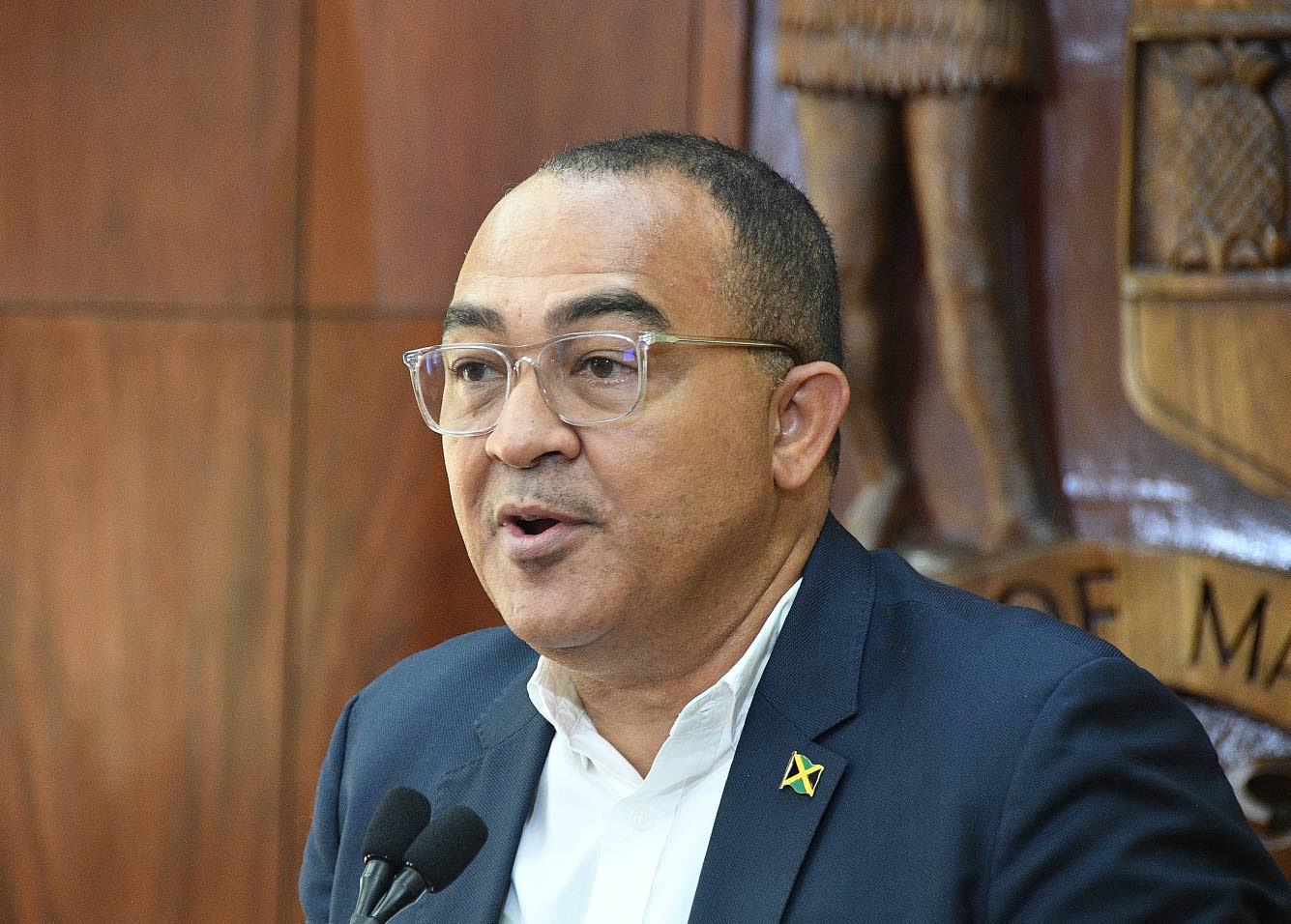
Dr Chris Tufton


