



FTC says ride-hailing ban failed
...urges regulation over prohibition
THE Fair Trading Commission (FTC) has concluded that Jamaica’s year-long ban on ride-hailing platforms such as Uber and inDrive did little to curb the use of these services and instead weakened competition in the transport sector.
The findings, contained in a new report obtained by the Jamaica Observer, recommend formal regulation of the platforms rather than broad prohibitions.
According to the report, the 2024 ban — implemented amid concerns about driver vetting, insurance coverage, and regulatory gaps — “proved ineffective”. Despite the prohibition, the FTC found that demand for the services remained strong and operators continued to function outside the formal system, undermining both enforcement efforts and policy intent.
Instead, the commission is calling for a dual regulatory framework that will bring the services under State oversight and introduce a new worker classification —“dependent contractor”— to offer gig-economy drivers baseline protections while maintaining the flexibility associated with platform work.
Economically, the report argues the prohibition ignored the inherent efficiency of the ride-hailing model. It found that digital platforms significantly lower “transaction costs” for passengers by minimising search and wait times compared to traditional taxi or charter models. Furthermore, by reducing market fragmentation the platforms can exercise greater operational control over drivers — which the report suggests could lower long-term enforcement costs for regulators.
The minister’s recommendation for an immediate ban was announced in June 2024, triggered by national security concerns following the tragic death of teacher Danielle Anglin who had used a ride-hailing service. Minister Vaz argued that while apps are traceable, “that can only help you in an investigation after the fact”, and emphasised preventative safety measures.
The sweeping prohibition immediately created a rift within the transport sector. Aldo Muir, owner of ride-share companies Red Plate and Intermetro Transportation Service, criticised the move as a “blanket statement” that unfairly penalised operators who had worked with the Transport Authority for years and invested millions into legal compliance. He noted that local operators were expecting further consultation before any drastic action.
Conversely, some local operators like 876 On The Go and the Dryva Group expressed support for the minister’s action to, “weed out the bad players”, and establish a clear regulatory environment.
At the operational level, the report calls for ride-hailing operators to register as “shared mobility service providers” (SMSPs) with the Transport Authority. This new category would be distinct from the rigorous, vehicle-centric regime for traditional public passenger vehicles (PPVs) which mandates frequent fitness certificates, specific colour codes, and route restrictions. Instead, SMSP obligations would centre on platform-level accountability. These would require operators to maintain accessible driver databases, integrate in-app safety features like geolocation, secure commercial insurance for all trips, and conduct criminal background checks.
Concurrently, the FTC proposes the creation of a new “dependent contractor” employment classification for drivers. This hybrid status seeks to bridge a persistent regulatory gap by providing a baseline of protections — such as potential access to minimum earnings frameworks and social security — while preserving the scheduling flexibility and ability to work across multiple platforms that characterise gig economy work. The proposal engages with a contentious global debate on how to classify platform workers — a legal dilemma that has sparked high-profile lawsuits and regulatory shifts worldwide as jurisdictions struggle to apply traditional employment frameworks to the digital age.
The FTC’s proposals, however, are not without their critics. The logic of regulatory neutrality is likely to face scrutiny from traditional taxi operators who may argue that creating a separate rulebook for SMSPs contradicts the principle of a level playing field. In response to Jamaica Observer queries, the commission clarified that, “regulatory neutrality does not require identical rules, but rather equivalence in achieving public policy objectives”, noting that the traditional and new models have fundamentally different operational realities.
Another critical question is whether new costs will simply push drivers back underground. The FTC acknowledged that while it has not set a precise “maximum compliance cost”, the policy must be designed so that, “the pathway to compliance is not prohibitively expensive or administratively cumbersome for the individual driver”.
The FTC’s central critique is that the outright ban has been a counterproductive tool, stifling market innovation while failing to meet its stated safety objectives. In its place, the commission champions the principle of “regulatory neutrality”, which aims to establish equitable rules for traditional taxi operators and digital platforms alike, preventing either from gaining an unfair advantage.
The proposed regulatory model is designed to formalise the sector by harnessing the inherent advantages of ride-hailing technology — such as digital traceability, transparent pricing, and user rating systems — to elevate safety standards and consumer protection across the entire transport market.
The immediate challenge for the Government is to incorporate these recommendations into the drafting of Jamaica’s first National Ride-Hailing Policy. As the Government works on the policy, the success of any new framework will need to be measured. The FTC suggested key indicators would include a measurable drop in the use of unregistered vehicles and high driver uptake of the new SMSP system, with the goal of making, “the formal, regulated market the obvious choice for both drivers and passengers”. The policy direction it chooses will signal whether the country intends to steer its transport sector towards structured, technology-enabled modernisation or perpetuate a cycle of ineffective prohibition and underground operation.
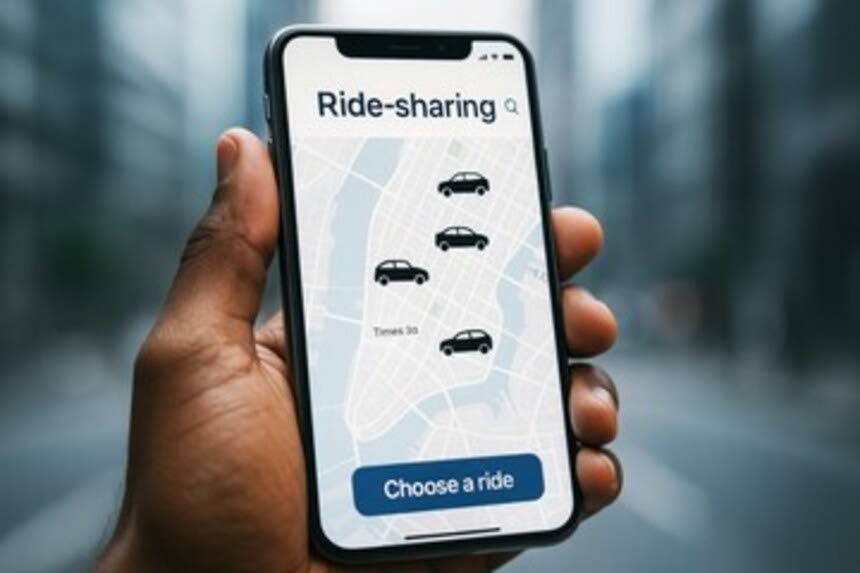
The tap of a screen that changed Jamaican transport. Despite a year-long attempted ban, demand for ride-hailing apps remained strong, leading regulators to propose legalising and regulating the technology for safety and competition.

Kevin Harriott, competition bureau chief, Fair Trading Commission (FTC), oversaw the commission’s landmark report which found Jamaica’s ride-hailing ban ineffective and proposed a new regulatory framework for the sector. (Photo: Joseph Wellington)


