



JPS increase defence
Energy Minister Daryl Vaz sought Tuesday to quell public alarm after the Office of Utilities Regulation (OUR) announced that it had approved a seven per cent electricity rate hike to Jamaica Public Service Company (JPS) that will begin to hit customers this month.
For an average residential customer using 165 kWh, the increase adds approximately $655 to a bill that was previously about $9,000.
At a press conference called to detail JPS’s accelerated restoration push, Vaz explained that the OUR-approved hike reflects higher fuel costs and the temporary loss of natural gas supply after Hurricane Melissa.
“The Government of Jamaica has taken note of the seven per cent increase in JPS bills for electricity consumption in November. In approving this measure, the OUR has acknowledged that, given the scale of the impact of the disaster, it may take up to six months for electricity generation costs to stabilise and for the energy consumption patterns to return to normal,” Vaz noted in his remarks.
“Importantly, the JPS and the OUR at this time have been working collaboratively to defer a portion of these increased costs, spreading recovery over several months to avoid bill shock and ease the burden on customers. Recognising the risk that further adjustments could place additional pressure on households and businesses, the OUR has urged JPS to engage closely with the regulator before applying any additional charges over the next six months, ensuring that the recovery process remains gradual, transparent, and manageable for consumers,” Vaz said.
Six weeks after the Category 5 storm struck on October 28, the restoration picture remains bleak in Westmoreland, where about 88 per cent of JPS customers are still without service, according to Vaz’s Tuesday update. In contrast, St Elizabeth has seen much better progress, with just 50 per cent of customers still awaiting power.
In other western parishes, the outage figures remained high: 45 per cent in St James, 39 per cent in Trelawny, and 36 per cent in Hanover. The minister contrasted this with Kingston, St Andrew, St Catherine, Portland, and St Thomas, which he reported are “essentially fully restored” with outages near zero. He attributed the disparity to the intensity of the hurricane’s damage in the west, not a lack of restoration effort.
The minister argued that the OUR-approved hike underscores fundamental flaws in the JPS’s existing licence — a licence he stressed cannot continue in its current form.
“For this reason, as energy minister, I could not entertain the extension of the existing licence and the existing terms for another 15 years,” the minister said. He indicated the current framework fails to protect consumers and leaves even the independent regulator, the OUR, with little power to intervene.
“Though this increase is significantly less than the amounts announced post-Hurricane Beryl, which was as high as 16 per cent, the position of the Government is that we must have a licence that protects the interest of the stakeholders. A better licence must be the way forward,” Vaz said.
Hurricane Beryl sideswiped Jamaica’s south-western coast in July 2024, leaving damage mostly in St Elizabeth, Manchester, Clarendon, and Westmoreland.
Turning to public criticism over the US$150-million government loan to JPS for restoration, Vaz was blunt: “Let me make it clear that the alternative to the Government providing the loan would be a 15-year extension of these inequitable terms and 15 more years of the JPS and the regulators doing very little to protect the consumer.”
Vaz defended the loan as the best option to prevent Jamaica’s post-hurricane energy crisis from becoming a permanent feature of its energy profile. He said the seven per cent increase was announced in the name of transparency and accountability.
The minister noted that the increase is not unprecedented, pointing out that an 11 per cent hike was approved as recently as May during normal, disaster-free conditions.
“There was no hurricane and no catastrophic damage, but an 11 per cent increase was approved based on the fuel prices and other variables. Again, let me make it clear that the JPS did indicate at the outset after Melissa that there is a possibility for an increase and therefore to announce as the OUR did yesterday [Monday] after consultations was the right thing to do rather than to allow the seven per cent to be put in the bill for some people to pick it up while others would not and then, at the end of the day, somebody will say how come they didn’t know about it. That’s not how we operate. Transparency and accountability are for good news and for bad news. Fluctuations happen and this fluctuation in the aftermath of the catastrophe is less than fluctuations that have been approved in normal times,” he said.
Reiterating the need for a new licence, Vaz pointed to a dramatic rise in hurricane frequency, noting that Jamaica faced 11 storms from 2015 to 2025 compared to just five in the prior decade — a 120 per cent increase.
“It is not rocket science to see that the Jamaica that we lived in when the former Administration signed the existing licence is not the Jamaica that we live in today. A new licence reflecting today’s climate and realities must be put forward; a licence that protects those burdened each time a hurricane passes and a licence that protects citizens,” he said.
Ansord Hewitt, the director general of the OUR, said he took note that the announcement of an increase in bills caused consternation amongst Jamaicans.
Hewitt said the adjustment was anticipated because JPS was forced to rely on more expensive fuel sources for generation, due to the fact that natural gas was unavailable during the period leading up to and immediately after Hurricane Melissa.
“There were disturbances to their system as well which would have required them to rely on certain generators. The natural gas barge was physically taken out of our waters with the impending hurricane and this resulted in greater reliance on a more expensive form of fuel. Additionally, the hurricane resulted in an approximately 30 per cent reduction in sales…
“What we are talking about is fixed costs being spread, perhaps to over 70 per cent of their customers, instead of the 100 per cent that would be on. The effect of this would be increases in the order of 45 to 50 per cent and, of course, we didn’t want this to happen. This was not something that would have been tolerated. From past experience we know the kind of consternation this would cause. To avoid bill shocks to customers, the JPS, in consultations with the OUR, has opted to defer some of the increase in fuel and independent power producer costs, and recovering by spreading it out over the coming months,” Hewitt said.
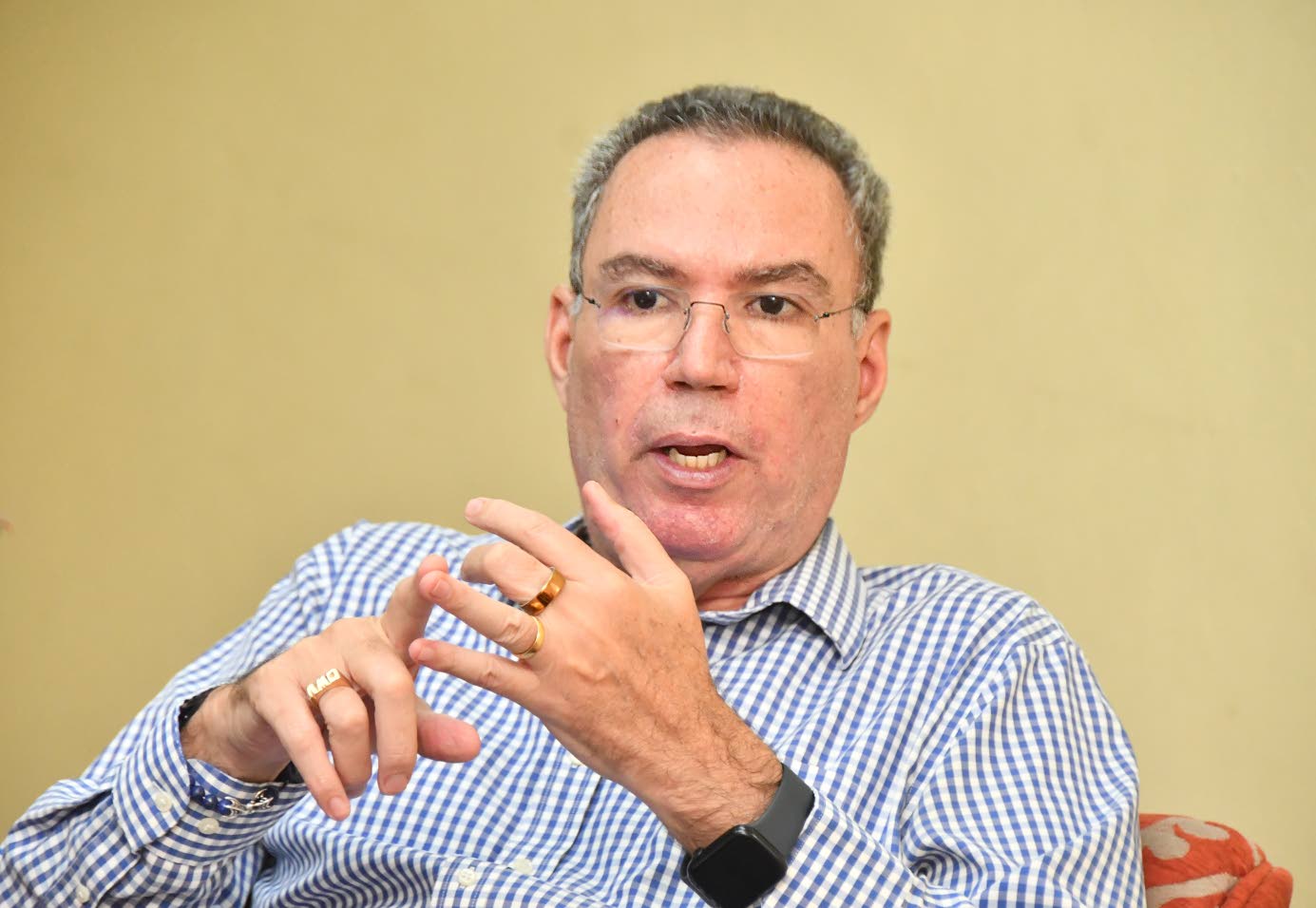
VAZ… the OUR-approved hike underscores fundamental flaws in the JPS’s existing licence (Photo: Naphtali Junior)

HEWITT… the adjustment was anticipated because JPS was forced to rely on more expensive fuel sources for generation (Photo: Garfield Robinson)


