Rebuild or relocate?
Future of three coastal hospitals under review after Hurricane Melissa
THREE of Jamaica’s most vulnerable coastal hospitals, which were badly damaged by Hurricane Melissa, are now at a critical crossroads as health authorities weigh whether rebuilding with greater resilience or relocating inland offers the safest long-term solution.
The future of Black River Hospital, Noel Holmes Hospital and Falmouth Hospital is now under detailed technical review, as the Ministry of Health and Wellness moves beyond emergency repairs towards what it describes as a deliberate “build back better” strategy shaped by climate risk, engineering realities and cost.
Speaking at the Jamaica Observer Press Club on Monday, Minister of Health and Wellness Dr Christopher Tufton said Hurricane Melissa had underscored the dangers facing health-care infrastructure located along Jamaica’s coastline, particularly as storms grow stronger and more frequent.
While immediate stabilisation work is ongoing, Tufton made it clear that the decisions ahead will not be guided by formal assessments.
“The discussion has already taken place in consultation with the IDB [Inter-American Development Bank] as it relates to an ecological assessment of the three hospitals that are on the coastline, to determine if we build back in a permanent way, what are the features of that build back to mitigate against the losses we sustain coming out of a Category 5; or do we relocate to go further inland,” said Tufton.
Black River Hospital, located along Jamaica’s south coast, has long been recognised as vulnerable to flooding and storm surge, vulnerabilities that were starkly exposed by the destruction caused by Hurricane Melissa. However, Tufton cautioned that any decision to relocate the facility must be carefully weighed, given the costs involved and the need for transparency and accountability in public spending.
According to the minister, the ecological and engineering studies will profile the risks associated with each location, outline what level of construction would be required to mitigate those risks, and determine whether such solutions are realistic.
“That technical assessment is what is going to be done, working with the IDB and the ministry to firstly determine the risk profiling of the location, [and] the build that would be necessary to mitigate against that risk profiling, is that practical, is that possible? Can we afford to build with that level of resilience? What’s the cost? Or is it better to just relocate inland?”
He added that while modern engineering can address many vulnerabilities, there are limits to what is sensible or sustainable, particularly when weighed against long-term climate threats.
Tufton also noted that the assessments are expected to be completed by the first quarter of next year, with preliminary findings anticipated between January and February.
“Once that comes in and there’s a recommendation, then Cabinet has already decided, led by the prime minister, of course, that we will move to follow through on those recommendations, along with other plans that are being made for build out and so on. That for us is going to be very, very important, because that means that we’ll build back with minimising the risk going forward,” he said.
The hospital review forms part of a wider health system strengthening programme that Tufton noted began before Hurricane Melissa, and which has increasingly prioritised resilience as a central design principle.
He pointed to the ministry’s “smart facility” approach — already applied to several health centres across the island — as an example of how future infrastructure will be developed.
“We have a guideline as to how we build, how we put the roof on, not just slab, but even zinc roofing, water catchment systems, solar power generator back-up, air flow, a number of things that are deliberately designed to improve resilience and ensure that these facilities can continue operating during and after extreme weather events,” he said
He noted that those facilities built to those standards performed better during the hurricane than older structures such as the Santa Cruz Health Centre, which he said was not badly hit despite the catastrophic impact the hurricane had on the parish of St Elizabeth.
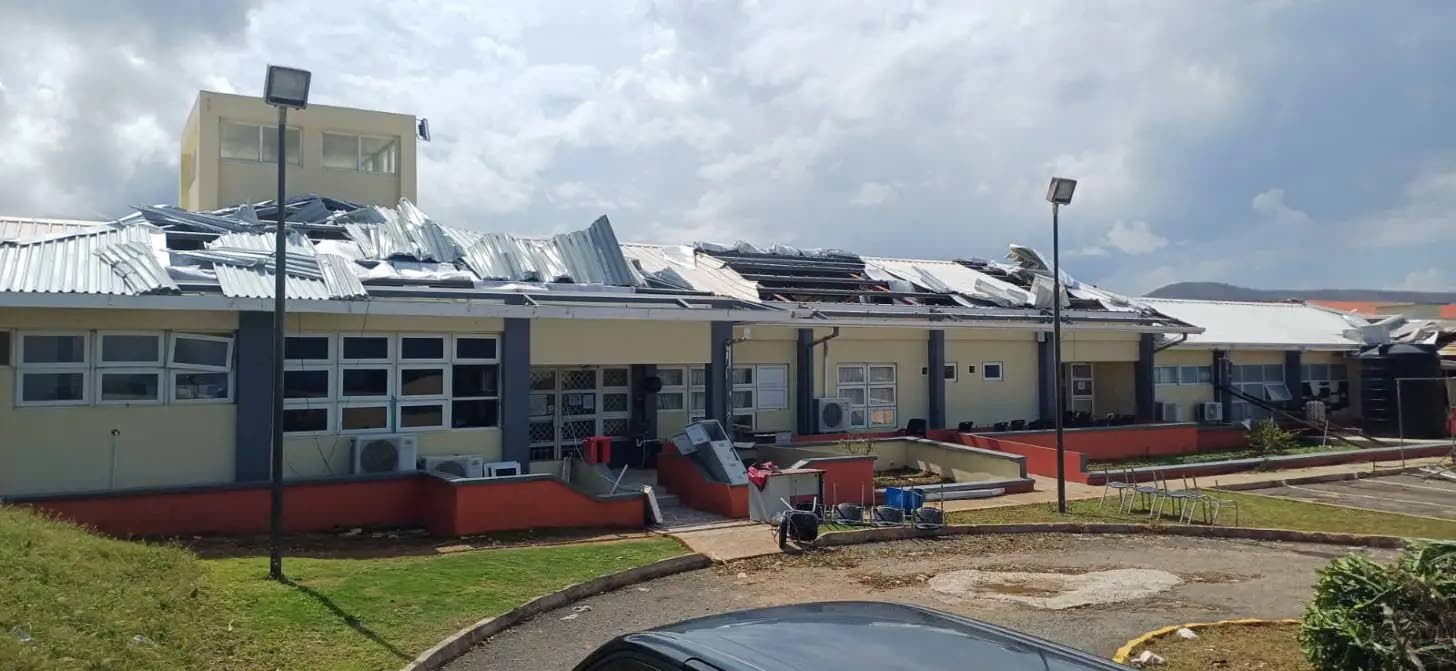
The damaged roof at Falmouth Public General Hospital in Trelawny following Hurricane Melissa.