



Support us!
Coffee farmers appreciative of intervention, but want more help
IN a bid to rescue a battered coffee industry, stakeholders are intensifying the Coffee Crop Resuscitation and Establishment Programme (CREP); however, president of the Jamaica Coffee Growers Association Donald Salmon said, while grateful, the efforts are not enough.
On Wednesday, acting director general at Jamaica Agricultural Commodities Regulatory Authority (JACRA) Wayne Hunter commissioned 5,000 bags of fertiliser valued at $35 million at a handing-over ceremony of agricultural inputs to coffee farmers, which was a part of a larger intervention of $120 million from the agency and the Government.
Hunter also announced that through CREP, which was implemented to establish nurseries as well as to replant coffee over a five-year period, both the Blue and High Mountain industries would receive thousands of seedlings to get farmers back on their feet.
Blue Mountain Coffee accounts for crop grown in St Andrew, Portland, and St Thomas, while the High Mountain variety consists mainly of coffee grown in Manchester.
“At this time, we have approximately 10,000 seedlings ready for High Mountain Coffee. That is with purpose, because a seed will take you about six months to come around. Seedling for the Blue Mountain is coming along quite nicely as well. We now have another 15,000 planting materials ready to be rolled out in the upcoming planting season which is in April,” said Hunter.
He received praise from Salmon, who was quick to commit an additional 10,000 seedlings to the current inventory. But his concerns were many.
“While we appreciate what we get from the Government… I don’t want to sound a bit greedy, but we need much more. It is a significant assistance, but the farmers are really hurting,” said Salmon.
The coffee industry has been dealing with punishing blows from inclement weather, surviving drought and storms. Most recently, Category 5 Hurricane Melissa hit Jamaica on October 28 leaving estimated losses of $1 billion and an accumulated deficit of $2.5 billion according to the chairman of Jamaica Coffee Exporters Association Norman Grant.
On Tuesday, Minister of Agriculture and Fisheries Floyd Green told a Jamaica Observer Press Club that CREP, which was already underway prior to the hurricane, required urgent reform to restore productivity and strengthen its resilience.
“We’re seeing how we can ramp up the numbers in terms of the fertiliser that we’re providing. We have a specific programme around coffee, which is about a $100 million intervention,” said Green, explaining that the sum would be dedicated to sourcing farming materials for coffee farmers.
He also said conversations with industry organisers helped to shape the Government’s response, with farmers themselves identifying their most urgent needs.
“I already met with Grant and the [Jamaica Coffee] Growers Association and took their primary needs, which they outlined to be largely fertiliser and roads as a preliminary, and then planting material. So we expect to start that distribution next week and some of it already started,” said Green.
The minister also disclosed plans to take coffee roads rehabilitation outside of the regular farm road programme and seek dedicated financing through the Ministry of Finance and the Public Investment Appraisal Branch, citing the difficult terrain and engineering demands of the coffee belt.
“The coffee roads require, in my view, a separate programme. So we’re working with the National Works Agency to cost it,“ Green said. “Some of those roads require significant engineering but they lead to the best coffee in the world. So the value of the proposition is significant, because if we can get those roads done we will see an expansion in the acreage of coffee.”
However, Salmon said, though receiving fertiliser was necessary, farmers required a more impactful commitment.
“We are representing the coffee farmers who want to look back at CREP and revisit how we are going to implement it. The farmers are, as I said before, very grateful for what is being presented. But we have to move in a timely way to get more input to the farmers,” he explained.
He also raised the issue of a quicker response to the crisis facing coffee farm roads, and called for the establishment of insurance for farmers who are at risk due to climate change.
“Up to about 2004 we had an insurance scheme so if there was a Beryl or Melissa farmers would definitely be compensated. We have to go back there. The Government either doesn’t have the money or don’t want to put the money in coffee. And I say that bluntly because I see tourism — everybody is getting money. We want a grant, we want assistance. If you look at the characteristics of the farmers who produce 80 per cent, they are either squatters, no land title, are very small and capital starved.
“We need to look at technology. How do we adapt technology in coffee farming? When I travel it’s mind-boggling. People are saying Bob Marley and Blue Mountain Coffee. We are seen in the world as one of the best coffee. Everybody wants a piece of us, and I think we are not taking advantage of our potential. The road network needs to improve, must improve,” he said.
Salmon charged that the livelihood of coffee farmers needed to be prioritised more, noting that, without them, the entire industry would collapse.
“I’m saying thanks to all the stakeholders… but one thing I’m going to say is that without the coffee growers and the farmers there’s no JACRA for coffee. No exporter. So support us.”
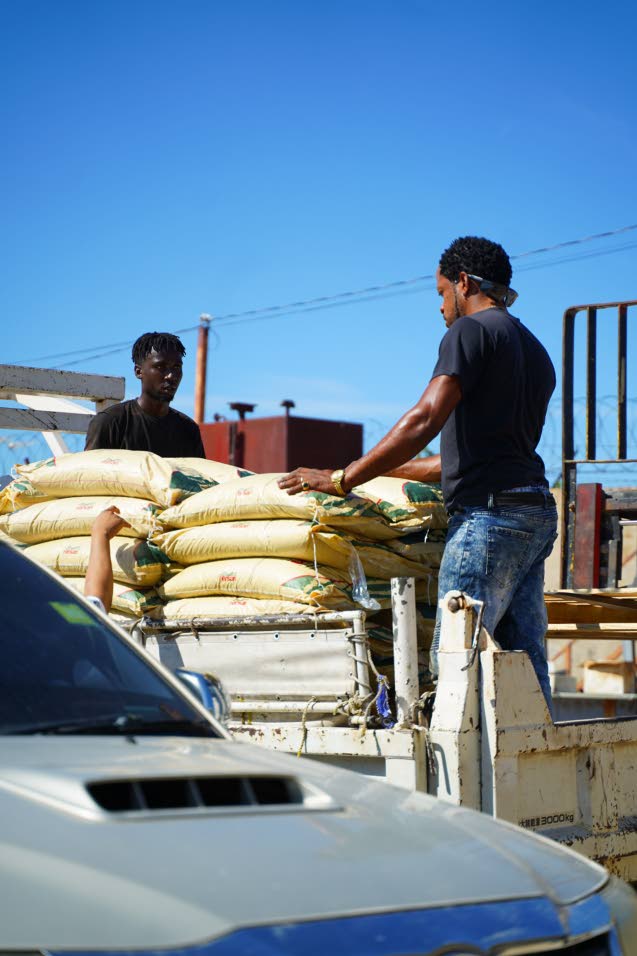
JACRA handed over 2,000 bags of fertiliser and other key agricultural inputs to the Jamaica Coffee Growers Association and the Jamaica Coffee Exporters Association, Wednesday, as part of its ongoing efforts to rebuild the industry following the passage of Hurricane Melissa. (Photo: JIS)


