



Big cost of climate change on Jamaica
CLIMATE change can no longer be treated as an environmental issue but must be elevated to a national development priority as its cascading impacts increasingly threaten Jamaica’s economic stability, infrastructure and long-term growth prospects.
That warning was issued by professor of climate science at The University of the West Indies (UWI), Mona, Michael Taylor, who cautioned that unless all sectors of the economy are strengthened simultaneously, Jamaica remains vulnerable to catastrophic losses from future natural disasters. He warned that the next major event could result in economic losses of between 30 and 40 per cent of GDP — not because the country failed to fix the most obvious weaknesses exposed by previous disasters but because another overlooked, downstream sector could become the ignition point for widespread devastation.
“In a cascading system, partial resilience equates to no resilience at all,” Taylor said during a public lecture hosted by the Ministry of Water, Environment and Climate Change and The University of the West Indies, held under the theme ‘From Loss to Recovery’.
He further explained that failure in one sector can rapidly trigger breakdowns across others. As a result, he warned, Jamaica’s ability to achieve the sustainable development goals (SDGs) is increasingly under threat. The scale of the risk was illustrated by the damage caused by Hurricane Melissa, estimated to have inflicted $1.3 trillion in losses, equivalent to 41 per cent of GDP. By comparison, Hurricane Ivan in 2004, previously regarded as one of the most destructive events in recent history, resulted in losses of $36.9 billion, or 6.8 per cent of GDP. Over the past 25 years, Taylor noted, the damage associated with Hurricane Melissa far exceeds anything recorded in Jamaica’s cumulative disaster history. Yet extreme weather events continue to occur with shortening recovery periods.
“They keep coming, with little time in-between to recover. Otherwise put, they repeatedly knock us off the development trajectory we thought we were on,” he said.
Beyond the headline-grabbing hurricanes, Taylor raised concern about Jamaica’s limited ability to measure the impacts of slower, creeping climate threats, including the record-breaking heat experienced in 2023 and the long-term toll of sea-level rise. While the country maintains records on the impacts of many natural disasters, he said, the scientific tools required to properly quantify these gradual but damaging effects are still lacking.
“We just don’t have the science to measure those yet,” Taylor said.
He explained that these data gaps must be urgently addressed in order to assess losses accurately, value ecosystem services, and map climate risks in a way that meaningfully informs policy. Closing those gaps, he said, will require coordinated action from academia, government and the private sector. As part of that effort, he pointed to the development of the Jamaica Systemic Risk Assessment Tool (J-SRAT), which is being led by The UWI and aims to bring together all available data to assess risk more comprehensively across sectors. The university is also working on ways to measure the avoided losses that could come from ecosystem services and nature-based solutions, an approach that could fundamentally change how policymakers think about climate resilience. Policymakers are therefore being urged to actively use this research rather than continuing to rely on imported solutions that may not fit Jamaica’s specific context.
“Solutions have to be contextual instead of borrowed from elsewhere,” Taylor stressed.
He also highlighted the cumulative and compounding nature of climate impacts, pointing to failing water systems, washed-away roads, and destroyed crops as examples of losses that have been building over time. Hurricane Melissa, he argued, did not create these vulnerabilities but magnified and accelerated them, and climate change not only deepens existing vulnerabilities but also creates new vulnerable groups, expanding the social and economic consequences of each successive event. Meanwhile, Minister of Economic Growth and Job Creation Matthew Samuda, who also addressed the lecture, warned that climate risk is already reshaping Jamaica’s physical and financial landscape, particularly in relation to housing and real estate development. Samuda revealed that some areas are becoming effectively unlivable, as insurance premiums rise beyond what homeowners and developers can afford. Coastal developments, in particular, are already under pressure.
“Our coastal developments are already threatened by increases in premiums. Some areas are simply becoming uninsurable because of the frequency of the events that we’re facing,” the minister said.
He noted that as insurance costs outstrip the capacity of mortgagors to support development, climate change is no longer just an environmental concern but a direct constraint on investment, housing and national growth.
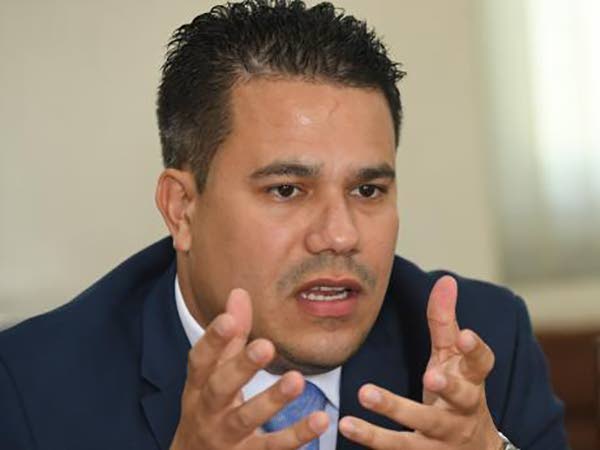
SAMUDA…our coastal developments are already threatened by increases in premiums.


