



Rastas express mixed views on cannabis exec order in US
Members of the local Rastafarian community have expressed mixed views on President Donald Trump’s recent signing of an executive order seeking to reclassify cannabis as a less dangerous drug in the United States.
While there were some who welcomed the development, others demonstrated a lack of excitement towards the move.
Errol McDonald, a founding member of international Reggae band Chakula considered the move to be a positive one.
“Anything towards freeing up the herb plant is obviously a good thing,” he said, expressing hope that it will get to a point where certain sanctions and prison sentences connected to cannabis possession are removed.
“They moved it now to a medicinal category. I can only see a positive in that. I don’t see anything negative. Hopefully, it could get to a stage where certain things become retroactive, where people who had charges could have them dropped. Even if they served time already, this now could be something good for them. It has to be a positive thing,” McDonald emphasised.
The Trump Administration is seeking to expedite the reclassification of cannabis as a Schedule III drug, which is less restrictive than those listed in Schedule I. The move is in a bid to ease federal barriers to medical research. The order does not seek to legalise recreational use nationwide.
Drugs in Schedule III are those which are deemed good for medical use but have the potential to be abused. Schedule I drugs under the US Controlled Substances Act are those said to be of high abuse potential and have no accepted medical use such as heroin.
Firstman, who is the founder of the Rastafari Indigenous Village in Montego Bay, St James, told the Jamaica Observer on Sunday that he does not expect the reclassification to really change anything for the people who already use the plant for medicinal and recreational use or otherwise.
“People of the world already know what ganja is. It’s more of a game that the politician is playing than anything serious. It’s more a formality because in reality there is nothing different that is supposed to happen. The amount of research that has already been done on ganja, how much more do they really want to do?
“Over the years this was something that every president could do. Nobody knows their real agenda. If every president can do it and they didn’t do it and this president is doing it and I think Joe Biden did it, what is the agenda?
Rastafarian attorney-at-law Marcus Goffe told the Sunday Observer that he felt the move by Trump is a good one but not one that necessarily will impact Jamaica. He pointed out that the order would open up opportunities for the exportation of cannabis from other countries into the United States; however, due to the saturation of the cannabis market it is highly unlikely Jamaica would benefit in that regard.
The lack of enthusiasm from some members of the Rastafari community towards the executive order contrasted with views by the Jamaican Government. Following the announcement last week that Trump had signed the executive order, the Jamaican Government began to monitor the situation closely for any developments.
State minister in the Ministry of Industry, Investment and Commerce, Delano Seiveright, said that it was a major signal in the direction of further liberalisation at the US federal level.
He said that moving marijuana to Schedule III would materially ease barriers to medical and scientific research, expand clinical study opportunities, and alter the operating environment for regulated marijuana activity.
He noted that the development could be significant for a country like Jamaica which has decriminalised small amounts of marijuana under a regulated medical, scientific, and therapeutic marijuana regime overseen by the cannabis licensing authority.
“Jamaica’s framework has been deliberately designed to support lawful, research-driven, and medically focused activity. However, the continued Schedule I classification in the US has long contributed to banking and correspondent services challenges, elevated compliance costs, and conservative risk assessments by financial institutions,” Seiveright said.
“Nevertheless, a US federal move away from Schedule I represents a meaningful and long-awaited shift, and one that could gradually reduce friction for legitimate medical research; scientific innovation; and compliant, value-added opportunities for Jamaica over time,” he added.
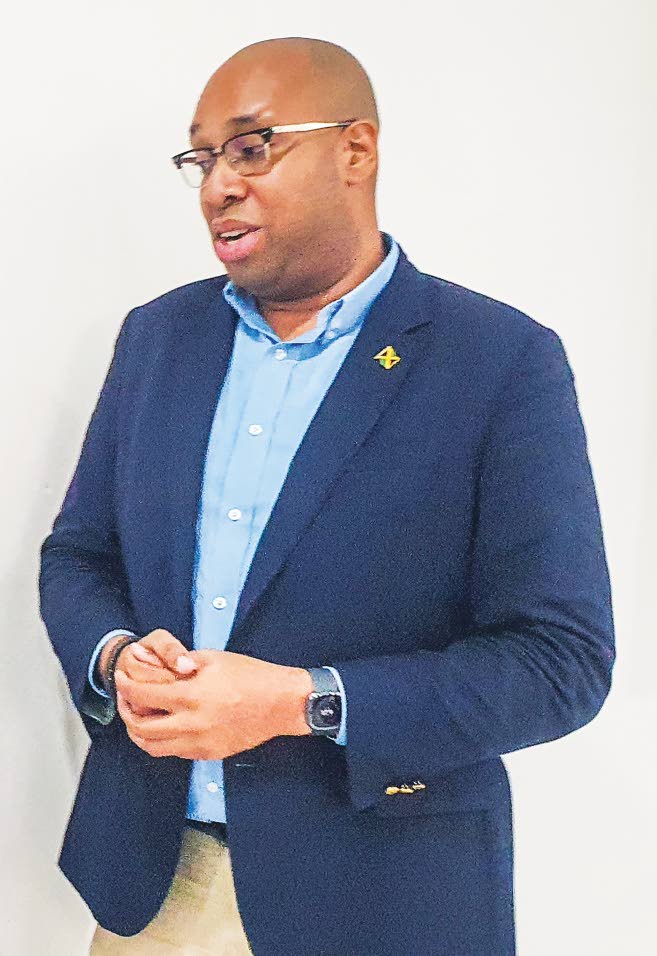
Delano Sevieright


