Tough going in Rocky Point as fishers try to bounce back from Melissa
Category 5 Hurricane Melissa, which hit Jamaica on October 28, left a trail of destroyed buildings behind in many communities across the island, especially in the south-western end, but not in seaside community of Rocky Point, Clarendon.
Instead, residents of that coastal community were left struggling to deal with a major blow to their livelihood — thousands of dollars worth of fish pots destroyed as the sea raged during the passage of the hurricane.
Now Rocky Point resident, fisherman Winston Simms is calling for help for his colleagues to acquire material to rebuild the fish pots and resume their livelihood.
“The storm gone with the pots. We didn’t lose any houses in Rocky Point but we lose out on the fishing. Everybody lose. We don’t find back one fish pot. Whole heap a pot. We had more than 200 pots between four of us as my crew and every fisherman lose pot. When you ask them if they found pots, they said no. Everybody lose in Rocky,” Simms told the Jamaica Observer.
“It damage the business. It caused real damage. From the hurricane blow we have a low turnout of the fish. Right now, fish and lobster little bit since the storm. No pots are out there to make you be able to say if the fish population improved. The crew lost about $500,000 in pots. Four of us in the crew and we are building some new pots. The Member of Parliament Pearnel Charles Jr [Jamaica Labour Party, Clarendon South Western] gave us one roll of wire each. We started to make the effort to buy rolls of wire and build some before that came in but we need more,” Simms added.
He said one roll of wire is usually enough to make around six fish pots.
According to Simms, it can cost upwards of $60,000 to build the six pots. He explained that some people have to pay others to build pots for them and the people building the pots charge somewhere in the region of $15,000 for their labour.
“You have to buy wire, buy rig and rope, and you have to pay man to do it. We need some help to get some more wire,” added Simms.
In the immediate aftermath of Hurricane Melissa the National Fisheries Authority (NFA) confirmed extensive and catastrophic damage to the island’s fisheries sector.
The NFA said that the industry suffered billions of dollars in losses due to the hurricane as there was widespread destruction across fishing communities, aquaculture operations, and critical infrastructure.
In addition, the NFA reported that its initial assessment painted a picture of severe loss in several key fishing parishes, threatening the livelihoods of thousands and the nation’s food security.
According to Dr Gavin Bellamy, CEO of the NFA, fishing beaches, particularly in the south-western region faced collapse and several communities reported 100 per cent loss of fishing vessels, damage to engines, gear, and critical infrastructure and processing facilities.
Bellamy also confirmed that the fisheries supply chain was severely affected.
“We are witnessing not just damage to property, but a direct blow to the livelihoods of thousands of Jamaicans and the protein supply for our nation. Our immediate focus is on stabilising the situation, supporting our staff and fishers, and clearing critical choke points. The supply of fresh fish to local markets, vendors, and consumers has been interrupted, creating immediate food security concerns,” said Bellamy.
Last week Minister of Agriculture and Fisheries Floyd Green told a meeting of the Jamaica Observer Press Club that his ministry has launched a multi-faceted recovery effort for the fisheries sector rolling out emergency support and long-term investments aimed at securing the industry’s future.
Green said fishers in several parishes have already benefited from the distribution of critical supplies, including wires for fishing equipment and generators for fuel stations, allowing them a quicker return to normalcy.
“We procured about $30 million [worth of] wires so that they can get their pots back up and running. One of the first things we did was to provide generators for the fuelling stations so they could go back out. The approach has been started with the areas that the fishers are ready to go back out. So we did distributions in Portland, St Mary, St Thomas, all of them,” said Green.
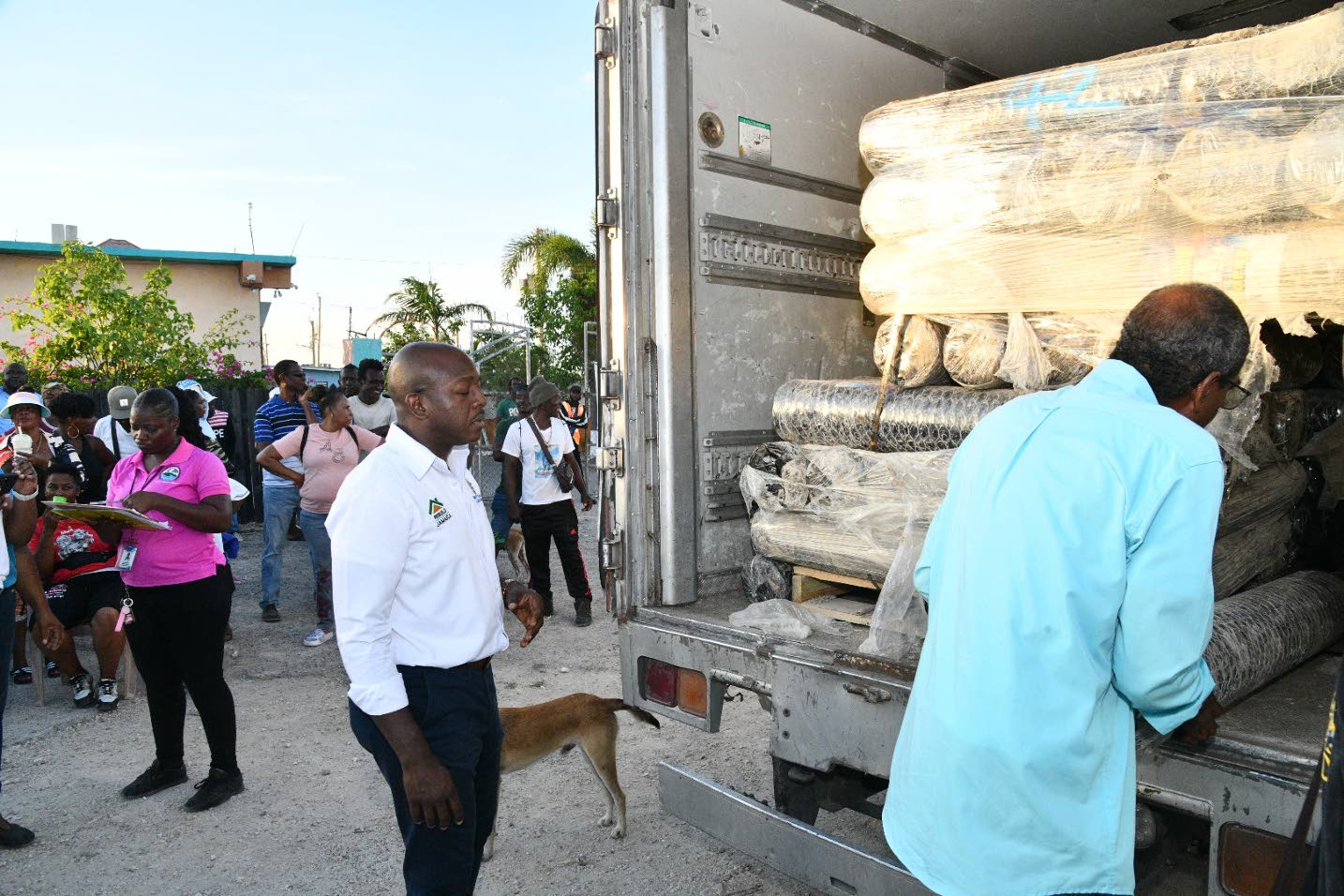
Member of Parliament for Clarendon South Western and Minister of Labour and Social Security Pearnel Charles Jr (left), observes while CEO of the National Fisheries Authority Dr Gavin Bellamy, opens pallets with wire mesh for fisherfolk to make new fish pots in Rocky Point, Clarendon, on Friday December 12. (Photo: JIS)