A disabled coffee farmer’s plea
DONALD Stewart, a disabled coffee farmer from St Andrew West Rural, is speaking out against what he describes as inadequate government support for farmers — particularly those living with disabilities — warning that, without meaningful intervention, the country’s prized coffee industry will collapse.
“I was just making this point to my colleagues that we have to set up some form of arrangement to treat [with] the disabled in coffee. The disabled are left out. If you’re not on [the] spot, then you’re not getting anything. Blue Mountain Coffee is one of the best in the world, but since we don’t have anything to sustain it, we’re left to beg.
“Like how mi lick out mi two knee inna coffee bush and now if I’m not on spot, nobody remembers a guy like me,” said Stewart, who was attending the commissioning ceremony for the handover of 5,000 bags of fertiliser, valued at $35 million.
Of the total, 2,000 bags of fertiliser were handed over to the Jamaica Coffee Exporters Association and the Jamaica Coffee Growers Association on December 17 at Jamaica Agricultural Commodities Regulatory Authority’s (JACRA) headquarters in Kingston.
The handing over of agricultural inputs is part of a larger intervention of $120 million from the JACRA and the Government as relief aid to support recovery, restore production, and rebuild livelihoods in the aftermath of Hurricane Melissa, which delivered a punishing blow to the coffee industry on October 28.
JACRA’s Acting Director General Wayne Hunter also announced at the event, which was held at the agency’s headquarters in Kingston, that through the Coffee Crop Resuscitation and Establishment Programme (CREP) — implemented to establish coffee nurseries over a five-year period — both the Blue and High Mountain industries would receive thousands of seedlings to get farmers back on their feet.
Blue Mountain Coffee accounts for crop grown in St Andrew, Portland, and St Thomas, while the High Mountain variety consists mainly of coffee grown in Manchester.
Despite this, Stewart, who has spent decades in the cycle of recovery after major weather events that have struck Jamaica, said that while fertiliser is important, in the long term, it does not help small producers who are struggling to make ends meet.
“We, as farmers, a lot of us don’t even have a good bed. Is $5,000 it cost me to pick and carry one box of coffee to the factory. This is a next problem because to pick it, some people don’t have any road so them cannot drive, them have to walk miles with it. Or, if you get it transported by truck, you have to pay $9,500 when one box of coffee is valued at $10,000; so there’s basically nothing after that,” explained Stewart.
He told the Jamaica Observer he believes the Government should focus on long-term initiatives such as: providing targeted grants, housing solutions through the National Housing Trust, insurance coverage, and policies that recognise farmers as essential contributors to the economy.
“Im wondering if this [event] is just the same old story, because all that we talk about here, we heard it talked about already — we’ve heard it all before. So the point is, anybody who is registered to RADA [Rural Agricultural Development Authority] needs to have some provisions with the housing trust. We need insurance, a scheme with the NHT. We need something; we want to feel like somebody too! Right now I feel like nobody,” charged Stewart.
He also argued that it is important for coffee farmers to have a representative in the Senate so that they can have a voice to advocate on their behalf.
Stewart further highlighted that most farmers are elderly, which, he said, is a tell-tale sign that the attractiveness of coffee farming is on a rapid decline. He urged the Government to consider policies that would attract the younger generation, warning that the industry would not survive otherwise.
“If you notice, it is only old people here saying that they are coffee farmers. You don’t see any young people. So I’m just wondering why the system isn’t attracting young people. Now is the time that they should be getting grants to come into the farming industry, because instead of developing the skills for the fork and machete, they’re going to develop skills for scamming,” he said.
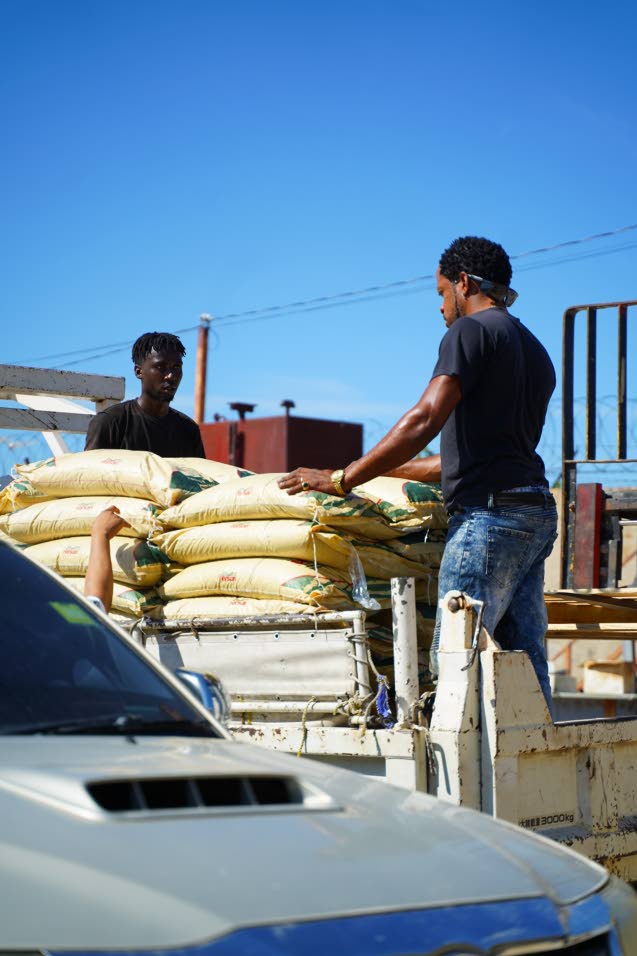
JACRA handed over 2,000 bags of fertiliser and other key agricultural inputs to the Jamaica Coffee Growers Association and the Jamaica Coffee Exporters Association as part of its ongoing efforts to rebuild the industry following the passage of Hurricane Melissa.