Floyd Green’s heavy toll
...but duty calls
HAVING weathered hurricanes Beryl and Melissa — back-to-back disasters just over a year apart — on the heels of the COVID-19 pandemic, Member of Parliament (MP) and Minister of Agriculture Floyd Green says he never imagined he’d experience multiple catastrophes during his time of service.
First elected to the Lower House in February 2016 as a representative for St Elizabeth South Western, a post he’s held since then, Green shared that the challenging back-to-back devastation has taken a mental toll on him but he’s happy to be in a position to serve, because he understands the importance of good leadership in the midst of a crisis.
Two months on and as rebuilding efforts continue in the wake of Hurricane Melissa’s assault on sections of his constituency, Green plans to take things step by step as he embodies the resilient nature of Jamaicans and the people of St Elizabeth.
“When COVID-19 came, I thought it would have been a once-in-a-lifetime experience as a political representative, where there were clearly a lot of challenges. Having [got] through the COVID-19 pandemic, we were very happy to try and get back some semblance of normalcy and then Hurricane Beryl came; which, again, I said: ‘Well, [the] last time we had something close to this was [Hurricane] Ivan, which was like 20 years ago, so this not going to happen again while I’m MP for another 20 years.’ And then we had Hurricane Melissa, which made…the other two disasters look minute in terms of the level of destruction,” Green said in an interview with the Jamaica Observer.
“Clearly Hurricane Melissa has come and has been more devastating than anything that we saw before. Just the level of displacement and the fact that people lost all that they have worked decades for, in a few hours, it has been a very difficult thing to come to terms with,” he added. “Also, not only the dislocation of the constituents, but I faced my own dislocation because of the damage that was done to where I live in the constituency, so it has been very difficult,” the three-time MP told the Sunday Observer.
His first crisis as a member of the House of Representatives was the COVID-19 pandemic, the first local case for which was recorded in 2020. According to data from the Ministry of Health and Wellness, up to December 2024, more than 6,600 residents in St Elizabeth — which has three other constituencies: St Elizabeth North Eastern, North Western and South Eastern — had contracted the virus.
His second major challenge came in the form of Hurricane Beryl, which skirted the south coast of Jamaica in July 2024 and was devastating for farmers islandwide, with residents of St Elizabeth being the hardest hit.
According to an assessment by the Ministry of Agriculture, Fisheries, and Mining, for which Green is the portfolio minister, the agriculture sector incurred losses totalling $4.73 billion from the passage of Hurricane Beryl. It also indicated that 48,852 farmers were impacted, with approximately 23,040 hectares of farmland destroyed.
Additionally, the sector suffered the loss of 323,412 animals due to the Category 3 hurricane, including small ruminants, poultry, and cattle. Domestic crops saw approximately 18,700 hectares of vegetables lost, with damage estimated at about $1.95 billion. The recovery process saw scores of farmers and residents of affected areas receiving assistance with housing repairs, farming equipment and seeds, and farmer insurance policies to protect them in the future.
However, just over a year later, when the sector and St Elizabeth were still recovering from Beryl, the monstrous Category 5 Hurricane Melissa made landfall in Jamaica, leaving behind apocalyptic scenes in St Elizabeth, Westmoreland, St James, Hanover, and Trelawny.
A post-hurricane assessment revealed that the agriculture sector suffered some $29.5 billion in losses. Approximately 41,390 hectares of farmland have been affected, impacting over 70,000 farmers. There was also a loss of approximately 1,251,410 animals, including small ruminants, poultry, and cattle. In relation to domestic crops, about 32,400 hectares of vegetable lines were lost, amounting to $8.8 billion. Assistance is currently being provided to those affected.
“It does take a toll, especially when you consistently look at people who’ve been through a very difficult time. With agriculture, we were just building back from Hurricane Beryl, and we were on the cusp of our best year ever and we were celebrating, and then something completely outside of your control just wipes it out. When you go and interact with those farmers who’ve been through multiple blows and those fishers who’ve lost multiple times, it’s easy to get depressed; it’s easy to get frustrated.
“But I think one of the things that I have to keep reminding myself is that they are depending on me to hold them up, so I have to be strong. You have to kind of cultivate that internal strength to move, and I do find that having a strong spiritual relationship with God helps because [in] times like these, prayer is very important, and it’s something that I have found helps in a big way,” said Green.
The minister said the crises have also reaffirmed certain beliefs.
“It has reaffirmed in my mind how important leadership is and how important the position of a Member of Parliament is. It makes you really see that leadership matters and the decisions made by leadership and the approach taken by leadership, ultimately, either helps or hurt the crisis. It has also made me almost an expert in crisis management.
“I think each experience is quite different, but some of the fundamental pillars have been written in my mind now, in relation to things like how important it is to effectively communicate, how important it is to act fast, how important it is to try and mobilise as much support as possible so that you’re not doing the journey alone,” he told the Sunday Observer.
“All things considered, I think I definitely am happy for the fact that I am the Member of Parliament and representative during these times, because I spent a long time outside of politics looking on and wondering if it was worthwhile and if it makes sense, and would your contribution really help to make a difference. I think the crisis and the multiple crises have shown that it does make sense, and somebody will have this position so it’s better to put it in the hands of somebody who really wants to make a difference,” he added.
As he once again leads recovery efforts for the agriculture sector and the people of St Elizabeth South Western, Green said he is taking “each task and each aspect in small parcels and try and get them done and move on”.
“You segment, you compartmentalise, and you literally take it one step at a time. It’s something that you hear me say in a lot of my videos around recovery and crisis, moving forward at one step at a time. You just have to take it as much as you can manage, in each patch, and move on,” he explained.
Green said he also has very strong support and emphasised the importance of a support system, especially in a crisis.
“Support can kind of hold you up so that you’re not just depending on your own strength and your own mental strength to carry you through. I’ve found it’s important to have people that you can turn to and that you can say, ‘Today is a very, very difficult day,’ and somebody to help to take some of that load off and give you encouragement to keep going,” the MP and Cabinet minister said.
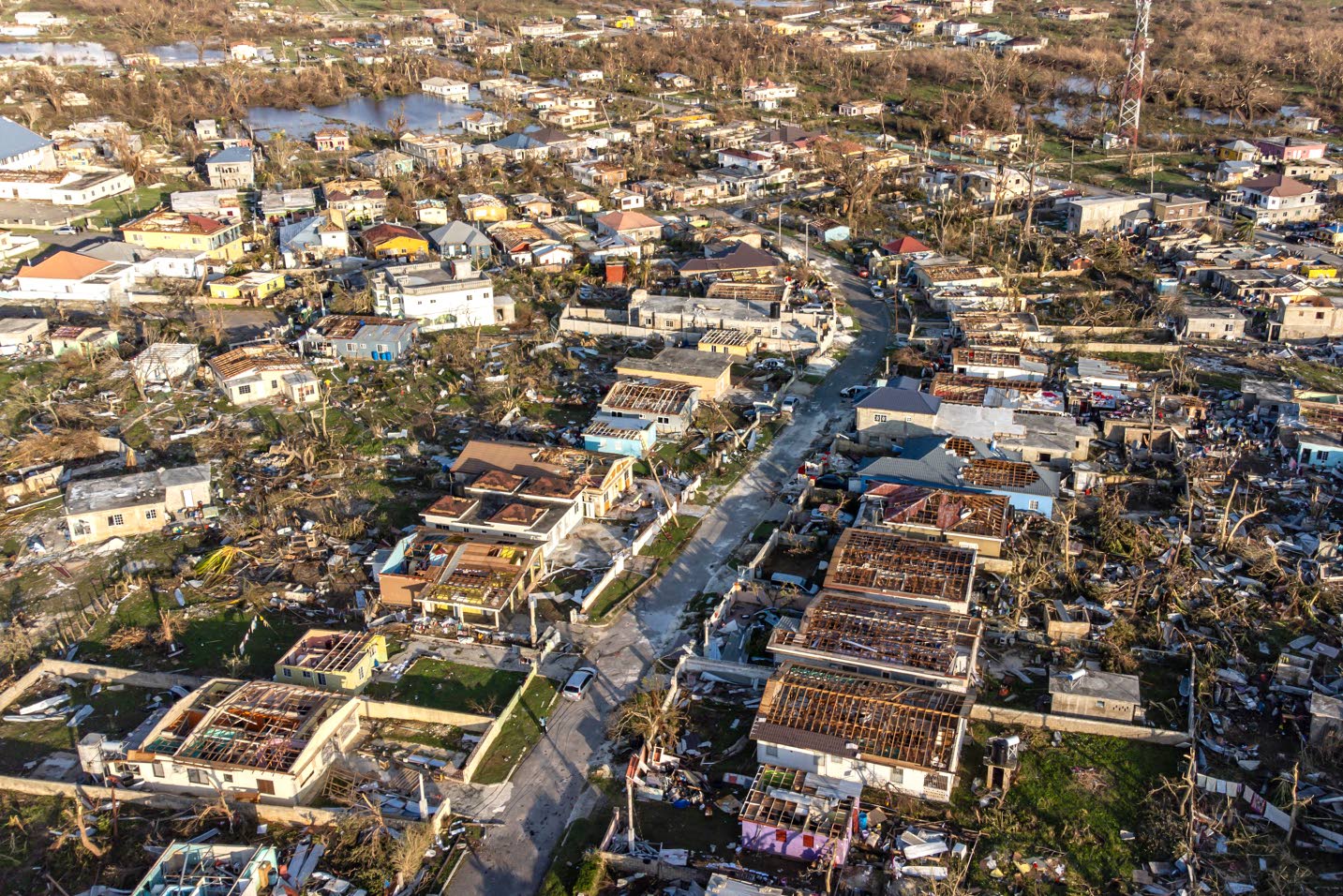
An aerial image capturing the devastation of a section of Black River, St Elizabeth, two days after Hurricane Melissa’s passage on October 28. (Photo: JIS News)
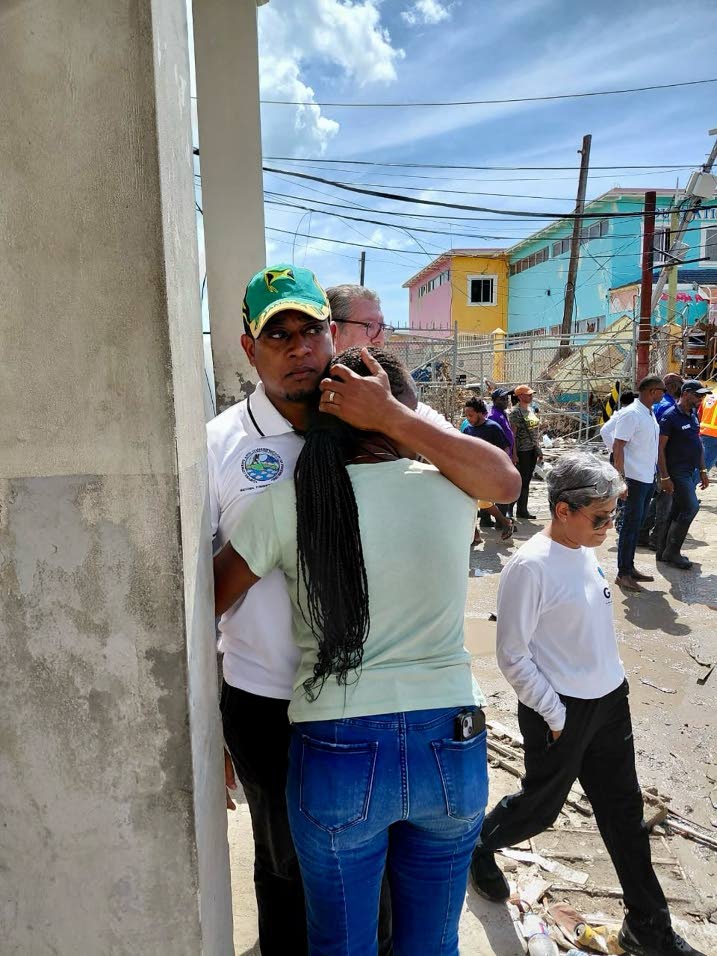
Floyd Green embraces a constituent during a damage assessment in St Elizabeth South Western post-Hurricane Melissa.
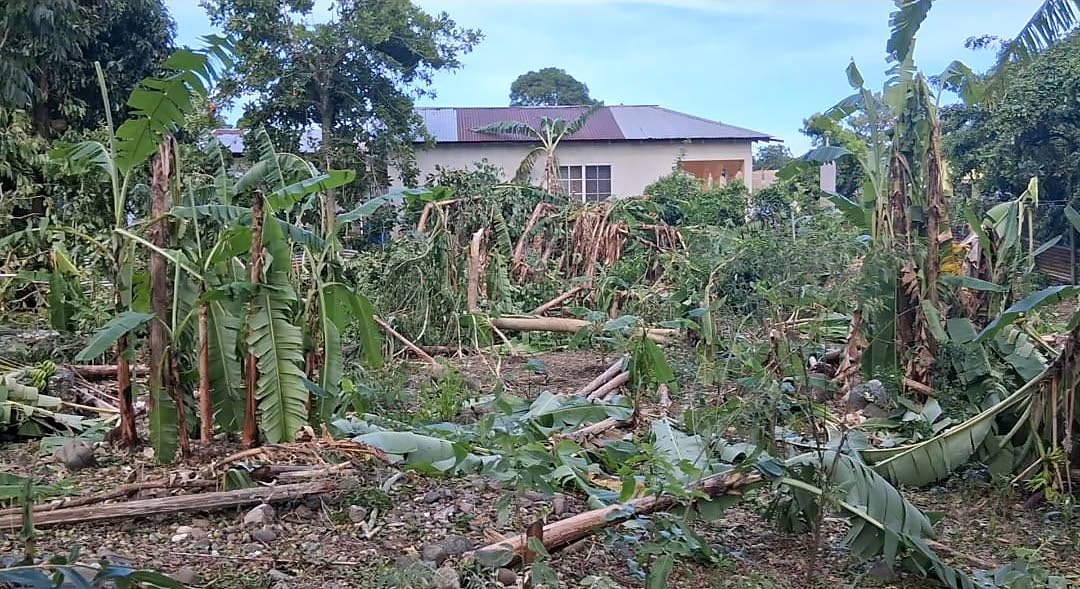
The agriculture sector incurred losses totalling $4.73 billion from Hurricane Beryl’s passage. (Photo: Everard Owen)