Missions of mercy
Bethel United Church makes hurricane response its agenda
As Hurricane Melissa meandered towards Jamaica in October, Bishop Devon Charles Brown and his ministerial team watched, prayed and planned for what the unprecedented Category 5 system would unleash on the island.
After the storm slammed into the island on October 28, mangling homes, flattening churches and stripping roofs, Charles Brown, prelate of Bethel United Church of Jesus Christ (Apostolic) in Jamaica and the West Indies, and his team headed for the south-western parishes armed with their emergency relief plan.
Now, eight weeks later, Bethel’s Regional Evangelism Outreach Ministry (REAM) team, headed by Evangelist Latoya Simba, remains dogged in its push to dispense aid stretching from St Elizabeth to Darliston, Westmoreland, and St Ann determined that the church “would not divorce itself” from its membership nor the communities in their hour of need.
“As part of our DNA, a family worship body, we care. So outside of even disaster, missions is at the core of what we do in a very holistic way, and how we bring persons into the kingdom of God has to be holistic. So before the disaster struck, we met as a National Ministerial Council body to discuss, our response. When it struck, we immediately met to mobilise our effort. We have 22 member churches and about six were hard hit with Hounslow, St Elizabeth, being one of the critical ones; the sanctuary was destroyed. Persons’ homes were covered under water, roads were impassable, it was just crazy for a number of days,” Simba told the Jamaica Observer.
REAM, she said, were first responders in Hounslow, an agricultural hub, brought to its knees by the hurricane.
“When we went there, the people were running out to us, begging for water, begging for what they could have gotten. One yard we went into, the house was smashed, babies were outside on wet mattresses. There were flies, flies, just taking over the babies. Nothing to eat, nothing to drink. We have adopted that family, we gave them mattresses, zinc, we gave them clothing,” Simba said, her voice filled with emotion.
“When we saw that level of devastation, we were moved to not only help our church, but community members. We’ve not stopped since the hurricane. We’ve made almost 20 trips and that’s outside of what the pastors are doing on the ground and we’ve spread our efforts across three phases. The three R’s being relief, recovery and reconstruction and so far, we have spent over $5 million in relief efforts,” Simba said, noting that the dollar figure was negligible when compared to the vast needs.
In noting that those needs go far beyond what care packages can address, she said the organisation has tailored its approach.
“When we went in some of the communities, we realised that outside of just meals, persons were walking around like zombies, being psychologically challenged, being numb, just wanting hugs, just wanting somebody to listen to their story, so we brought Dr Keshauna Ferguson, an expert psychologist, and she’s been on the ground offering psychological care. We’ve also brought her husband, who is a medical doctor by profession, to assist medical care needs as well as counselling,” Simba shared.
For Simba, a married mother of twin girls (nine) and a son (12), the scenes of devastation which greeted the team on each foray into the various communities will not be erased any time soon.
“I’m just starting now to come back normal. For weeks I could not sleep, I could not eat; I lost weight, because when you go and you see, it’s unbelievable, it’s like a nuclear bomb dropped. As far as the eye can see, every single house flattened, so a lot of them are living in conditions that’s not even liveable. Recently I got a message saying, ‘help me get out because I’m being subjected to domestic violence, and I feel unsafe’,” she shared.
“Some of them are staying with friends, total strangers, family members. Some of them are in one room with 10-15 people,” Simba explained.
Noting that the need for proper living accommodations is dire, Simba said Bethel is transitioning its aid programme.
“We’ve started the recovery phase to help to rebuild homes and to support with livestock, and come the new year we’ll be transitioning to reconstruction and that will be across churches and homes. The church is looking to help with build back grants as well as what we call adopt a family initiative. We’ve not yet confirmed the grant amounts but it will be based on the severity of the damage,” she told the Observer.
She said the organisation is also partnering with government agencies to speed up the recovery process.
“We’re working with the Ministry of Labour through a brokerage approach where when we go on the ground we have the forms from the ministry and we help fill out those forms for persons who cannot access them online because they don’t have electricity, and we also take the same approach with the National Housing Trust information,” Simba said further.
The fact that the hurricane is long gone but many households are still nowhere close to normal, is a painful reality for the team she said.
“One experience last week made me cry; I was in Hounslow, and we were giving out warm blankets because we have a Chinese couple on board with us who sponsored over $300,000 worth of blankets. A little girl walked up and she was looking teary so I sat down started talking to her, and she said, ‘Miss, if you could just give me that last blanket? My mother and I, we sleep on the ground and I just would like to be warm tonight’. That brought me to tears, I had to turn back and I borrowed somebody’s blanket just to give that little girl. So the living conditions are dire, dire,” Simba emphasised.
In the meantime, she said the organisation has developed a skill bank from which it will draw resource personnel to help with the rebuilding and rehabilitation of the six churches that were affected.
“So far, we’ve gotten internal carpenters, masons, businessmen came on the last trip to Darliston with us and they began helping us in terms of building back one home so far,” she said.
In a bid to further soften the crisis she said the team last weekend engineered a treat and fun day for the Darliston community serving more than 300 hot meals and dispensing gifts in a bid to soften the harsh realities and help heal the memories of the trauma the hurricane brought to the area.
“One person went outside and a sheet of zinc flew and just cut off their head. A young girl, she went outside to look and just the shock of it, she got a heart attack and died. This has taught us so much even from a psychological standpoint,” Simba said.
In the meantime, Bishop Charles Brown says Bethel is prepared to go the long haul.
“We are mobilising funds locally and also from our counterparts overseas to effect phase two of our response. It won’t be a sprint. This is going to be a marathon. We have pretty much suspended our regular agenda items at a national level because our response has become our agenda, and we will stick to that as long as it takes,” he told the Observer.
“We have got to do what we what we have to do to make sure that we remain relevant and serve the people who are really in need of our assistance at this time; we can be trusted, and we will certainly ensure that what is done, is done to the benefit of the other communities that were badly affected by the hurricane,” Charles Brown stated.
He said the church has partnered with a number of businesses in carrying out its relief and reconstruction efforts.
Asked to give his first impression upon seeing the impacted areas for the first time, Charles Brown said the full import of his role as a leader helped frame his response to the scenes which were far worse than portrayed by the media.
“It was heart-rending to see the devastation. It was like a bomb went off in those areas. It was really, really heart-rending but you had to hold your composure, while you think of what they would have gone through. Leadership requires that you respond in a way that brings comfort, assurance, and also inspires hope, and that was basically my task, as I went to see for myself. I can tell you, I have seen images on television, social media, but nothing prepared me for what I witnessed travelling to Darliston, it was really, really, really bad. But again, I was encouraged by the resilience of the people,” he told the Observer.
“Some were affected mentally and they were just off, but it is where leadership comes in, to inspire hope, to give assurance and to be a representative of the Lord; a voice in the midst of chaos, and hopelessness. You try to wrap your hands around persons, listen to them and also let them know that it’s not the end and we will rebuild stronger and better, and the Lord promises He would never leave nor forsake His people,” Charles Brown said, noting that Bethel was grateful that despite the damage, no lives had been lost.
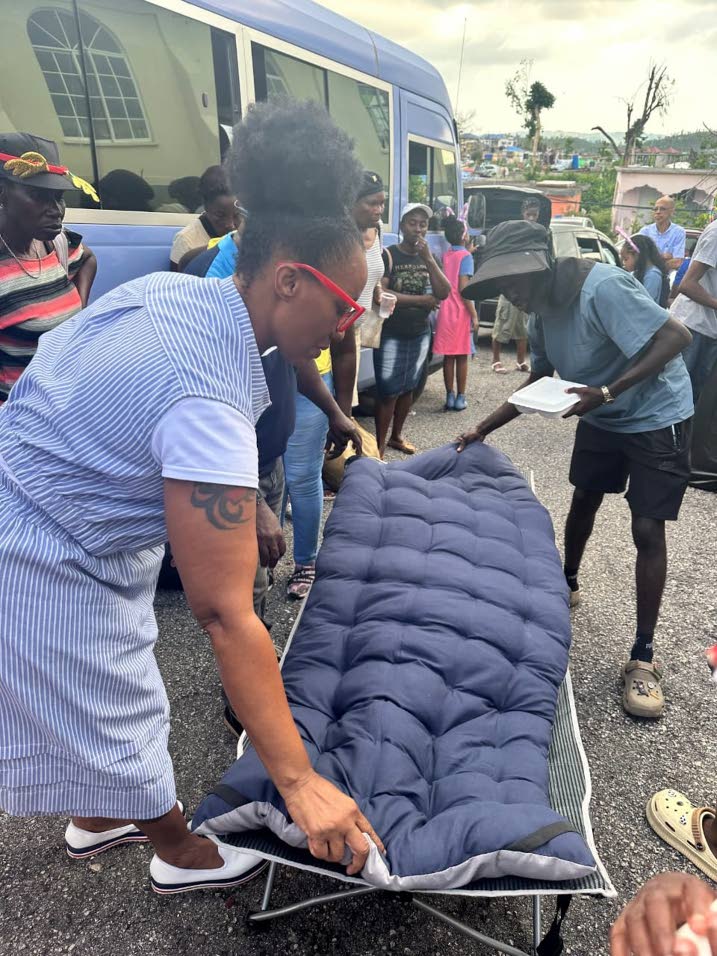
Members of the Bethel team unfold one of the blow up cots being distributed in Darliston, Westmoreland.
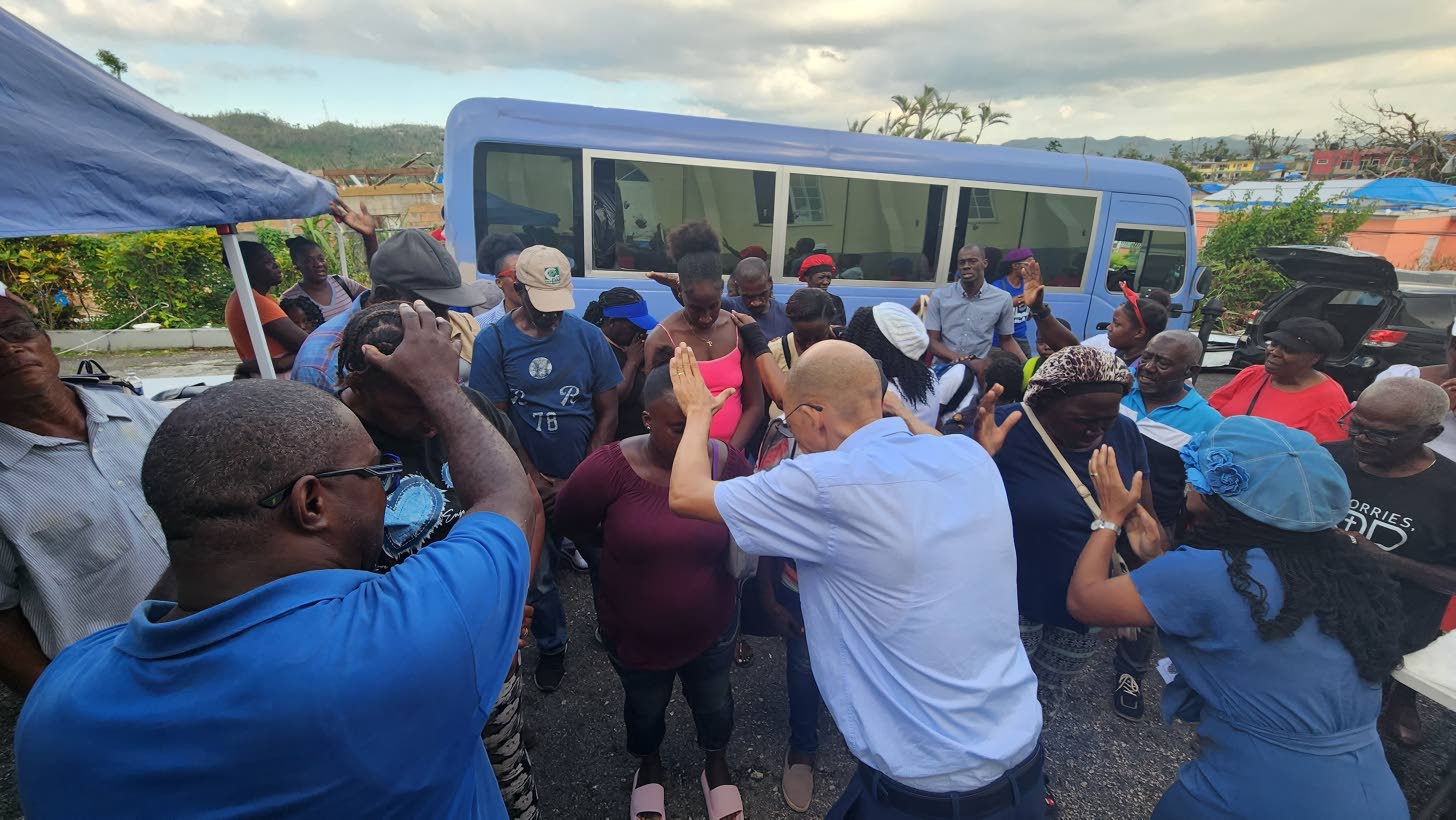
Bethel’s ministry team takes to the streets of Darliston to pray following a community treat and fun day recently.
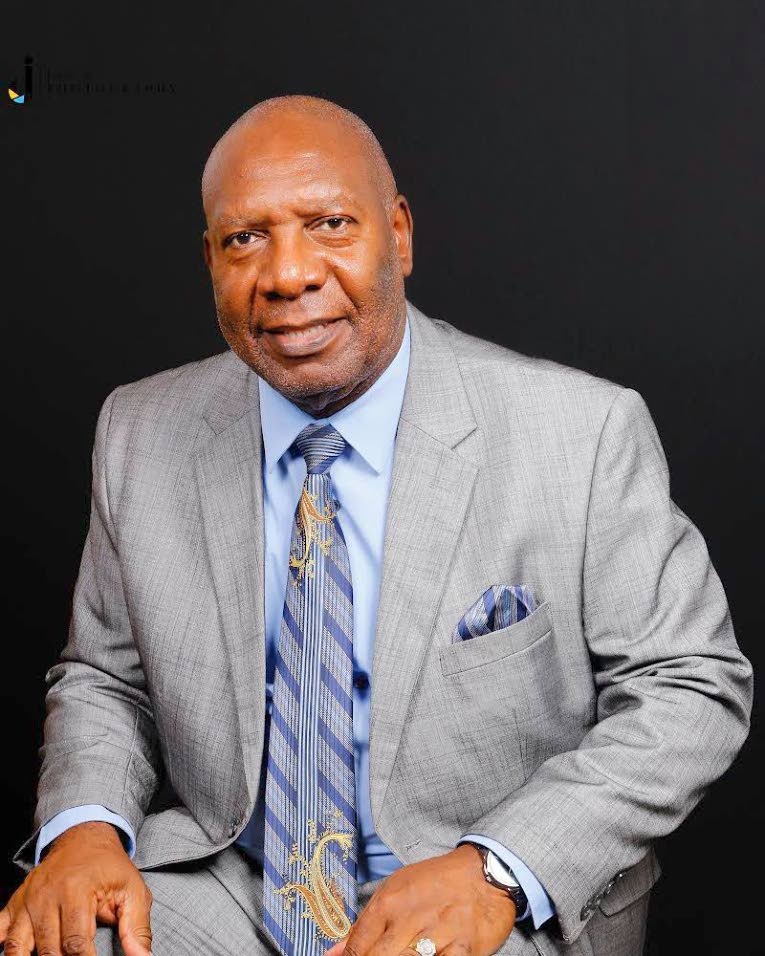
CHARLES BROWN… this is going to be a marathon