



Inside the criminal mind
Psychiatrist outlines factors, some from birth, that set people on path to prison
Forensic psychiatric expert Dr Myo Kyaw Oo, who has worked in Jamaica’s prisons for more than two decades, says the majority of convicts serving time for the most atrocious crimes have a history of familial instability, including parental discord and separation, compounded by instances of abuse, neglect, and behaviour consistent with conduct disorder.
Dr Oo, a sessional consultant psychiatrist with the Department of Correctional Services, was responding to a Jamaica Observer query seeking to establish the factors triggering individuals to commit acts of violence.
According to the respected Burmese-born psychiatrist, known for his long service at Bellevue Hospital and advocacy for mental health in correctional facilities, parental dispositions and experiences during pregnancy are also among the factors which set individuals on the path to prison.
“To have a child you need two parents. Parental factors are very important. That means genetic depositions are very important. If the mummy has a personality disorder and daddy has a personality disorder, your genetic deposition may not be good at all,” Dr Oo explained.
He said there are other factors that can affect the unborn child, among them physical illnesses affecting the mother; viruses or infections that affect the foetus’s brain development; if the mother never got love and affection from her partner; or if the partner abandons the mother; or, if during the pregnancy the mother was beaten daily and faced abuse.
Emphasising the importance of proper brain development during pregnancy, Dr Oo said experts are now seeing the telltale signs of neglect in this respect in people behind bars.
“These days we see a lot of people with literacy problem inside the prison; people can’t read and write. When you ask them what level [education] they achieved, they say grade nine, grade 10. Some people even say that they graduated at grade 11, but when you ask a grade 11 to read, they can’t even read or write. That’s the system we have,” he told the Observer.
“So the thing is that we have seen a lot of people with what we call, in other terms, mental retardation or intellectual disability, or their IQ (intelligence quotient) is lower than their age. We have a lot of people there. So those are the factors like neurodevelopmental factors and the parental factors,” Dr Oo said.
Additionally, he said adverse conditions during pregnancy, followed by troubled childhood experiences and inadequate schooling set individuals further down the path to criminal behaviour.
“When the child grows up — whether this child is nurtured in a loving environment or the child faces abuse and neglect — parental discord can affect [children]. Can you imagine your mommy and daddy separated from [you are] very young; the child, from a very young age, sees mommy and daddy fight until they bleed. Every day daddy comes back home drunk and beats up the mommy; things like that. This child will be affected. We have seen our inmates with that kind of history inside,” Dr Oo shared.
According to the expert, many adults now behind bars were children raised without the right values which set them on a path to delinquency and conduct disorders.
“We have seen people inside the prison — people who, at a young age, [could have been] diagnosed with conduct disorder. But then we miss them; schools miss them. So, therefore, they never get the required counselling and they grow up; they have a behaviour problem; they have lots of fights and problems with the students; problems with the school teacher; they can’t conform to the rules and regulations, run away, things like that, changing school from one to another. These are all factors too. And then after high school… they develop into adulthood. If you have a history of conduct disorder, after 18 this conduct disorder will develop into a personality disorder, which is a severe form of conduct disorder,” Dr Oo outlined.
“Those people, they don’t conform with rules and regulation; they don’t care, they don’t appreciate other people’s emotions, the person is crying, person begging for life, they don’t care about it. For them it is nothing at all. They can’t appreciate somebody suffering at all, and they themselves cannot appreciate their emotions either. So those are the majority of people that we see inside,” he explained.
“We have a number of persons with a history of parental discord, parental separation and family abuse, family neglect, and with features of conduct disorder, they end up in our correctional facility,” the forensic psychiatric expert stated.
According to Dr Oo, those individuals could have been saved if someone had noticed.
“Some of them… should not be in the correctional system, because, if you have a child showing behaviour problem in the primary school, the parents should notice if the parents are loving parents; or, if not, the schoolteacher should notice it. So parents and teachers together, they should have taken this child to the treatment facility to do a proper assessment. But then our system is not adequate enough to provide all the assessment either. That is one of the reasons we miss them,” he said.
Dr Oo said labelling such children is the final nail in the coffin in most instances.
“Finally, when the child does things bad they are labelled, and they are taken to court and they are sent to the correctional system after our mediation and diversion systems fail. So that’s what we are seeing, basically. So you can imagine, if we had that kind of system working very well, we would have less people coming into our institutions and the correctional system, including juveniles,” he contended.
Substance abuse resulting in mental illnesses, he said, is also a culprit.
“When we talk about people having mental illness, you know, later on they have depression, anxiety disorders. People have psychosis. Majority of our prisoners, based on our finding, they start smoking weed from a young age, from 13, 14, 15, 16. And you know that the weed is widely available in Jamaica, and now that the law has changed you can even plant five cannabis [trees] in your backyard, and you can consume your cannabis inside your house. So we make things quite complicated for those people who have pre-existing issues,” Dr Oo said.
“So we have people, and many of them inside, we see that they have developed mental illnesses and psychosis, post-traumatic stress disorder, bipolar manic disorder, mood disorders. When they smoke weed the matter is made worse; they lose judgement. They can’t control their anger. They can’t control their impulsivity, they commit offences,” he pointed out.
Dr Oo was, however, keen to point out that the majority of individuals in prison in Jamaica are not mentally ill.
“One thing I would like to stress here is that people are sometimes mistaken; mental illness can be dangerous, it can cause individuals to commit a lot of atrocities and crime, but what we observe is that most of the murders, most of the serious offences, are committed by people with no mental illness at all,” he emphasised, adding that some people also end up behind bars, having committed crimes of passion.
“Sometimes people come into the prison system, ordinary people, just like you and me, and you’re pushed or you’re faced with extreme circumstances, meaning that you have to do self-defence and self-defence goes wrong, you have no choice at all, you end up in prison. Or crimes of passion; you come back home and you find your wife in your bed with somebody else, that kind of thing,” Dr Oo explained.
He, in the meantime, praised judicial officers for the attention now being paid to psychological and psychiatric factors influencing criminal acts.
“The legal system — meaning the judge, prosecution, as well as the defence lawyer — now they are paying more attention to the psychological factors, and more psychiatric aspects, and the mental aspects. Therefore, many of the offences like murder, manslaughter, rape, robbery, armed robbery, and child abuse, and Family Court cases also, they are using more psychological and psychiatric assessment,” he told the Observer.
“Not only that, they are also using the assessments for the sentencing process too. Before they are sentenced, they send them to us to do a psychological and forensic psychiatric assessment. We have to read the history, we have to read the deposition, we have to read the statements and so on, and we do a serial assessment, and we have to provide the court [with] what would be his mental status prior to, or at the time he committed the offence. That is called forensic psychiatric assessment. I really appreciate that I wanted to see that one happen, and it’s happening. So I’m very, very glad for that,” he said.
According to Dr Oo, with so many factors at play, the work of mental health experts like himself is imperative.
“You can’t pinpoint only one factor, so that’s why, when we have to do assessments, we have to do a serial assessment, and we have to listen. We have to ask from the day you are born until you are today, if you are saying you are 45 years old, we want to know 46 years of your history, because we want to know how you spent the nine months inside your mommy’s belly, and before that; we also want to know about your relationship between your mommy and your daddy — are you a planned child or your mother just got pregnant and daddy ran away,” he shared.
“That’s why we don’t want to see, like, under-age parents, children ending up with children of their own,” Dr Oo declared.
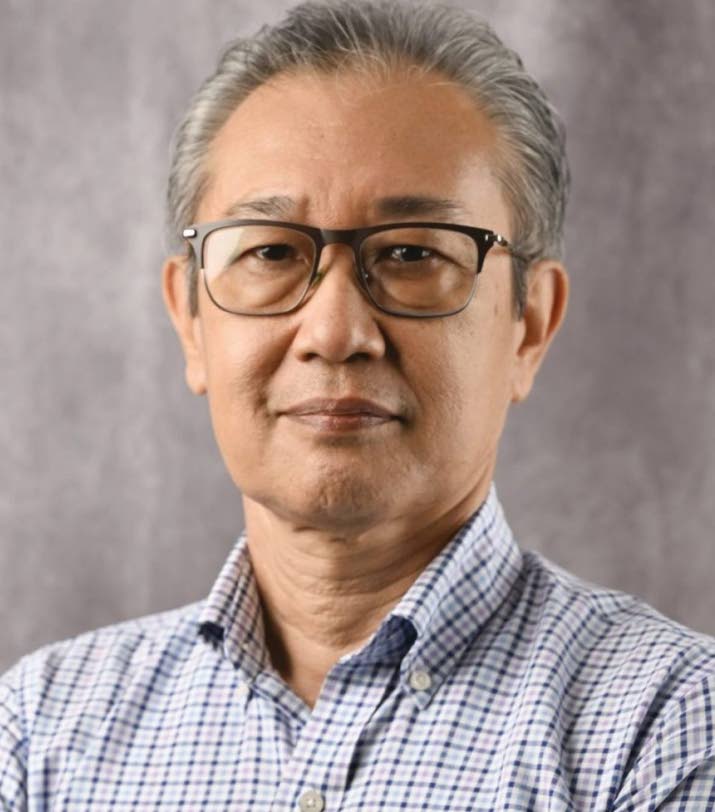
OO… we have seen people inside the prison who, at a young age, could have been diagnosed with conduct disorder but we miss them


