



When ‘fallen angels’ become a weapon against African spirituality
I just completed watching a very interesting YouTube video entitled Forbidden Origins of African Gods: Fallen Angels and Ancient Blood. The video creator draws heavily from the book of Enoch’s narration about fallen angels and embraces lock, stock, and barrel the controversial view that the sons of God mentioned in Genesis 6:2 were, in fact, the same fallen angels referenced in the book of Enoch. The video then builds on this foundation, presenting the argument that African, Mesopotamian, Canaanite, and ancient European and American spiritual traditions were all rooted in the worship of the fallen angels.
Practitioners of the Abrahamic faiths will no doubt give the video the thumbs-up for exposing the ‘diabolical’ nature of African spirituality. After all, who does not know that any spiritual beings not connected to Jehovah, the Trinity, Allah, and the angels are nothing more than demons masquerading as gods. Incidentally, Jews, Arabs, and good European Christians weaponised this thinking and used it as a pretext for some world-class genocide, ethnic cleansing, slavery, colonisation, and exploitation directed against the darker skinned people of the world.
As a Caribbean person of African ancestry who is on a journey to rediscover what was lost on the tragic trail from the womb of the African continent to the hell-holes called plantations in the Caribbean, I am forced to take issue with the thrust of the video. I initially limited my critique in the comments section to the obvious anti-black statement which linked Hamitic people to the cursed fallen angel genetic trait that supposedly produced the Nephilim or giants mentioned in Genesis 6:4. The video states point blank that populations descended from Ham carry traces of the Nephilim genetic code.
Good Bible students would know that when the Semitic Jews entered the Hamitic land of Canaan they were like grasshoppers compared to the massively built Canaanites. The presence of so many giants in Canaan is cited as the reason the God of the Bible had a bone to pick with the Canaanites. This bad blood would result in the near-extinction of the Canaanites. The fallen angel connection to the Nephilim in Noah’s day also seemed to have ticked off the God of the Bible, occasioning the extermination event referred to as The Flood. Apparently, this is the bedrock reason for all of the racism, genocide, ethnic cleansing, slavery, and exploitation suffered by descendants of Ham.
After reflecting on the video for an entire day, I felt duty-bound to present a more robust defence of the spiritual traditions of my African ancestors. To begin with, the great Creator embraced by traditional African spirituality does not have a vendetta against the darker skinned people of the Earth. The African Creator ignited the spark of existence then stepped back and allowed life to evolve with a little assistance from some powerful agents called orishas or loas. Yahweh, unlike the Creator of African spirituality, is very much involved in the day-to-day affairs of humanity. Yahweh unleashes floods; burns cities; and kills first-born babies, toddlers, teenagers, and adults in an African nation.
The orishas and loas who act as agents of the Creator are very much like the angels in the Abrahamic faiths. Angels are portrayed as both healers and destroyers. They are the dispensers of blessings and curses. In 2 Kings 19:35, one angel kills 185,000 Assyrians. Another angel, single-handedly, almost wiped Jerusalem off the map, according to 2 Samuel 24:15-16. This near-holocaust in Jerusalem occurred in the wake of an angelic-induced plague which claimed the lives of 70,000 Jews. Even in New Testament times, angels were still killing people, according to Acts 12:23.
Since practitioners of the Abrahamic faiths love to use the moniker demonic when describing African spirituality, I thought it would be helpful to turn the demonic spotlight on all three of the Abrahamic faiths to see how they compare with the ‘devilishness’ of African spirituality. No less an authority than Jesus called the Jewish Scribes and Pharisees of his day “spawns of the devil” (John 8:44). In the book of Revelation, Jesus dropped another bombshell on a group of Jews by calling them the synagogue of Satan (Revelation 3:9).
Martin Luther of Protestant Reformation fame is on record addressing the pope and the organisation he represented as anti-Christ and the whore of Babylon, respectively. Churches like the Jehovah’s Witnesses, the Mormons, and Seventh-day Adventists went one up on Luther by also calling the Catholic Church the whore of Babylon and all the other Protestant churches the daughters of the whore of Babylon. The Catholic Church and her daughters struck back at these upstart churches by calling them demonic cults.
Seventh-day Adventists, who have traditionally elevated themselves to the pre-eminent position of the remnant who keeps all the commandments of God and have the testimony of Jesus — according to the writings of American author and influential leader of the Seventh-day Adventist Church Ellen White — have disgraced themselves by the standards of their pioneers in taking to their bosom the trinity doctrine.
The pioneers of the Seventh-day Adventist Church considered the trinity to be the very essence of the idolatrous and adulterous wine of Babylon. If Adventist prophetess White is to be believed, modern-day Adventists, by drinking from the Babylonian cup of iniquity, have embraced a false concept about God and have become comparable to ancient Baal worshippers.
Salman Rushdie’s Satanic Verses and the vicious, vile, effluvium directed by white evangelicals and their black conservative religious allies at the religion of Islam suggest that all may not be well in the Muslim camp. Suicide bombings; terrorist activity worldwide; beheadings; church, synagogue, and mosque attacks; kidnappings; and an assortment of medieval practices perpetuated by Moslems today, inclusive of anti-black slavery, raises some serious questions about Islam and its moral qualification to sit in judgement of African spirituality.
When all is said and done, I am inclined to agree with Paul of Tarsus who said that we all are seeing through a glass that is very clouded (1 Corinthians 13:12). On the topic of God and spirituality, religious communities can be compared to the seven blind men who were asked to describe an elephant based on what part of the elephant they touched. Each of the blind men was right in what he affirmed about the part of the elephant he touched. Tragically, all seven of the blind men were wrong in what they denied about the totality of the elephant.
Now we all know in part, but when perfection comes, we will see and know what is the reality of God. Until that time of perfection arrives, humility should be the order of the day for all faith traditions.
Lenrod Nzulu Baraka is the founder of the Afro Caribbean Spiritual Teaching Center and the author of Out of Babylon: Why Black People Should Leave Most Churches.
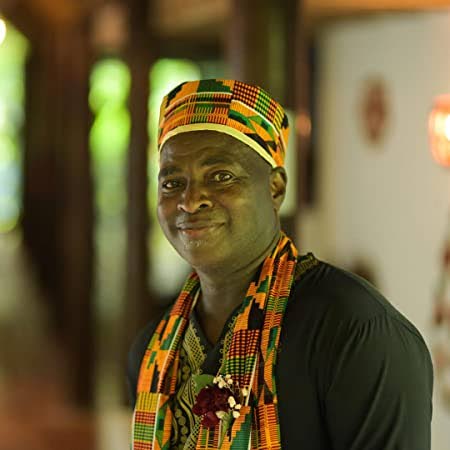
Lenrod Baraka .

Practitioners of the Abrahamic faiths have demonised African religions.


