



‘It’s about people, not buildings’
Church leaders weigh in on debate over State’s offer of rebuilding funds
AS the debate swirls over Government funding for damaged churches, religious leaders are stressing that the true mission after Hurricane Melissa is putting roofs over people’s heads, not rebuilding sanctuaries.
The response follows public criticism from Member of Parliament (MP) for St Catherine South Western, Everald Warmington, who questioned Government’s decision to allocate $75 million towards rebuilding churches damaged by Hurricane Melissa. Warmington argued that the funds would be insufficient to repair the scale of damage, and should instead be redirected towards housing and other social needs.
On December 23, Prime Minister Dr Andrew Holness announced a $75-million allocation to the Social Development Commission to support churches and faith-based institutions in rebuilding efforts following Hurricane Melissa.
The announcement followed the establishment of a Religious and Faith-based Task Force, comprising members of the Jamaica Umbrella Group of Churches, to identify the needs of religious organisations.
Holness emphasised the vital role of churches in society, noting their collaboration with the Government and other agencies in the hurricane relief effort.
The $75-million allocation will benefit churches across the five parishes most affected by the hurricane, and where possible, further assistance will be extended to churches across the island.
Yesterday, senior church leaders said Warmington’s criticism misunderstands both the condition of many congregations and the way churches have functioned on the ground since the hurricane struck on October 28, leaving widespread roof damage, homelessness, and prolonged displacement across western parishes.
Bishop Dr Rowan Edwards, chairman of the 10,000 Men and Families Movement, said that while the Government’s gesture towards churches was welcome, the priority for congregations remained the people within them — many of whom are still without shelter.
“The fact that the Government gave thoughts of giving the church help to rebuild is a very, very good gesture. But at this moment, there are so many people out there that are homeless, many people have not gone back into their houses because they have no roofs on their houses,” he told the
Jamaica Observer.
Edwards explained that in several parishes, the scale of housing loss among church members far exceeds the damage to church buildings themselves, particularly in western Jamaica.
“I spoke to one pastor who said her members lost 98 per cent of their roofs. Now, I don’t know when those people are going to be able to put back their roofs on their houses,” Edwards said.
He said any funds directed through churches would naturally be used to assist families first, rather than prioritising buildings.
“The money that they would give to the church, we would use that money to help our people, to get back their roofs. We prioritise our people, apart from the building,” Edwards said.
Drawing a personal comparison, he added: “If I have money to build a church, and one of my children, their roof is gone, I would have [halted] the church building and built one of my children’s houses… I put people above buildings.”
Warmington, in a video circulating on social media, argued that $75 million could not meaningfully rebuild churches and suggested congregations could instead share facilities or redirect resources entirely towards housing.
But Bishop Dr Peter Garth, senior pastor at Hope Gospel Assembly in St Andrew, said the MP’s comments contained internal contradictions and overlooked the operational realities facing churches.
“If you look at giving 10 or 25 churches, you would end up giving each church $3 million and that could not repair many of them because there is severe damage. So he is right on that note that $75 million cannot repair the churches. Now, to say that churches should be built in one area, rather than putting up back buildings, I think he’s off target there.”
Garth also challenged Warmington’s assertion that churches are largely empty and financially secure.
“He is saying that the churches have a lot of money in bank accounts, and at the same time he’s saying that the churches are empty. Now, if the churches are empty, how is it that we could at the same time have a lot of bank accounts that would have a lot of funds in them?” Garth said.
He added that while the church was not rejecting Government support, leaders would prefer practical assistance that could directly benefit struggling families.
“I think that our response would be not to accept $75 million for the repairs of churches, but to accept instead building material that will be used to assist other Jamaicans in rebuilding their homes,” Garth said.
“I firmly believe that we should take care of the people, which is what we have been doing from day one, looking out for persons out there. We were first responders, and we continue to respond, and so we would accept that and use the materials to help Jamaicans to rebuild their homes. We cannot go very, very far with the $75 million, but at least we would have material to help, because we have been helping persons to repair their roofs and so forth… and I believe that the Church should continue to help Jamaicans who are suffering, who have lost their roofs, and are in dire need of assistance,” he said.
For his part, Father Sean Major-Campbell, a priest of the Anglican Diocese of Jamaica and the Cayman Islands, said the debate had unfairly portrayed churches as wealthy institutions, when in reality many congregations are financially strained and deeply embedded in social support work.
“It is unfortunate that churches are broadbrushed to be seen as being awash with money,” he said. “Most congregations are struggling… many members are poor or are pensioners.”
He noted that long before Hurricane Melissa, churches were already filling gaps in education, healthcare and social welfare, often quietly and without State support.
“How many people knew that many congregations, while not able to meet current operating expenses, are still sponsoring that child in school and that youth in college?” Major-Campbell asked. “When members of society come struggling with suicidal ideation, we do not send them to the State. We understand that the church exists for those who are not members.”
He cautioned against applying a rigid interpretation of the separation of church and State, arguing that Jamaica’s history shows consistent cooperation between both in areas of national development.
“Separation of church and State does not mean they stop working together,” he said. “Let us continue to work together for the good of Jamaica land and people we love.”
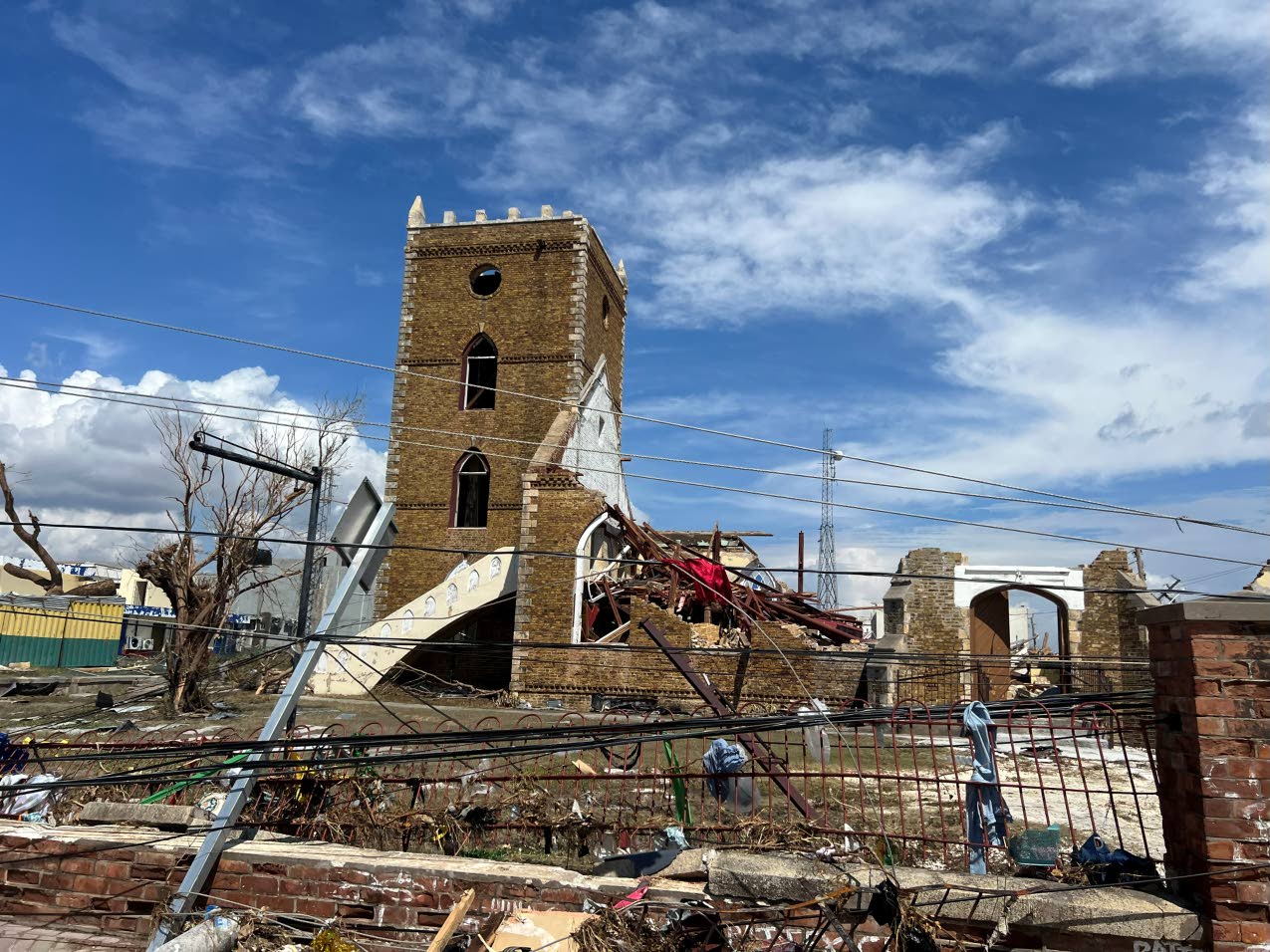
What remains of St John’s Anglican Church in Black River, after Hurricane Melissa
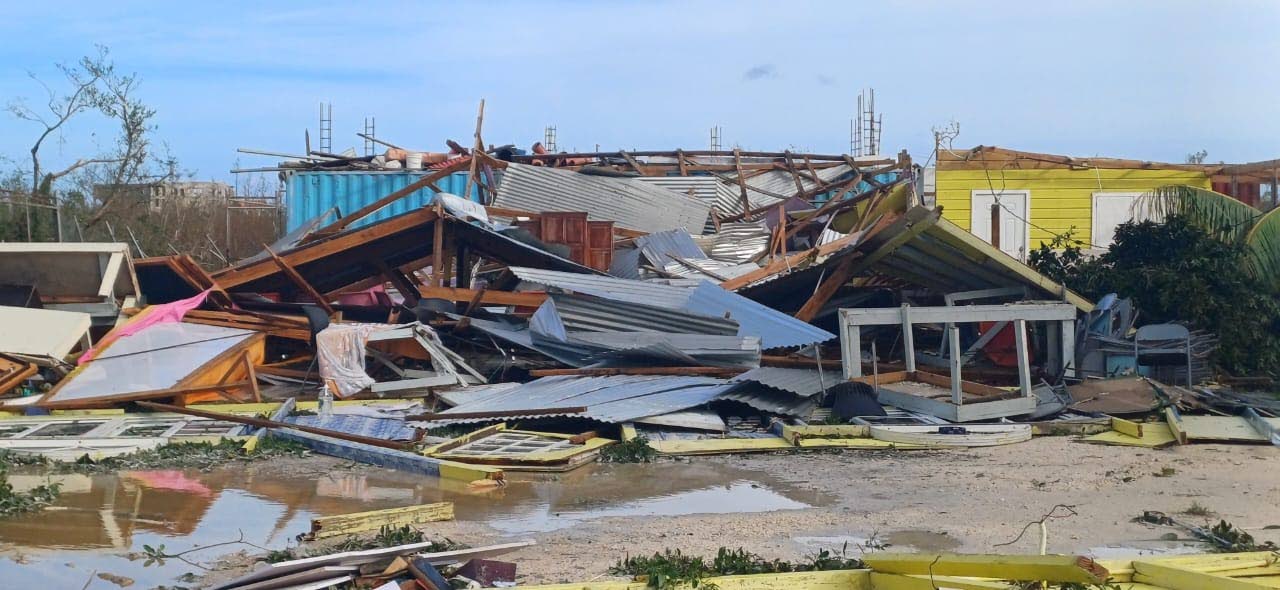
What remained of Scarlett Hall Church of God in Trelawny the morning after the passage of Hurricane Melissa.


