



STAGE ECONOMICS
Live comedy’s gains amid theatre’s decline
The way Jamaicans consume entertainment has changed over the years, forcing the comedy industry to adapt. Comedians who once dominated prime-time television slots are increasingly turning to live stand-up performances and small, recurring shows.
That shift was evident throughout 2025. Consistent weekly and monthly showcases, like Christopher “Johnny” Daley’s Johnny’s Live Comedy Bar and Dufton Shepherd’s events, were supplemented by major year-end productions such as the Christmas Comedy Cook-Up and December shows featuring Pretty Boy Floyd. The year, however, was not without challenges. Weather-related disruptions and government-announced cancellations of Christmas parties affected entertainers who depend heavily on seasonal bookings.
“Several events were cancelled, and entertainers took losses,” comedian Ity Ellis said in an interview with the Jamaica Observer.
Even for established shows, staging costs remained high. Organisers of the Christmas Comedy Cook-Up admitted that ticket sales were slow until just days before the event, raising concerns it could fail.
“We were asking ourselves why we pushed to stage the show in a year where the national mindset was so different,” Ellis shared.
Ultimately, the event exceeded expectations, with a packed venue and no recorded losses. But while comedians can stay afloat through this model, the broader theatre industry, which was the catalyst for comedy in Jamaica, is slow-burning in the background.
“Although not at the levels of pre-pandemic, we are back up and running, and people have started coming back out,” veteran comedian Glen “Titus” Campbell said. “We’re still being creative.”
Before COVID-19, Kingston could host as many as nine plays on a single night across different venues, Campbell recalled. Since then, more than half of those performance spaces have been lost.
“Some property owners decided they needed their spaces for more lucrative and sustainable businesses, so theatre was pushed to the back burner,” he told the Business Observer.
The loss of venues has disproportionately affected traditional theatre productions, which rely on sets, lighting, sound equipment, and storage. Stand-up comedy, by contrast, has proven more flexible, requiring fewer technical resources and adapting more easily to smaller, intimate venues. While some creatives experimented with online formats during and after the pandemic, Campbell said monetising digital comedy content remains difficult in Jamaica. He noted that while online videos such as Windscreen Posse attracted strong engagement, fewer than 1,000 people paid for access.
“Jamaicans are not people who readily buy entertainment online,” he said. “If it’s on YouTube and free, there’s no problem. But we’re not seeing where we can be sustainable off social media alone.”
That reality has reinforced the importance of live performances as the primary revenue driver for comedians. Television consumption has also shifted. The popular Ity and Fancy Cat Show, once a Sunday night staple, is no longer on air. However, Ellis said the continued circulation of old clips online points to enduring demand for comedy content, even as platforms change. He acknowledged concerns about the repurposing of legacy material but said the audience response confirms comedy’s relevance in new spaces. The annual Christmas Comedy Cook-Up, which features local and regional comedians, may be entering its final phase. With next year marking its 23rd staging, organisers have confirmed plans to cap the event at 25 years. The next major comedy live show is scheduled for January 4 at The Summit, featuring Dufton Shepherd, Blakka Ellis, and Kathy Grant.
Audience members share a moment of laughter during the Christmas Comedy Cook-Up, one of Jamaica’s longest-running comedy productions, which drew strong turnout despite a challenging year for the entertainment industry.(Photo: Garfield Robinson)

Kathy Grant, the only woman comedian in the line-up for the Christmas Comedy Cook-up show. (Photo: Garfield Robinson)

Comedian Dufton Shepherd (Photo: Garfield Robinson)

Comedian Fancy Cat entertaining audience members at previous Christmas Comedy Cook-up shows.

Jamaicans had a bellyful of laughter this year with several stand-up comedy events.
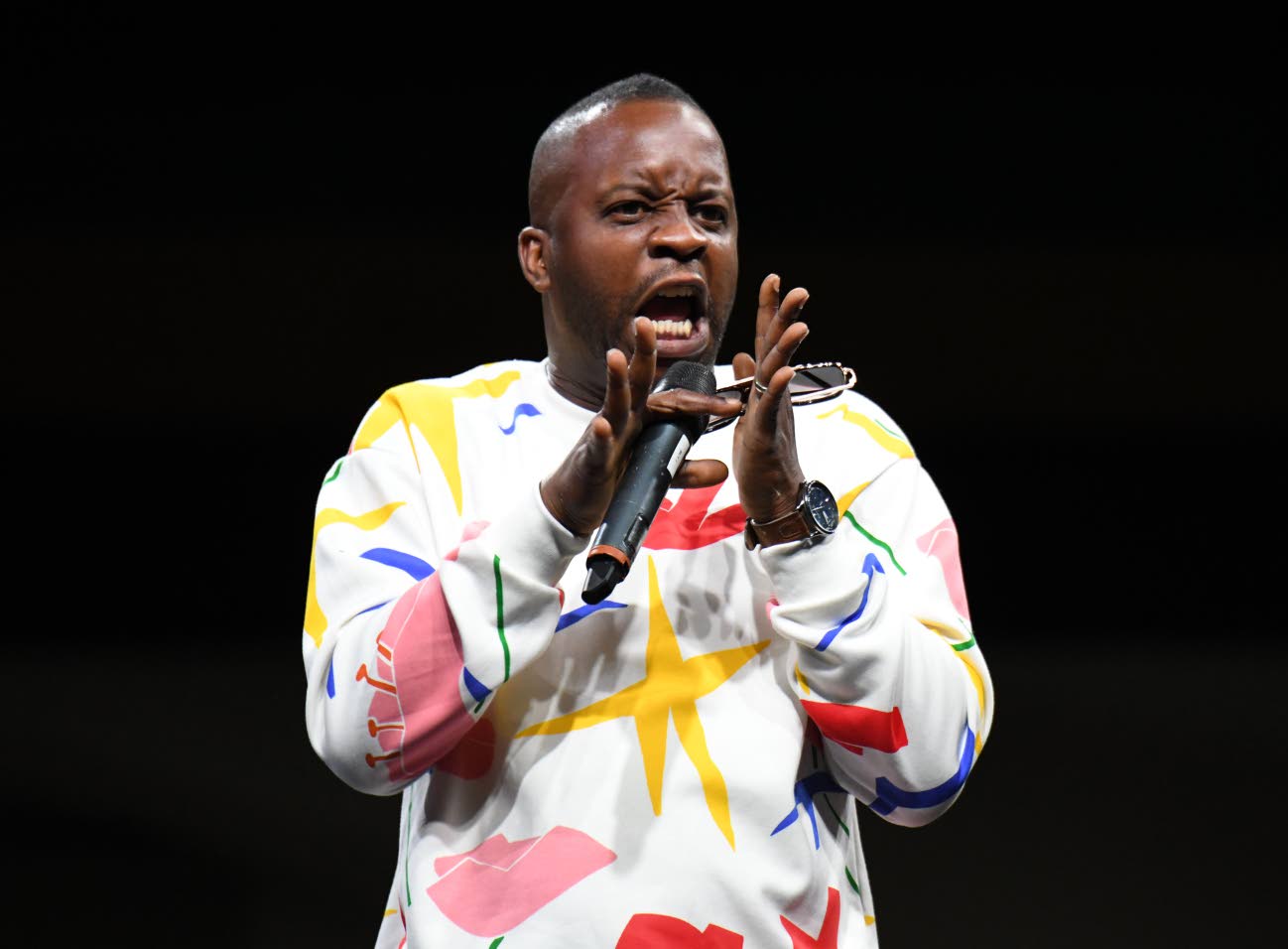
Christopher “Johnny” Daley has been one of the most consistent comedians with recurring live stand-up shows for the year 2025.


