



US$5-m push into local housing manufacturing
Modular Jamaica scales hurricane-resistant construction after storm-tested home stands
A steel-frame house in Savanna-la-Mar, Westmoreland, that withstood Hurricane Melissa is shaping a US$5-million investment push by Modular Jamaica into local housing manufacturing as the company moves to scale hurricane-resistant construction across the island.
The single-storey structure on Darling Street was built in February as a privately commissioned model home, using patented steel-frame technology developed by UK-based MB Group. When the hurricane tore through Westmoreland later in the year the house was still without paint, but it remained completely intact while neighbouring buildings lost roofs, walls and entire sections.
That unplanned stress test has since pushed the company beyond the demonstration phase and into deployment, according to CEO William Massias.
Modular Jamaica, which was formed in November to bring the technology to the local market under an exclusive licensing arrangement with MB Group, is now finalising plans to establish a manufacturing facility along the Mandela Highway corridor in Kingston. Operations are targeted to begin by February 2026, with an initial capital investment of about US$5 million.
“Once we saw how the structure performed in real conditions it became clear that this couldn’t stay at the demonstration stage. The focus now is on building the capacity in Jamaica to deliver these homes at scale,” Massias told Jamaica Observer.
At initial capacity the plant is expected to produce about 1,000 steel-frame superstructures per month and employ roughly 50 people, with scope to expand output as demand increases. The facility will fabricate the steel skeletons that form the core structural component of each home.
Steel for the frames will initially be sourced from Colombia.
“We’re in the final stages of signing off on a facility but we can’t say where exactly it is just yet,” Massias said. “We’re starting with a leased space so we can move quickly. The priority is getting the machinery in place and production started, rather than waiting on a build-out that would slow the roll-out.”
Explaining the construction process, Massias said the homes are built around an 18-gauge steel frame engineered to withstand Category-5 hurricane conditions, and anchored to a conventional concrete foundation. Once the foundation has cured, the steel skeleton can be erected in a matter of hours.
External concrete cladding boards are fixed to the frame, with drywall used internally, allowing finishes to be tailored to budget and preference. For a basic 320-square-foot unit — comparable in size to entry-level social housing — construction from foundation to completion could take about two weeks, depending on labour and finishes.
“William is being conservative with the timelines,” Chief Marketing Officer Kevin Bourke interjected. “With a five-person crew, once the foundation is ready, you can put up the structure and cladding in a day — which changes how quickly people can move into a finished home.”
Larger models range from 440 square feet to more than 1,100 square feet, while the system can support multi-storey buildings of up to five floors. Homes can also be expanded over time or dismantled and relocated — a feature the company says could be useful where land tenure or redevelopment timelines remain uncertain.
The technology has already been deployed elsewhere in the region. Through MB Group’s operations, close to 800 homes have been built in Guyana, with the first structure completed within 10 days of breaking ground, according to the company.
Beyond single-family housing, the system has also been used for more complex builds in other markets, including an aircraft hangar, a three-storey apartment building, and a six-storey hotel currently under construction. Similar steel-frame technology is also being used in Barbados, where developers have turned to hurricane-resistant construction for hotels and other commercial projects, reflecting growing demand across the Caribbean for structures designed to withstand extreme weather.
Locally, Hurricane Melissa damaged or destroyed more than 100,000 homes, compounding a national housing deficit estimated at about 150,000 units, with annual demand continuing to outpace supply. Traditional block-and-steel construction has struggled to respond quickly — particularly after major weather events — due to labour intensity, build times and rising costs.
Massias said the company’s immediate focus is on institutional clients, particularly Government which he sees as best positioned to deploy the technology quickly and at scale given access to land, financing, and delivery timelines. NGOs and private developers are also part of the target market, though the priority is on large, coordinated, housing programmes rather than individual one-off builds.
“If I had my way, Government would be our first major customer. They have the land, they have the financing, and they’re under pressure to deliver homes quickly. If we can partner with Government, that’s where you start to see hundreds or thousands of homes going up at a time,” Massias said.
“We’re not saying no to anyone,” he said, “but the real impact comes when you’re building at scale.”
Alongside its commercial plans Modular Jamaica has also tied its expansion to a structured philanthropic commitment, particularly for large-scale deployments in disaster-affected communities. For every 1,000 steel frames produced the company has pledged to contribute a community facility — such as a school, clinic, church or community centre.
Massias said that element of the model is shaped in part by his prior role as acting executive director at Food For the Poor, where he was directly involved in post-disaster housing and relief efforts across Jamaica.
“I’ve seen first-hand how critical safe housing is after a disaster, especially for women and children who don’t have the means to rebuild on their own. That experience is a big reason why we structured this so that community facilities are built alongside homes — not as an afterthought,” he said.
Bourke added that the intention is not to blur the line between commercial operations and charity, but to ensure large-scale rebuilding efforts leave lasting social infrastructure behind.
“From the start, we felt that if we’re going to be deploying homes at scale, there also has to be a give-back element,” he said.
As Modular Jamaica positions itself for large-scale deployment — particularly through Government- and NGO-led programmes — access to financing has become central to how quickly the model can be rolled out. Insurance and mortgage funding has long been a constraint for non-traditional housing solutions in Jamaica, even where construction costs and timelines are competitive.
Massias said the real-world performance of the Savanna-la-Mar house, combined with the engineering standards behind the system, have strengthened the company’s discussions with lenders and insurers.
“If a structure can withstand a Category 5 hurricane, the risk profile changes,” he said. “That’s what lenders and insurers are really assessing when they look at underwriting a home over 20 or 30 years.”
Discussions are under way with several financial institutions, including the National Housing Trust, though approvals are still pending.
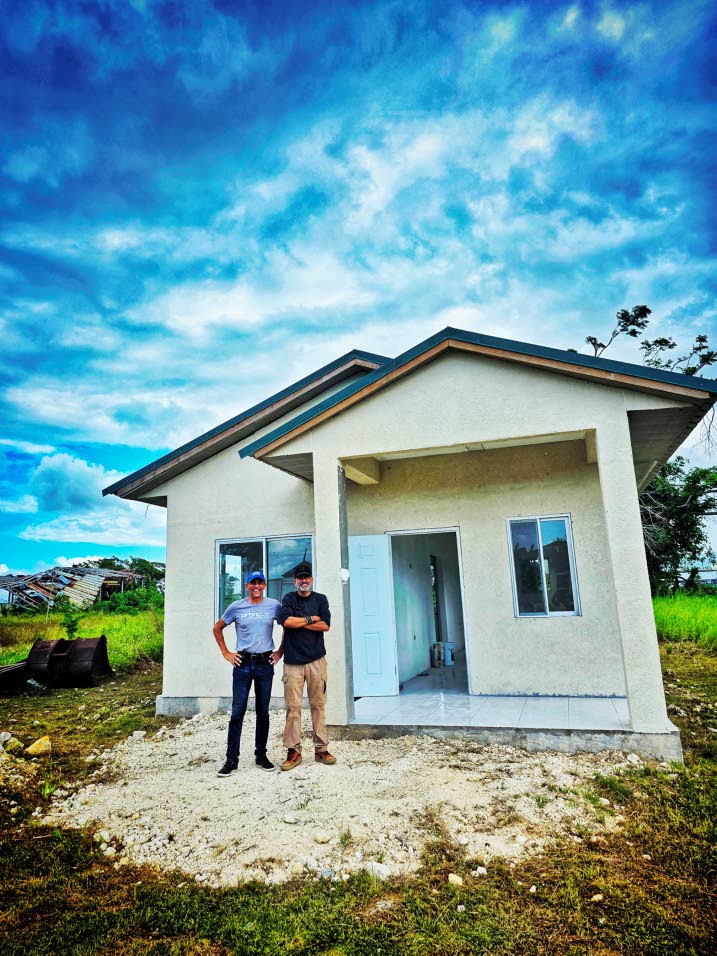
William Massias (left), chief executive of Modular Jamaica, and Kevin Bourke, chief marketing officer, stand outside a steel-frame model home in Savanna-la-Mar, Westmoreland. The structure remained intact after Hurricane Melissa, helping to validate the construction system now being scaled locally.
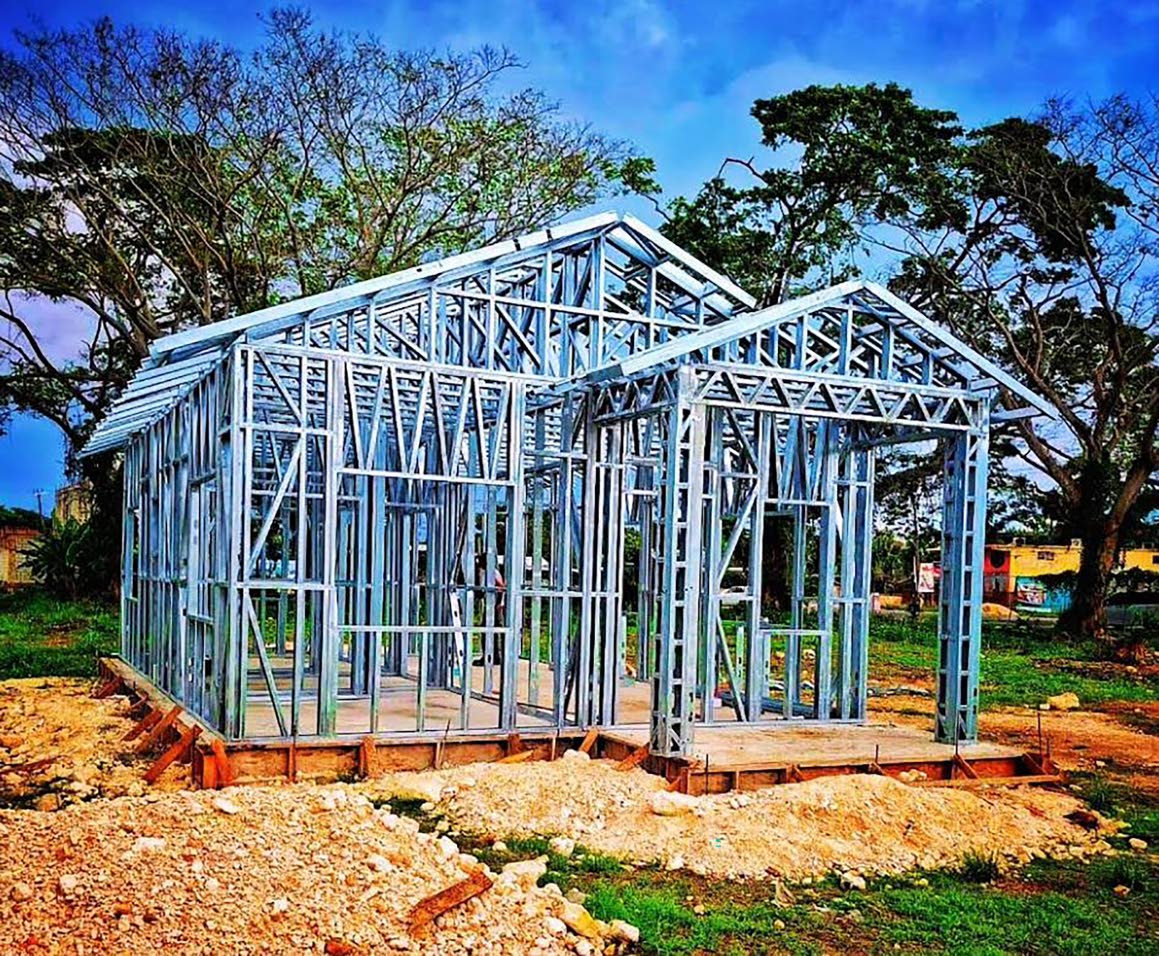
A close-up of a steel-frame superstructure being erected on a concrete foundation. Once the foundation has cured, the steel skeleton can be assembled in a matter of hours, after which external concrete cladding and internal drywall are added to complete the home, according to Modular Jamaica.
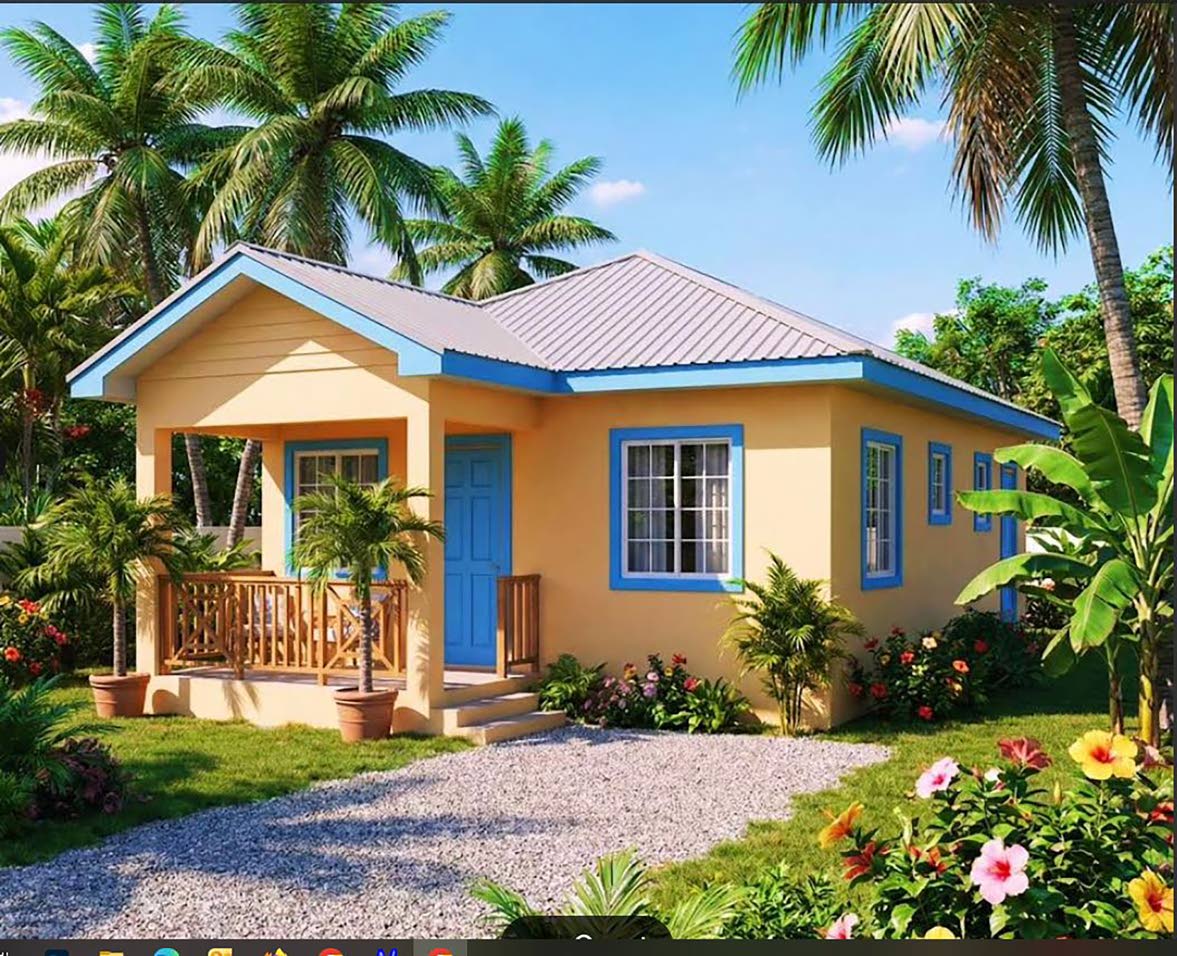
A completed steel-frame home finished with concrete cladding and internal drywall, similar to models already delivered overseas using the patented system licensed to Modular Jamaica.


