



Strong rebound for small ruminant sector post-Melissa, says Green
Agriculture Minister Floyd Green is excited about the resilience and recovery being recorded in Jamaica’s small ruminant sector in the aftermath of Hurricane Melissa.
Green told a recent Jamaica Observer Press Club that the sector, mainly sheep and goats, took a major hit during the Category 5 storm which hit the island on October 28, 2025.
“Clearly, we did see a big blow to our small ruminant sector; I think more than 3,000 goats were lost,” said Green as he explained that the loss went beyond adult animals, with many farmers reporting reproductive issues linked to the extreme weather conditions brought on by the hurricane.
With reports reaching the Observer of a small goat farmer who saw a number of his goats suffering miscarriages, which is a major issue linked to weather systems such as Melissa, Green noted, “Not only miscarriages, but clearly one of the things you have to look out for is foetal disease because, again, getting medication and veterinary services — especially in the areas that were harder hit — was difficult.”
He pointed out that despite the losses the industry did not collapse, and argued that this was largely because of the $50-million National Small Ruminant Development Programme launched in August 2021 and which is geared towards rapidly increasing the population of primarily goat and sheep, thus increasing the local production, productivity, and quality of small ruminant meat and milk.
Green explained that when the programme was launched it focused mainly on the distribution of mature bucks to support expanded breeding of small ruminant clusters across the island, and increasing the abundance and availability of breeding stock for artificial insemination and embryo transfer.
He added that the initiative was also aimed at growing the sector by five per cent each year, steadily decreasing the country’s import bill for goat meat.
According to Green, the National Small Ruminant Development Programme is one of his flagship projects, and it has played an integral role in the sector’s resilience — even while facing devastating loss.
“We have had a very good small ruminant development programme over the last two and a half years since I have been minister; so what we’ve been doing over the last few years is to help the farmers have better quality animals.
“So we have really looked at a genetic pool, and we worked with [former Finance Minister] Dr Nigel Clarke, and we put forward a policy where we remove duty from the importation of live animals. Since we have done that, at least 1,400 animals have come into the country,” said Green.
Further explaining the efforts by the agriculture ministry to combat the aftermath of Hurricane Melissa, Green pointed to collaborations with international companies to provide veterinary services to small ruminant farmers in the areas hardest hit by Melissa.
“We have partnered with both Hi-Pro and Nutramix, and we have had three veterinary clinics on the road, and they have gone to all of the hard-hit parishes. The turnout is amazing. People are bringing their small ruminants, collecting medication, showing goats that have gotten damaged or hurt,” said the agriculture minister.
With the goal of resilient recovery now in focus, Green told Observer editors and reporters that his ministry is seeking to extend the ruminant development programme to ensure that the sector rebuilds more abundantly and stronger.
“This year is the final year [for the programme] but we’re going to seek an extension. Now that we have brought in boatloads of herds for ourselves, part of what we’ve been doing is acclimatising them and doing some cross-breeding.
“We are going to see a rapid expansion of our programme to provide those goats. Over time we’ll see some new breeds, and [also] dairy and goat milk production increase. We are seeing good returns on that. One of the big parts of the programme is artificial insemination as well, which we provide free to the farmers so that they can have more consistency,” said Green.
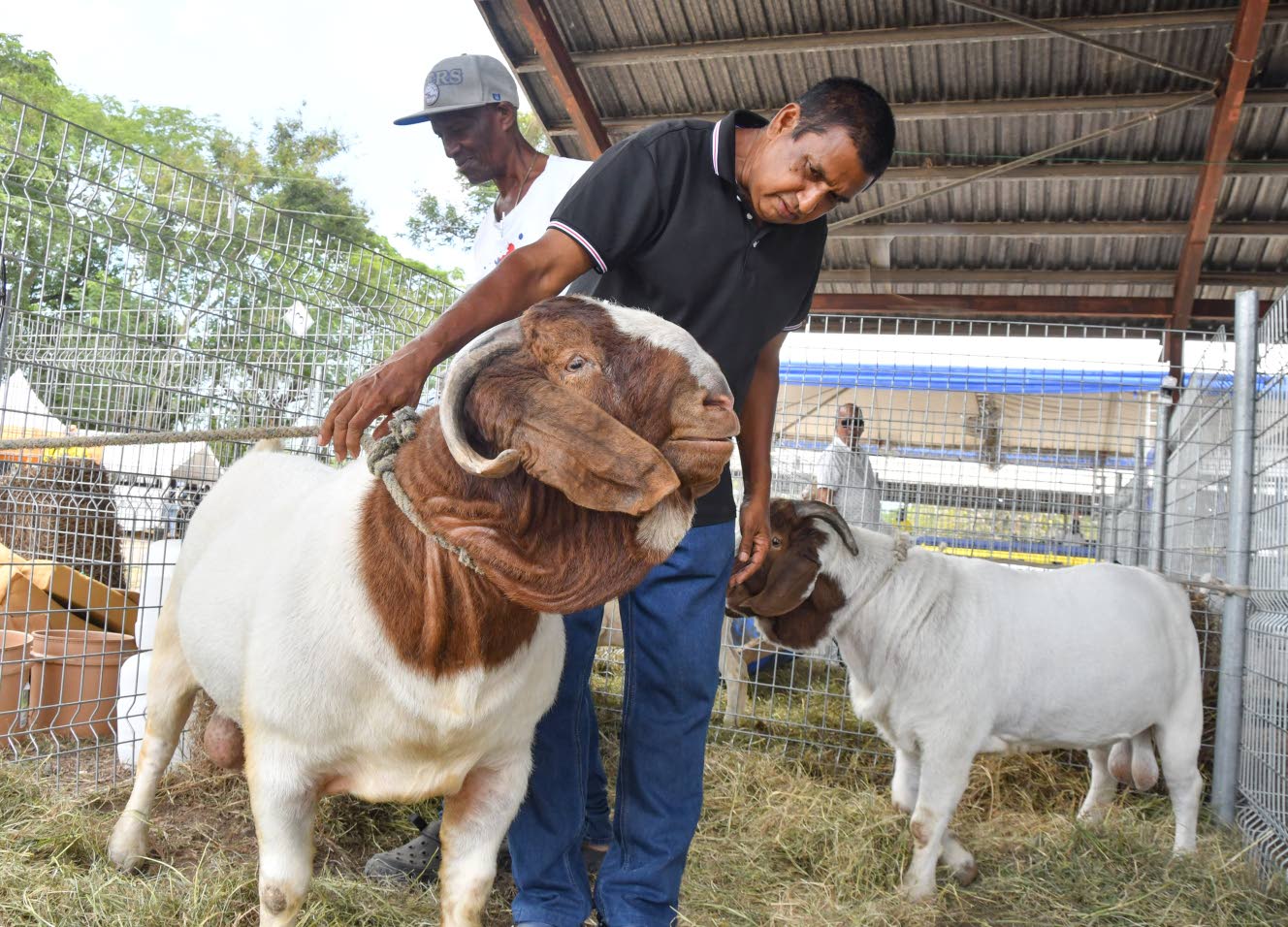
Shenley Williams (right), owner of Suncrest Farm, and Joseph Durrant inspect a two-year-old Boer goat at the Denbigh agricultural show in May Pen, Clarendon, on Friday, August 1, 2025. Agriculture Minister Floyd Green says the National Small Ruminant Development Programme, launched in August 2021, is geared towards rapidly increasing the population of primarily goat and sheep. (Photo: Naphtali Junior)

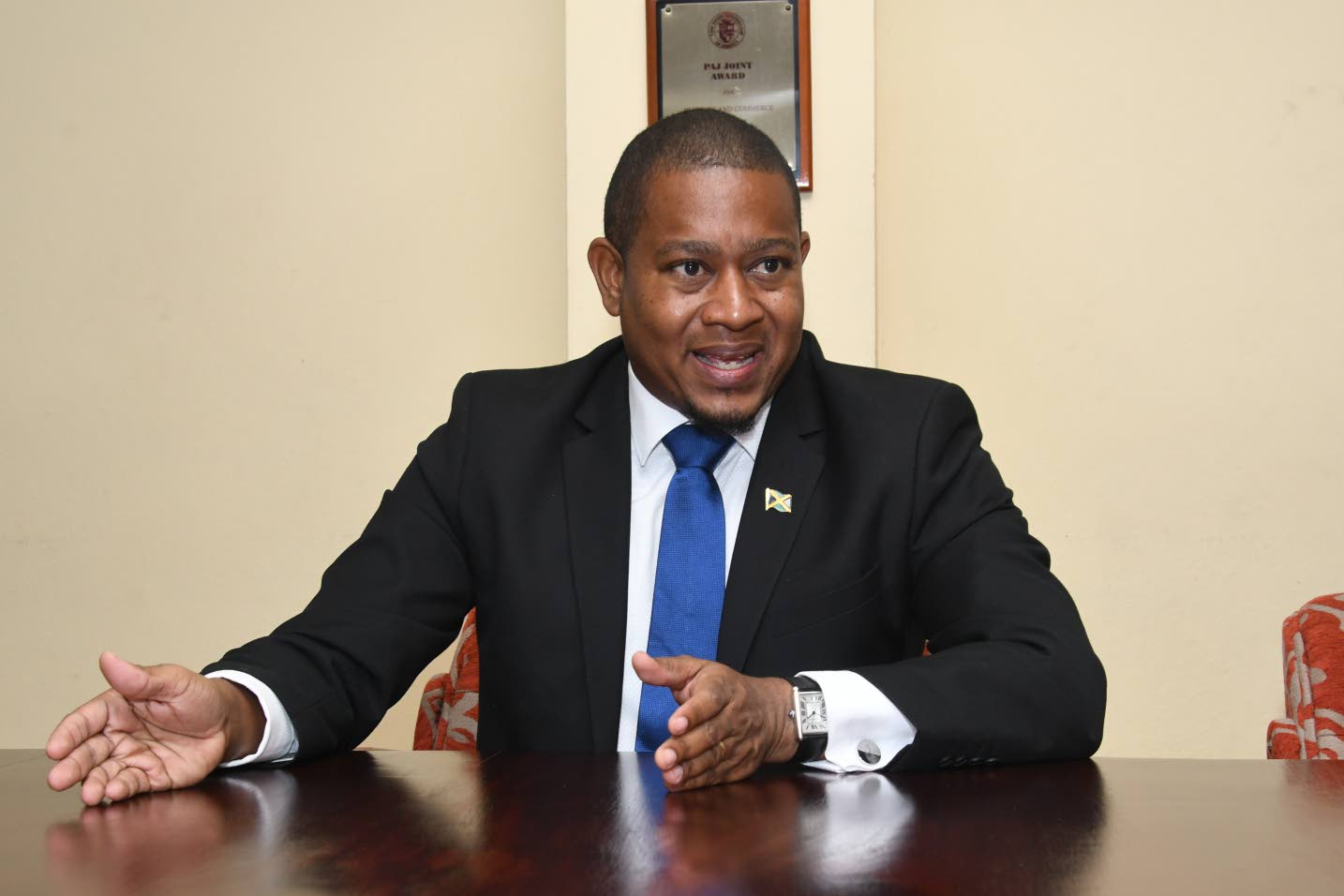
Agriculture Minister Floyd Green speaking about Hurricane Melissa’s effect on the small ruminant sector at a recent Jamaica Observer Press Club. (Photo: Karl Mclarty)


