



‘NO WAR ON ATHLETES’
JOA President Samuda urges sport world not to punish US competitors after Venezuela invasion
WITH tensions rising between the USA and Venezuela, Jamaica Olympic Association (JOA) President Christopher Samuda says American athletes should not suffer consequences stemming from sanctions imposed by international sporting federations.
On Sunday, US President Donald Trump said they will “run” Venezuela temporarily, after a military attack on the country which led to the capture of its President Nicolas Maduro. Maduro, who has served as president of the South American nation for over a decade, pled not guilty in his first court appearance in New York on Monday.
Trump has since issued threats against multiple countries, including Colombia, Mexico, Iran, and Greenland.
The USA’s actions have led to comparisons in some quarters to Russia’s 2022 invasion of Ukraine.
With Russia yet to strike peace with Ukraine, the country’s national teams have been banned indefinitely by international sporting associations including the International Olympic Committee, FIFA, and World Athletics.
South Africa, Iraq, Belarus, and Libya are among the countries who had previously been banned by international sporting bodies due to war-related actions. The USA has historically carried out military actions against a number of countries but their national teams or athletes have continued to compete on the global stage.
It remains to be seen whether the USA will face sanctions for its recent target of Venezuela. However, Samuda told the Jamaica Observer that their athletes don’t deserve to suffer due to political actions.
“I’ve always articulated that athletes are not architects of war; athletes do not make war and therefore athletes should never be considered as pawns in any political matrix of war — that’s the first principle,” he said.
“The second principle is that athletes, for them it’s a career, it’s their job, and therefore we have to be very sensitive in terms of ensuring that athletes who represent their country and who are discharging national duties on behalf of their country, that they’re given an opportunity to pursue their careers. And when I say that I mean critically, because there are athletes who have family and they have responsibilities to their family.”
Samuda says there should be a strong separation between politics and sports to ensure all sporting stakeholders continue to thrive.
“Having regard to those two principles, I’ve always maintained that the athletes should not suffer as a result of any political turmoil or political conflict — and we have to find a way where we’ll be able to demonstrate in the sporting fraternity the expression of those principles while at the same time ensuring the safety and the welfare of countries,” Samuda said.
“But the fact is that there is going to be more and more pressure on the sporting fraternity because politics is very intrusive. Therefore, at the global level as well as a national level, we have to develop mechanisms to insulate sport from politics to the extent that we give our athletes, our coaches, and our administrators a fair chance of making a life and making a living.”
The USA is set to host two of the biggest international sporting events in the world over the next two years with the FIFA World Cup this summer and the Olympic Games in Los Angeles in 2028.
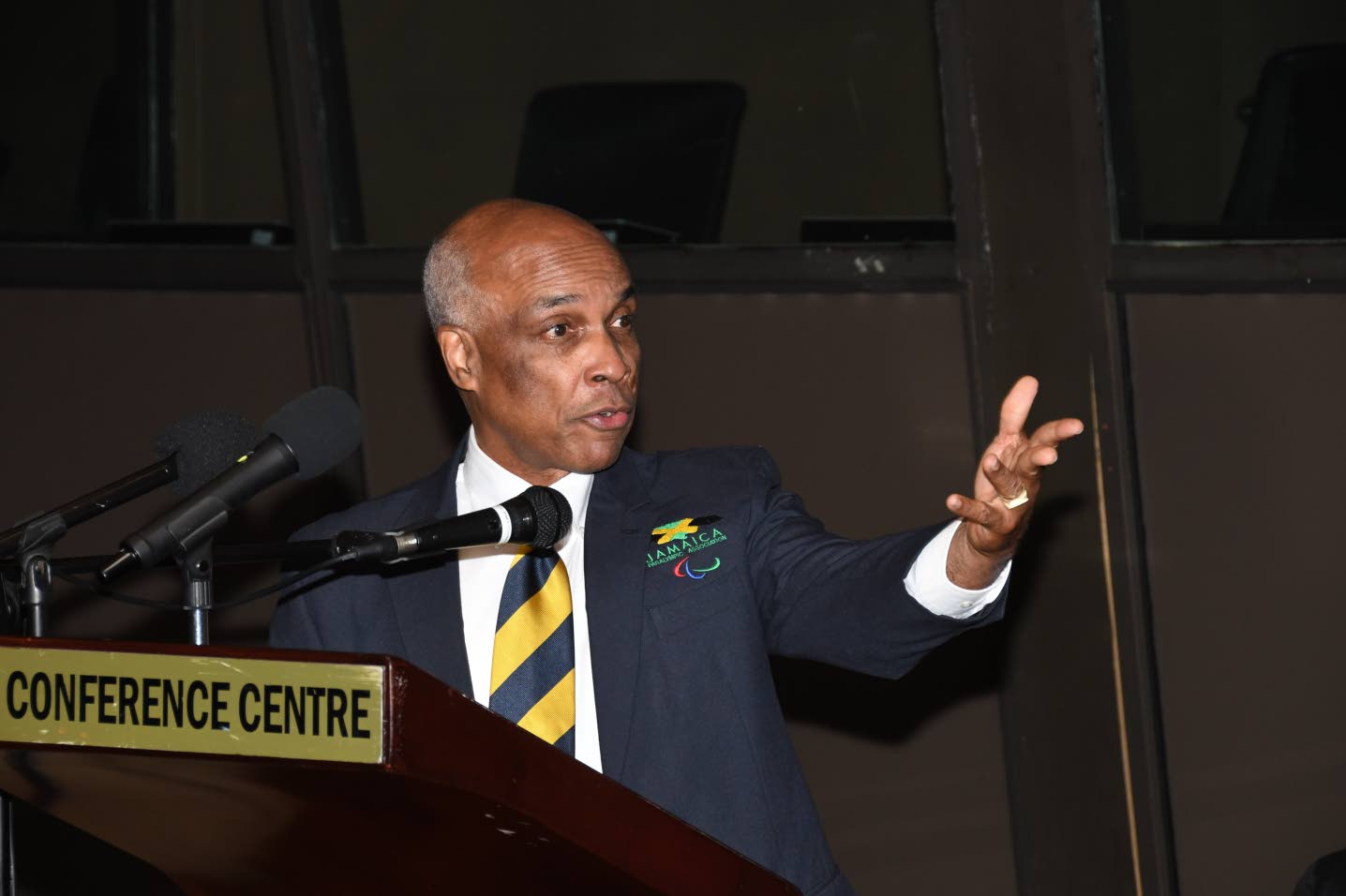
SAMUDA…athletes do not make war and therefore athletes should never be considered as pawns in any political matrix of war — that’s the first principle (Photo: Joseph Wellington)
From left: United States’s Kenneth Bednarek, Jamaica’s Bryan Levell, and United States’s Noah Lyles compete in the men’s 200m final during the World Athletics Championships in Tokyo, Japan, on September 19, 2025. (Photo: Garfield Robinson)


