



Call for special gang court
WITH six gang trials involving dozens of accused scheduled to start this year in the Home Circuit Court in Kingston, Justice Dale Palmer expressed concern on Wednesday that it could delay the progress of 753 other matters to be heard, prompting him to issue a call for special facilities to be built for trials with many defendants.
Palmer’s appeal, made during the opening of the Hilary Term of the Home Circuit Court at the Supreme Court building in downtown Kingston, was especially triggered by Director of Public Prosecutions (DPP) Claudette Thompson’s remarks during the ceremony that there are files for six gang cases which will all be before the court during this term.
“A number of counsel present are expected to be part of a particular matter that is expected to start this morning and …the fact that there are other matters to start, it reminds me of remarks that would have been made repeatedly: there is a need for specialised environments to house such matters, given the very difficult logistical challenges that they present, security as well as the housing of respective counsel as well as for the defendants themselves. And … with all that is happening it underscores the need for a specialised environment to be built to accommodate such appearances,” Palmer said.
The matter Palmer mentioned which was scheduled to begin on Wednesday involves alleged Clansman gang leader Tesha Miller and 23 of his co-accused who are to face trial under the Anti-gang Legislation for offences including murder and robbery.
“The matter that is expected to begin has displaced the other courts in terms of the housing of other defendants and also people being ushered into the courtroom and the management of the court. There are limited court resources and so it underscores that need [for special facilities]. As the learned director has outlined, there are several gang-related matters that are expected to be case-managed and heard during the course of this term. We are mindful of the need to make the best use of the court’s resources,” Palmer added.
He welcomed Chief Justice Bryan Sykes’ recent recommendation for more to be done to encourage plea bargaining as a way to slash the backlog of cases before the courts.
“The learned chief justice remarked recently of the need for — as much as we acknowledge that plea negotiations are often entered into between the Office of the DPP and members of the private Bar — a more proactive approach,” he said.
“It is one of those measures that certainly will aid… Other jurisdictions that can boast higher turnover rates also have substantial plea bargaining and so the burden on their court [is less],” Palmer pointed out.
During his remarks, King’s Counsel Peter Champagnie commented that it might require the changing of certain legislation to make defendants more willing to enter into plea bargaining arrangements instead of opting to go to trial.
“There is legislation that is either outdated, in need of amendment or in need of review. I know, for example, in Belize, there is a justice board and they, on a regular basis, seek to improve the system. We may have it here, but if we do, certainly it is not being felt. I think there should be a timely reminder in terms of the Firearms Prohibition Restriction Regulation Act 2022,” Champagnie said.
“In its present form it is going to retract from gains made in terms of the backlog of cases. All cases cannot be tried, and once we have this mandatory minimum [sentence] persons are going to want to take their chances at trial. We would ask that that legislation be revisited and reviewed. As we move into 2026, on behalf of the private Bar, I pledge our continued cooperation, continued support. There have been many gains but there is much more to be achieved,” Champagnie added.
Contributing to the discourse, Jamaican Bar Association executive Joel Nelson recommended that where the Office of the DPP can, it should throw out certain cases that linger in the courts.
“From what has been said, we give our commitment not only to approach the prosecution [for plea bargaining] where possible but we ask that the prosecution, where possible, review its files and discontinue matters that can be taken off the list.
“Oftentimes the burden is placed on defence counsel to approach and shorten proceedings. We are aware that at times there are files and matters on the list for a very long time and they go nowhere. We ask for a review so those matters can be removed from the list,” Nelson said.
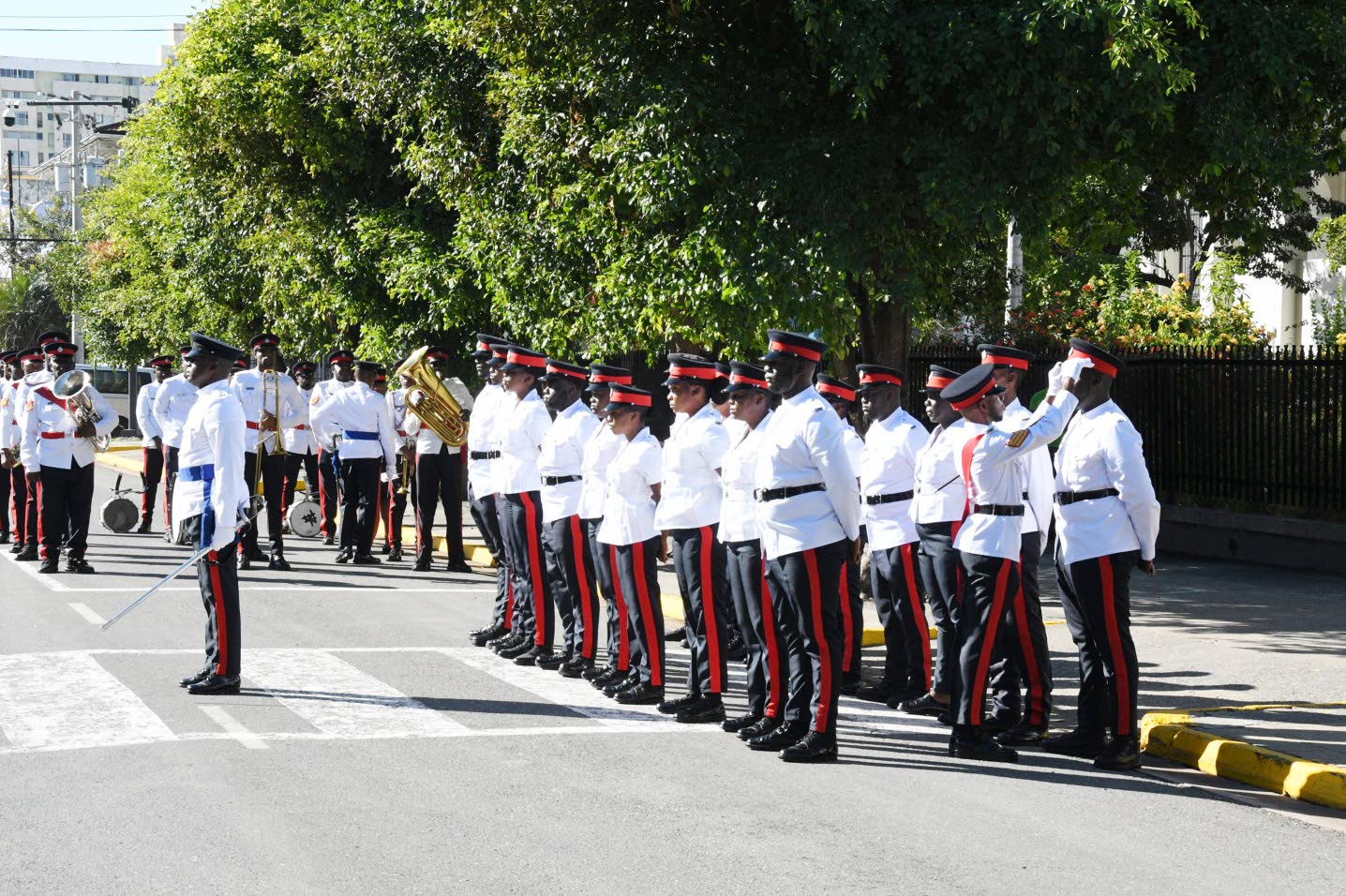
Members of the Jamaica Constabulary Force on parade during the official opening of the Home Circuit Court of the Judiciary of Jamaica, Hilary Term, in downtown Kingston, Wednesday. (Photo: Joseph Wellington)


